Showing posts with label unsolved mysteries. Show all posts

Monday, July 14, 2014

The Tarim Mummies - The Deads Tell a Tale

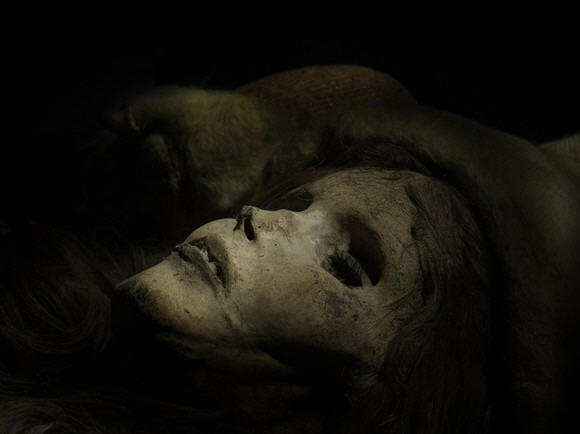
The Tarim mummies are a series of mummies discovered in the Tarim Basin in Xinjiang, China, which date from 1900 BC to 200 AD. In addition to being very well-preserved finds, controversy flows around them as DNA tests seem to show that they are the result of Asian and Caucasian mating thousands of years before it's commonly thought that the two peoples intermingled.

The Taklamakan Mummies (Tocharian mummies)

In the late 1980's, perfectly preserved 3000-year-old mummies began appearing in a remote Taklamakan desert. They had long reddish-blond hair, European features and didn't appear to be the ancestors of modern-day Chinese people. Archaeologists now think they may have been the citizens of an ancient civilization that existed at the crossroads between China and Europe.

Victor Mair, a specialist in the ancient corpses and co-author of “Mummies of the Tarim Basin”, said:"Modern DNA and ancient DNA show that Uighurs, Kazaks, Krygyzs, the peoples of Central Asia are all mixed Caucasian and East Asian. The modern and ancient DNA tell the same story.” The discoveries in the 1980s of the undisturbed 4,000-year-old ”Beauty of Loulan” and the younger 3,000-year-old body of the ”Charchan Man” are legendary in world archaeological circles for the fine state of their preservation and for the wealth of knowledge they bring to modern research. In the second millennium BC, the oldest mummies, like the Loulan Beauty, were the earliest settlers in the Tarim Basin.


The Tarim Mummies - The Deads Tell a Tale 

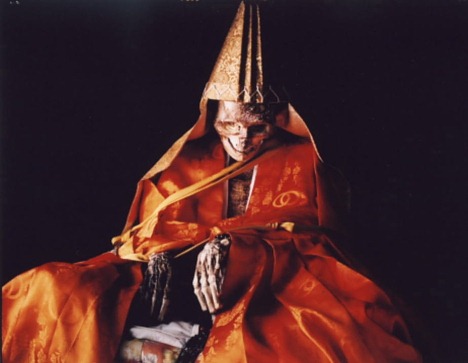
Sokushinbutsu - The Bizarre Practice of Self Mummification

Scattered throughout Northern Japan around the Yamagata Prefecture are two dozen mummified Japanese monks known as Sokushinbutsu, who caused their own deaths in a way that resulted in their mummification. The practice was first pioneered by a priest named Kuukai over 1000 years ago at the temple complex of Mount Koya, in Wakayama prefecture. Estimates of the number of self-mummified priests in Japan range between sixteen and twenty-four priests. Impressive though this number is, many more have tried to self-mummify themselves; In fact, the practice of self-mummification -- which is a form of suicide, after all -- had to be outlawed towards the end of the 19th century to prevent Buddhist priests from offing themselves this way. and yet the grand majority of priests who have tried to do this have failed. The reasons will take some explaining -- but first, some background on the whole practice and the reasons for it.

Sokushinbutsu refers to a practice of Buddhist monks observing austerity to the point of death and mummification. This process of self-mummification was mainly practised in Yamagata in Northern Japan between the 11th and 19th century, by members of the Japanese Vajrayana school of Buddhism called Shingon ("True Word"). The practitioners of sokushinbutsu did not view this practice as an act of suicide, but rather as a form of further enlightenment. Those who succeeded were revered, while those who failed were nevertheless respected for the effort.

It is believed that many hundreds of monks tried, but only 24 such mummifications have been discovered to date. There is a common suggestion that Shingon school founder Kukai brought this practice from Tang China as part of secret tantric practices he learned, and that were later lost in China. Today, the practice is not advocated or practiced by any Buddhist sect, and is banned in Japan. The practice was satirized in the story "The Destiny That Spanned Two Lifetimes" by Ueda Akinari, in which such a monk was found centuries later and resuscitated. 


Sokushinbutsu - The Bizarre Practice of Self Mummification

Sunday, March 9, 2014

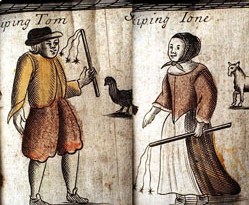
Whipping Tom: The Weird, Serial Spanker Of London


Whipping Tom was a mysterious man who wandered the streets of London in 1680. He shocked 17th-century society by lunging at women, lifting their dresses, and spanking their bums while shouting “Spanko!” before escaping capture. At one point, things got so bad that armed men would patrol the streets dressed as women in the hopes of drawing him out.Almost 200 years before Jack the Ripper stalked the streets of London, there was a much more hilarious monster terrifying society. He was given the name of Whipping Tom because this monster’s modus operandi was the spanking of young women’s bums. He would allegedly attack without warning, spanking ladies on the bottom while shouting “Spanko!” and then elude all attempts to capture him. He was so quick and slippery that some people even claimed he used supernatural powers in his escape. It was this sort of behavior that earned him the title “The enemy of milk wenches’ bums everywhere.”

Mostly Tom would use his hands to carry out a spanking but sometimes he would use a birch rod, attacking quickly, tipping them over his knee so that they couldn’t get away as he gleefully laid a smackdown on their derrieres and then be gone in an instant while his victim sat there confused as to what had just happened.

"Whipping Tom" was the nickname given to two sexual attackers in London and the nearby village of Hackney. Both would attack women walking alone and beat them on the buttocks. While there is some evidence that an earlier attacker in around 1672 was also nicknamed "Whipping Tom" and carried out similar attacks on women, the earliest recorded attacker of this nature was active in central London in 1681. He would approach unaccompanied women in alleys and courtyards and spank them on the buttocks, before fleeing. The inability of the authorities to apprehend the offender caused complaints about the ineffectiveness of London's constabulary, and prompted vigilante patrols in the affected areas. A local haberdasher and his accomplice were captured and tried for the attacks.

Whipping Tom: The Weird, Serial Spanker Of London

Jikininki Demon - One of Worst Mythological Demons


In Japanese Buddhism, jikininki ("human-eating ghosts"; pronounced shokujinki in modern Japanese) , also called wendigo are the spirits of greedy, selfish or impious individuals who are cursed after death to seek out and eat human corpses. They do this at night, scavenging for newly dead bodies and food offerings left for the dead. They sometimes also loot the corpses they eat for valuables, which they use to bribe local officials to leave them in peace. Nevertheless, jikininki lament their condition and hate their repugnant cravings for dead human flesh.

Often, jikininki are said to look like decomposing cadavers, perhaps with a few inhuman features such as sharp claws or glowing eyes. They are a horrifying sight, and any mortal who views one finds himself or herself frozen in fear. However, several stories give them the ability to magically disguise themselves as normal human beings and even to lead normal "lives" by day.

Jikininki are preta of the 26th class in Japanese Buddhism. They are also sometimes considered a form of rakshasa or gaki ("hungry ghosts"). In the latter case, they may be freed from their deplorable existence through remembrances and offerings or through the prayers of a holy and/or righteous man that has a truly holy spirit and has done nothing to dishonor his or her family. 

Jikininki Demon - One of Worst Mythological Demons

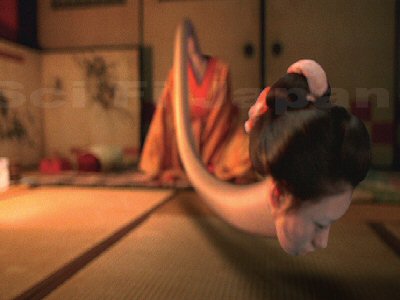
Rokurokubi - Long Neck Japanese Legendary Ghosts


Rokurokubi which are related to Nure-onna are yokai found in Japanese folklore. They look like normal human beings by day, but at night they gain the ability to stretch their necks to great lengths. They can also change their faces to those of terrifying Oni to better scare mortals.

In their daytime human forms, rokurokubi often live undetected and may even take mortal spouses. Many rokurokubi become so accustomed to such a life that they take great pains to keep their demonic forms secret. They are tricksters by nature, however, and the urge to frighten and spy on human beings is hard to resist. Some rokurokubi thus resort to revealing themselves only to drunkards, fools, the sleeping, or the blind in order to satisfy these urges. Other rokurokubi have no such compunctions and go about frightening mortals with abandon. A few, it is said, are not even aware of their true nature and consider themselves normal humans. This last group stretch their necks out while asleep in an involuntary action; upon waking up in the morning, they find they have weird dreams regarding seeing their surroundings in unnatural angles.

According to some tales, rokurokubi were once normal human beings but were transformed by karma for breaking various precepts of Buddhism. Often, these rokurokubi are truly sinister in nature, eating people or drinking their blood rather than merely frightening them. These demonic rokurokubi often have a favored prey, such as others who have broken Buddhist doctrine or human men.

Tanuki often imitated rokurokubi when playing practical jokes on people. In a folktale collected for his book, Kwaidan by Lafcadio Hearn, the nukekubi is misidentified as rokurokubi, an error that also appears in the Fighting Fantasy book, Sword of the Samurai, and in Stephen Dedman's novel The Art of Arrow-Cutting. The nukekubi is a similar but slightly different being from Japanese folklore belonging to the same overall class; instead of necks that stretch, the nukekubi have heads that completely detach. The book Even More Short & Shivery by Robert D. San Souci has a tale called Rokuro-kubi, but, again, the descriptions in the book are nukekubi, not rokurokubi.

Tuesday, September 17, 2013

The Ghosts of LUCEDIO ABBEY : Unexplained Encounters

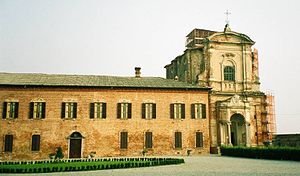
According to legends, It is written that in 1684 many young girls who lived in the area met the devil in their dreams. After seducing them, he sent them to visit the monks at Lucedio's Abbey. The girls managed to corrupt the abbey and convert the monks to Satanism. From that moment on, a long history of evil rituals, tortures, homicides, cruelty and even cases of child molestation began. Things were so twisted that the abuse reached Rome and Pope Pio VI closed the Abbey. That was on September 10, 1784 - one hundred years later.

Lucedio Abbey is a haunted monastery in Italy that was featured on Scariest Places on Earth and Ghost Hunters International. It is a place where torture, murder and disturbing black magic rituals were performed and many say it is one of Italy's most haunted places. Lucedio Abbey dates back to 1123. During that time, Cistercian monks resided there and introduced rice cultivation to the area. What nobody suspected was that these monks had lost faith in God and turned their backs on Christianity. The evil monks took to worshipping the devil and performed horrific and disturbing black magic rituals within the walls of the holy building.


The Ghosts of LUCEDIO ABBEY : Unexplained Encounters

Rasputin the Mad Monk - The Immortal Russian

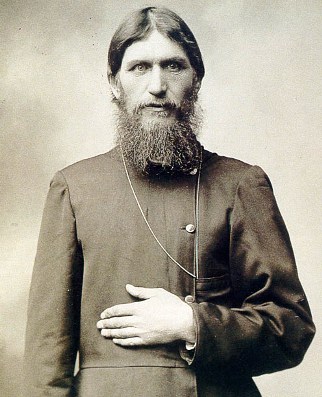
According to legends, Russian mystic Grigori Rasputin (1869-1916) was first poisoned with enough cyanide to kill ten men, but he wasn’t affected. So his killers shot him in the back with a revolver. Rasputin fell but later revived. So, he was shot again three more times, but Rasputin still lived. He was then clubbed, and for good measure thrown into the icy Neva River.

The mysterious Grigory Efimovich Rasputin, a peasant who claimed powers of healing and prediction, had the ear of Russian Tsarina Aleksandra. The aristocracy could not stand a peasant in such a high position. Peasants could not stand the rumors that the tsarina was sleeping with such a scoundrel. Rasputin was seen as "the dark force" that was ruining Mother Russia.

To save the monarchy, several members of the aristocracy attempted to murder the holy man. On the night of December 16-17, 1916, they tried to kill Rasputin. The plan was simple. Yet on that fateful night, the conspirators found that Rasputin would be very difficult to kill.

The Mad Monk

Tsar Nicholas II and Tsarina Aleksandra (the emperor and empress of Russia) had tried for years to give birth to an heir. After four girls were born, the royal couple was desperate. They called in many mystics and holy men. Finally, in 1904, Aleksandra gave birth to a baby boy, Aleksei Nikolayevich. Unfortunately, the boy who had been the answer to their prayers was afflicted with "the Royal disease," hemophilia. Every time Aleksei began to bleed, it would not stop. The royal couple became frantic to find a cure for their son. Again, mystics, holy men and healers were brought in. Nothing helped until 1908, when Rasputin was called upon to come aid the young tsarevich during one of his bleeding episodes. 


Rasputin the Mad Monk - The Immortal Russian 

Okiku - Ghost Story of Japanese Haunted Devil Doll

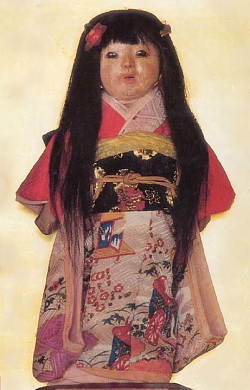
The haunted japanese doll Okiku, possessed by the spirit of a 10 year old girl who took refuge inside it. Some time after the funeral of the girl, the hair of the doll began to grow. Although the doll’s hair is cut regularly, the hair grows again and again. A mysterious doll possessed by the spirit of a child has captured the curiosity of people across Japan for decades. The legendary Okiku doll, named after the girl who long ago used to play with it, is a 40-centimeter (16-in) tall kimono-clad figure with beady black eyes -- and hair that grows.

The Okiku doll has resided at the Mannenji temple in the town of Iwamizawa (Hokkaido prefecture) since 1938. According to the temple, the traditional doll initially had short cropped hair, but over time it has grown to about 25 centimeters (10 in) long, down to the doll's knees. Although the hair is periodically trimmed, it reportedly keeps growing back.

It is said that the doll was originally purchased in 1918 by a 17-year-old boy named Eikichi Suzuki while visiting Sapporo for a marine exhibition. He bought the doll on Tanuki-koji -- Sapporo's famous shopping street -- as a souvenir for his 2-year-old sister, Okiku. The young girl loved the doll and played with it every day, but the following year, she died suddenly of a cold. The family placed the doll in the household altar and prayed to it every day in memory of Okiku.

Some time later, they noticed the hair had started to grow. This was seen as a sign that the girl's restless spirit had taken refuge in the doll.

This doll was originally purchased in 1918 by a Eikichi Suzuki in Sapporo, where he saw a beautiful Japanese doll with a Kimono. Eikichi bought this doll for her sister, who is two years old named Okiku. She loved this doll and play it every day. But unfortunately, Okiku died shortly afterwards of a fever. Then at his funeral, family want to put a doll into his coffin, but somehow they forgot. The girl’s family then put the doll on the household altar and pray for every day in order to commemorate Okiku. Some time later, they saw the hair began grows. According to this story is the spirit of the girl who took refuge inside the doll. 


Okiku - Ghost Story of Japanese Haunted Devil Doll

Thursday, August 22, 2013

The Bloody Benders: Horror in the Old West

The Bloody Benders were a family of serial killers who owned an inn and small general store in Labette County of southeastern Kansas from 1871 to 1873. The family consisted of John Bender, his wife Mrs. Bender (later referred to as Kate, Sr., since no one knew her given name), son John, Jr., and daughter Kate. While Bender mythology holds that John and Kate were brother and sister, contemporary newspapers reported that several of the Benders' neighbors have stated that they claimed to be married, possibly a common law marriage.

They are believed to have killed about a dozen travelers before their crimes were discovered and the family fled, with their fate uncertain. Much folklore and legend surrounds the Benders, making it difficult to separate fact from fiction.

Background

Following the American Civil War, the United States government moved the Osage Indians from Labette County, Kansas to a new Indian Territory located in what would eventually be Oklahoma. The newly-vacant land was then made available to homesteaders. In October 1870, five families of spiritualists settled in and around Osage township of western Labette County, approximately 7 mi (11 km) northeast of where Cherryvale would be established seven months later. One of the families was John Bender Sr. and John Bender Jr. who registered 160 acres (65 ha) of land located adjacent the Great Osage Trail, which was then the only open road for traveling further west. After building a cabin, a barn with corral and a well, in the fall of 1871, Kate (Ma) Bender and her daughter Kate arrived and the cabin was divided into two rooms by a canvas wagon-cover. The Benders used the smaller room at the rear for living quarters, while the front room was converted into a "general store" where a few dry goods were sold. The front section also contained their kitchen and dining table, where travelers could stop for a meal or even spend the night. Ma and Kate Bender also planted a 2 acres (0.81 ha) vegetable garden and apple tree orchard north of the cabin. Bender family

John (Pa) Bender Sr. was around sixty years old and spoke very little English. When he did speak it, it was so guttural that it was usually unintelligible. Ma Bender, who also allegedly spoke very little English, was 55 years of age and was so unfriendly that her neighbors took to calling her a "she-devil". John Bender Jr. was around 25 years old, handsome with auburn hair and mustache and spoke English fluently, but with a German accent. John was prone to laughing aimlessly, which led many to consider him a "half-wit". Kate Bender, who was around 23, was cultivated and attractive and she spoke English well with very little accent. A self-proclaimed healer and psychic, she distributed flyers advertising her supernatural powers and her ability to cure illnesses. She also conducted séances and gave lectures on spiritualism, for which she gained notoriety for advocating free love. Kate's popularity became a large attraction for the Benders' inn. Although the elder Benders kept to themselves, Kate and her brother regularly attended Sunday school in nearby Harmony Grove. The Benders' inn was a simple one room house divided into living quarters and the kitchen and store area. 


The Bloody Benders: Horror in the Old West

Wednesday, May 22, 2013

Creepy Coincidence of the Deadly Double - Pearl Harbor advance-knowledge Conspiracy Theory

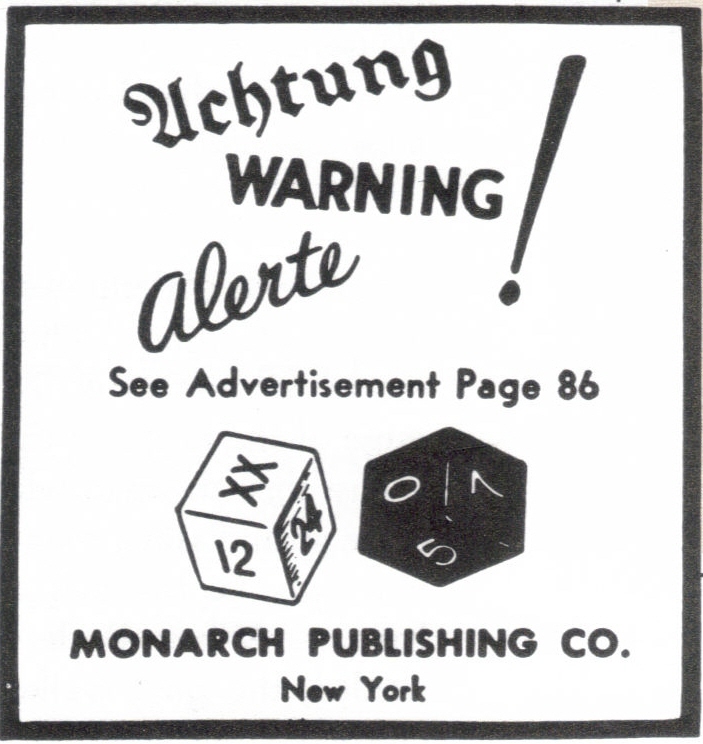
A few weeks before the Pearl Harbor attack, a pair of strange ads appeared in the New Yorker. They seemed to be advertising a dice game called The Deadly Double. One of the ads showed a pair of dice with the characters 0, 5, 7, xx, 24, and 12 on the visible faces. Above were warnings in a variety of languages: "Achtung! Warning! Alerte!" The other ad showed people in a bunker and explained that the dice game was essential air raid survival gear. The company logo was a suspiciously Germanic looking double eagle.

The ads have a somewhat strange design, but only in retrospect did they appear to contain a coded message. The numbers could allude to the date of the Pearl Harbor attack (12/7), with the other numbers representing codes to be deciphered by sleeper agents in the U.S. The Deadly Double itself was thought to refer to the twin threats of Germany and Japan.

Like many mysteries, retellings of this story emphasize the unknown and leave out crucial facts. The 0 and 5 are sometimes thought to foretell the exact time of the attack, but the first aircraft opened fire on Pearl Harbor at 7:48 a.m. local time. Books on mysterious events like to leave this story unresolved, as though the identity of the ads' creator remains unknown to this day. In truth, it was traced to a game company in Chicago that made a dice game called the Deadly Double. Their war-themed ad might seem like poor taste today, but the numbers on the dice matching the date of Pearl harbor was pure coincidence. Still, it was weird enough that the FBI got involved. 


No sooner had the Japanese bombed Pearl Harbor, Hawaii on December 7, 1941, that the home front became obsessed that lurking in the shadows was a Japanese traitor or Nazi spy, saboteur, or subversive hiding behind every bush, gathering all of the United States’ valuable information.

As a result of the attack on Pearl Harbor, the nation was on high alert for spies, especially “suspicious looking Orientals.” Many law enforcement officials took matters into their own hands. At a major naval base in Norfolk, Virginia, the chief of police located all Japanese aliens living in his city and ordered them jailed – all fourteen of them. In Newark, New Jersey, police officers’ were given the authority to board trains and arrest all suspicious looking Orientals and to use their own judgement when determining if an individual of Oriental origin “looked suspicious” or not. Other state’s followed, singling out many individuals as “suspicious looking Orientals.”  


Creepy Coincidence of the Deadly Double - Pearl Harbor advance-knowledge Conspiracy Theory

Hidden Treasures - Treasure Chest of the Church of Pisco


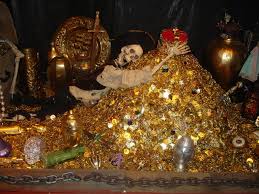
The year was 1859. Four unsavory characters were serving as mercenaries for the Peruvian Army. A Spaniard (Diego Alvarez), an Irishman (Killorain), an Englishman (Luke Barrett) and an American (Brown). They figured there had to be a way to make better money and were looking for opportunities.

One of the men ran into a renegade priest named Father Matteo. The priest told the man of a treasure hidden and guarded at a church in the town of Pisco. The four came up with a plan, deserted from the army and made their way to Pisco.

Alvarez and Killorain were both Catholic and started to attend mass regularly. They became model parishioners. After some time they went to the local priests with a terrible story. They had found out that a renegade priest by the name of Father Matteo knew about the treasure and was gathering up a large group of bandits to come and steal the treasure.

The Priests believed the story. These men could know nothing of the treasure on their own. Father Matteo must be up to something. Alvarez came up with a plan to save the treasure. They could load the treasure onto a ship and move it to the safety of Callao. Alvarez and his three friends would gladly donate their services as guards.

So it came to pass that the priests loaded the following on a ship in the tiny harbor of Pisco:
  • 14 tons gold ingots
  • 7 great golden candlesticks, studded with jewels
  • 38 long diamond necklaces
  • A quantity of jeweled rings
  • A quantity of jeweled bracelets
  • A quantity of jeweled crucifixes
  • 1 chest uncut stones
  • 1 chest Spanish doubloons
  • Various other jewels and ornaments 
Hidden Treasures - Treasure Chest of the Church of Pisco

The Mysterious Norwegian Woman - The Isdal Woman Spy Thriller

The Isdal woman (Norwegian: Isdalskvinnen) is the subject of an unsolved case involving an unidentified woman found dead at Isdalen Valley in Bergen, Norway on 29 November 1970. Considered one of Norway's most profound mysteries, the case has been the subject of intense speculation over the years regarding the identity of the victim, the events leading up to her death and the cause of death. Public interest in the case remains significant.

The woman was found in a part of Isdalen popularly known as "Death Valley", which lies in the direction towards Mount Ulriken. Next to the scene police found a burned-out passport. The autopsy showed that the woman had suffered blunt force trauma to the neck and had taken several sleeping pills before she died. The official police report concluded suicide, but this conclusion is highly controversial.

Discovery

On 29 November 1970 at approximately 13:15, while hiking in the hills of Isdalen valley outside of Bergen, a university professor and his two young daughters came across the partially charred remains of a naked woman hidden among some rocks at a remote hiking trail. Present at the scene were large amounts of sleeping pills, and bottles of petrol. A full scale murder investigation was immediately initiated and the case has since evolved to become the most comprehensive criminal case by the Bergen police.

Investigation

Police traced the woman to two suitcases that were found in an NSB train station in Bergen. Police also found that the labels had been removed from every piece of clothing she wore, and that her fingerprints had been sanded away.

In addition, police discovered a prescription for a lotion, but both the doctor's name and date had been removed. Within the lining on one suitcase police discovered 500 German marks. Partial fingerprints were found on a few pieces of broken glass. They were insufficient for an identification, but police suspected that they belonged to the dead woman. The police had made phantom drawings on the basis of witness descriptions and analysis made from the body; these drawings were published in the media and disseminated via INTERPOL in a number of countries. 


The Mysterious Norwegian Woman - The Isdal Woman Spy Thriller 

Monday, May 6, 2013

Codex Seraphinianus - The World's Weirdest Book

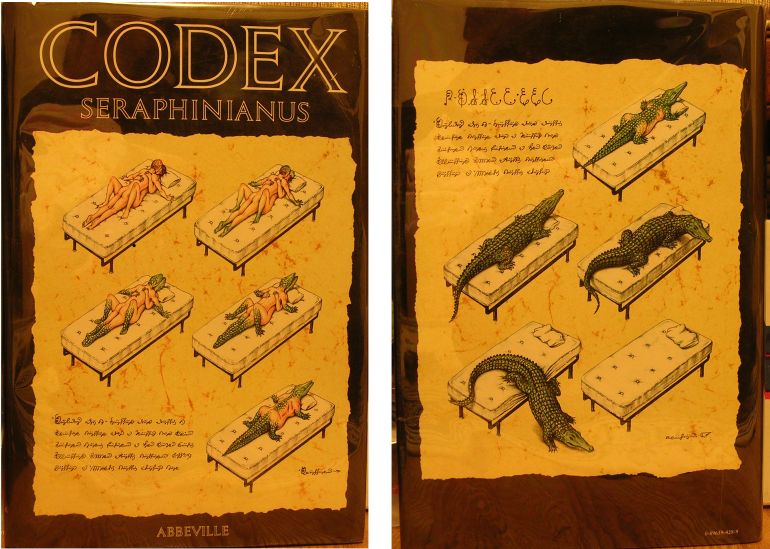
Some people think it's one of the weirdest books ever published. An art book unlike any other art book. A unique and disturbing surreal parody. Grotesque and beautiful. It's very hard to describe. Codex Seraphinianus by Italian artist Luigi Serafini is a window on a bizarre fantasy world complete with its own unique (unreadable) alphabet and numerous illustrations that borrow from the modern age but veer into the extremely unusual.

Codex Seraphinianus, originally published in 1981, is an illustrated encyclopedia of an imaginary world, created by the Italian artist, architect and industrial designer Luigi Serafini during thirty months, from 1976 to 1978. The book is approximately 360 pages long (depending on edition), and written in a strange, generally unintelligible alphabet. Originally published in Italy, the book has since been released in a number of different countries.

The word "Codex" in the title means "book" or "code" (from Latin caudex), and "Seraphinianus" is derived from the author's last name, Serafini (which in Italian, refers to the seraphs). Literally, Codex Seraphinianus means Serafini's code. It was first published in two volumes by Franco Maria Ricci in 1981. The pictures in this AbeBooks article are from the 1983 American edition published by Abbeville - 370 pages of the Twilight Zone. There is also a 1993 single volume edition and a revised 2006 Italian edition with new illustrations - this final edition is the most affordable version.

Created in the late 1970s, the book's blurb on the cover flap talks about Codex Seraphinianus being a book for the "age of information" where coding and de-coding messages is increasingly important in genetics, computer science and literary criticism. "The Codex presents the creative vision of this time..." goes on the blurb. If Serafini was so influenced by "information" in the 1970s to create this maverick art book, then what must he make of today's information age? Codex Seraphinianus Covers featuring Facebook, Twitter, blogs and Google? Countless websites and blogs can be found pondering the meaning of Codex Seraphinianus or simply admiring a truly original piece of art/fantasy/imagination - call it what you will. 


Codex Seraphinianus - The World's Weirdest Book

Tuesday, April 23, 2013

The Great Train Robbery - Unsolved Mystery

The Great Train Robbery is the name given to a £2.6 million train robbery (the equivalent of £41 million today) committed on 8 August 1963 at Bridego Railway Bridge, Ledburn near Mentmore in Buckinghamshire, England. The bulk of the stolen money was not recovered. Three robbers were never found, two convicted robbers escaped. One convicted was most likely never involved, and died in prison. Though there were no firearms involved, the standard judgment was 30 years.

Planning the robbery

The robbery was planned by several parties with no overall mastermind. Although the robbery operation itself was planned and executed by the late Bruce Reynolds, the target and the information came from a still unknown individual dubbed the "Ulsterman". The key field organisers were Gordon Goody, Buster Edwards and Charlie Wilson, with Brian Field being the key link between the robbers and the informant.

At 6:50 PM on Wednesday 7 August 1963 the travelling post office (TPO) "Up Special" train set off from Glasgow Central Station, Scotland en route to Euston Station in London. The train was hauled by an English Electric Type 4 (later Class 40) diesel-electric locomotive numbered at the time as D326 (later renumbered 40 126). The train consisted of 12 carriages and carried 72 Post Office staff who sorted mail during the journey.

Mail was loaded onto the train at Glasgow and also during station stops en route, as well as from line-side collection points where local post office staff would hang mail sacks on elevated track-side hooks which were caught by nets deployed by the on-board staff. Sorted mail on the train could also be dropped off at the same time. This process of exchange allowed mail to be distributed locally without delaying the train with unnecessary station stops. One of the carriages involved in the robbery is preserved at the Severn Valley Railway.

The second carriage behind the engine was known as the HVP (High Value Packages) coach, which carried large quantities of money, as well as registered mail for sorting. Usually the value of the shipment was in the region of £300,000, but because there had been a Bank Holiday weekend in Scotland, the total on the day of the robbery was £2.6 million (equivalent to about £43 million in 2012 RPI terms). 


The Great Train Robbery - Unsolved Mystery

Monday, January 21, 2013

The Rake - Mythical Scary Creature


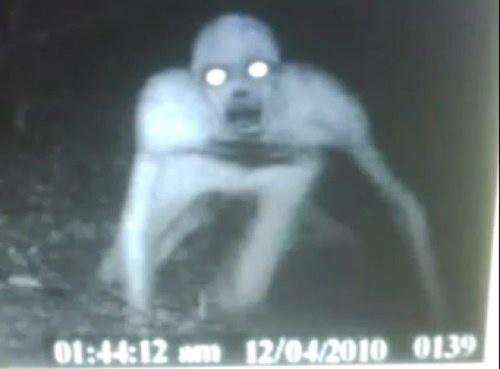
The Rake is a mythical creature which is described as pale and humanoid, with it limbs twisted at odd angles and having long talons to harm its prey. Its movements are often described as canine. Its eyes are described to be black. Its presence is often accompanied by heavy breathing, whispering and loud growls. Witnesses who encounter the Rake, encounter it at night, when it perches near them, awaiting for its victim to awake, if they do not, it will leave demands, often telling the victims to leave. Its voice is high-pitched and somewhat indescribable. One way or another, if its victims do not meet his demands it continually visits them and eventually harm and/or kills them in their slumber.

Lore recognized the Rake due to its distinct appearance: human in form, but with canine movements, fitting the description from the original creepypasta. In EverymanHYBRID, its presence is usually accompanied by heavy breathing, whispering noises, and loud growls. The Rake is exceedingly strong, with sharp claws. Unlike Slenderman, it doesn't seem to affect electronic equipment. However, footage seems to blur when The Rake is caught on camera, or nearby.

The Rake Video


During the summer of 2003, events in the northeastern United States involving a strange, humanlike creature sparked brief local media interest before an apparent blackout was enacted. Little or no information was left intact, as most online and written accounts of the creature were mysteriously destroyed.

Primarily focused in rural New York state, self proclaimed witnesses told stories of thier enounters with a creature of unkown origin. Emotions ranged from extremely traumatic levels of fright and discomfort, to an almost childlike sense of playfulness and curiosity. While their published versions are no longer on record, the memories remained powerful. Several of the involved parties began looking for answers that year. 


The Rake - Mythical Scary Creature

Tomino’s Hell - Japanese Urban Legend

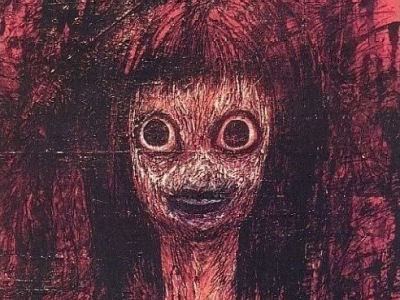
This is popular Japanese story is about a poem called “Tomino’s Hell.” They say that you should only read with your mind, and never out loud. If you were to read it out loud, then you must take responsibility for your actions.

Tomino is a japanese urban legend about a poem that kills anyone who recites it out loud.In this world there are things that you should never say out loud, and the Japanese poem “Tomino’s Hell” is one of them. According to the legend, if you read this poem out loud, disaster will strike. At best, you will feel very ill or injure yourself. At worst, you could die.

One person said: “I once read Tomino’s Hell on the air for an online radio show called Radio Urban Legends. At first everything was normal, but gradually my body, it became difficult to read. I read half of it and then broke down and threw it away. Two days later I got injured and I was left with seven stitches. I do not want to think that this was because of the poem.”

This is a rough English translation:

Tomino’s Hell

The older sister vomits blood, the younger sister spits fire.
Cute Tomino spits treasured jewels.
Tomino died alone and fell into hell.
Hell, darkness, with no flowers.
Is it Tomino’s older sister that whips?
The number of red welts is worrisome.....


Continue Reading Tomino’s Hell - Japanese Urban Legend

Monday, January 7, 2013

ANNABELLE - The Haunted Doll

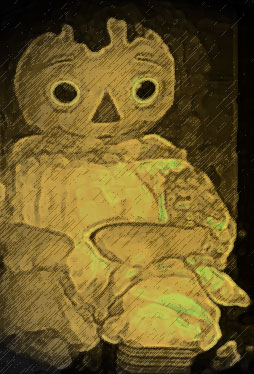
This is a terrifying case of a raggedy Ann doll named Annabelle. The case is from the 1970's and is highlighted in the book The Demonologist. This is one of the Warrens most asked about cases. The referral came from an Episcopal priest. A somber toned clergyman told Ed Warren of two young nurses who had communicated with what they thought to be a human spirit. One of the girls’ friends had been attacked physically, and the activity was still in progress, so Ed accepted the case. With that the priest gave Ed the phone number of the girls. Ed immediately called the number and upon reaching one of the girls, Ed verified the existence of the problem and told the young women that he and Lorraine were on their way.

Today, AnnaBelle remains locked in a glass case, and is on display at the Warren Occult museum. The only one of it's kind, the museum houses haunted artifacts and objects collected from over 50 years of paranormal investigations. It is still reported that while very week, AnnaBelle still manages to turn up in the strangest of places. 


Annabelle: The Haunted Doll

In the 1970's a mother strolling along the street walked into a hobby store, and purchased a large Raggedy-Anne doll as a present for her daughter's birthday. Thus begins one of the most unusual cases of a possessed object on record. Annabelle's antics were so bad, she is now locked inside a protective glass case in an occult museum to keep her at bay.

This incident is a terrifying case investigated by famed paranormal investigators Ed and Lorraine Warren in the 1970's. A priest had contacted Ed, and told him of two young nurses who were experiencing terrifying phenomenon in their home. Strange things were occurring to the point that they had contacted the church for help. The church referred the case to the Warrens, who immediately began investigating.  


ANNABELLE - The Haunted Doll

Friday, November 30, 2012

Conspiracy Theory - President’s Book of Secrets

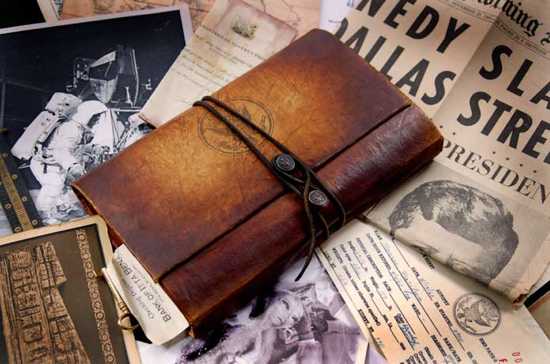
This theory was used in the film National Treasure 2: Book of Secrets, and claims that the Presidents of the United States have passed down a book from Washington to Obama, in which some or all have added facts and histories earth-shattering in scope and implications, and that this book’s location is only known to the President, and the National Librarian of Congress. Thus, if the President is assassinated, the Librarian informs the next President of the book. After each President leaves office, the location is changed.

This book is rumored to contain the truth about the alien landings at Roswell, NM and Rendlesham Air Base, UK, and many other UFO events; the truth about the JFK and RFK assassinations; the location of the Holy Grail (tying in with the Fort Knox conspiracy theory); the fates of various high-ranking Nazis following WWII (and the facts concerning the U. S. government’s assistance of them); even the identity of the Antichrist. Assuming there is a book, and assuming it identifies the Antichrist, we are led to wonder if he and the President are on the same side, are one and the same, or whether the President fears for Earth’s immediate future. Even more insidious, in terms of realism, is the claim that the book told of the attacks of September 11, 2001 before they took place, and also tells of the imminent coup d’etat of Russia, followed by a Russo-North Korean invasion of South Korea, initiating WWIII.

This weekend President Obama got a little down time with his family in Maine, he also took the time to bring some interesting reading material. Supposedly, according to White House officials speaking on the condition of anonymity, the president removed from a secret compartment inside a White House Abraham Lincoln statute the rumored "President's Book of Secrets." Many historians and conspiracy theorists would be surprised to find out that the secret book featured in the movie "National Treasure: Book of Secrets," actually does exist. The top ten secrets believed to be in the book are listed below:

1. The Lincoln Memorial is really made out of solid gold painted white. Should the deficit hit $400 trillion dollars then it will be melted down to pay off debts.

2. Should the Supreme Court even become deadlocked, perhaps by a 4-4 vote with one justice abstaining, then the President can take down the Great Seal of the White House, which is four feet in diameter, and flip it while the vice president calls heads or tails to decide the case.

3. The missing 8 minutes on the Watergate tapes reveals then President Nixon talking about what to do with aliens being held at a secret military base in Iowa.

4. The book also describes a secret deal between the United States and Canada where participants in the witness protection program, and a certain celebrities gone bad such as Lindsay Lohan, can live anonymously in Quebec as long as a promise to speak French.


Conspiracy Theory - President’s Book of Secrets 

Unexplained Phenomenon of NAGA Fire Balls

Naga Fire balls

The Naga fireballs of the Mekong river are not a question of ‘If’, but a question of ‘What’. They are one of the most well documented unexplained phenomena in the entire world. Every year during October on the night of Wan Awk Pansa thousands of spectators gather on the banks of the Mekong river in Thailand and Laos to see the legendary Naga breathe forth balls of fire from the river itself. Many have been watching this every year for their entire life. The balls themselves are reddish in color and are about the size of an egg. They slowly and silently rise from the river before accelerating high into the air where they disappear. There can be anywhere from tens to thousands of these glowing orbs per night. The balls themselves are seen either side of the festival night, which attests to the fact it’s more than likely of natural origin rather than an organized display by officials.

Their supernatural origin is not without opposition. Manas Kanoksin, a doctor from Nong Khai strongly believes that fermenting sediment on the river’s bottom causes pockets of methane gas to form, and that the Earth’s position in relation to the sun during those days of the year causes them to rise, then spontaneously ignite in the presence of ionized oxygen. Italian chemists Luigi Garlaschelli and Paolo Boschetti, have replicated the lights by adding chemicals to the gases formed by rotting compounds. But other researchers dismiss this theory, pointing out that the rocky river bottom doesn’t have much sediment, and that the water’s turbulence would break up any such methane bubbles before they reached the water’s surface. Whatever the cause, the Naga fireballs of the Mekong are one of the least known, most spectacular of phenomena to observe.

Each year, hundreds of fireballs spontaneously explode out of Thailand’s Mekong River. Known as “bung fai paya nak” or “Naga fireballs,” they have appeared on the “late autumn night of the full moon at the end of the Buddhist Lent for as long as anyone can remember,” according to a 2002 Time magazine story about the phenomenon. Some believe the balls come from the breath of Naga, a mythical serpent that haunts the river. (Locals use old grainy pictures and postcards of the mythical beast to prove its presence to tourists.) Others believe the fireballs are actually pockets of methane bubbling up from the river, but many locals remain convinced that the fireballs are of a supernatural origin.

Naga Lights

Weird things are happening some 70 - 100 kilometres downstream from the Vientiane - capital of Laos. In the nights from the muddy waters of Mekong river appear red glowing balls which quickly rise up in the air and disappear without noise (some, who manage to be close to the lights, report silent hiss). These mysterious sparkles are small, but sometimes they reach a size of a basketball.

These are not some ghosts seen by occasional people and questioned by majority. Ghost fireballs of Mekong have been seen by thousands of people, photographed and captioned on movies and, after all, investigated by scientists looking for the explanation of this interesting phenomenon.
Unexplained Phenomenon of NAGA Fire Balls 


Unexplained Heist of THE IRISH CROWN JEWELS?

Irish Crown Jewels

The jewels – emeralds, rubies and diamonds presented to the Irish nation by William IV in the 19th century, were kept in a safe in Dublin Castle’s Bedford Tower. They were in the care of Sir Arthur Vicars, the Ulster King of Arms, his nephew Pierce Mahoney, and two assistants. On June the 28th, 1907, Vicars reported that his key to the tower’s main door had vanished. Five days later, the cleaner, Mrs Farrell, found the main door unlocked when she arrived for work. Then finally, on July 6th, she noticed something even more strange: the door to the strongroom where the jewels were kept, had been left open overnight. That afternoon, a castle porter named Stivey entered Vicar’s room while Vicars and Mahoney were examining the gold and enamelled collar of the Order of St Patrick. Vicars gave the porter a safe key and ordered him to put the collar with the rest of the jewels. A few minutes later, Stivey returned with the alarming news that the safe was already open. Vicars made a swift inspection and cried, ‘My God, the jewels are gone!’

Police never caught the thief. Within a month of the crime, Scotland Yard detectives had produced a report with the name of their prime suspect. However, this report was suppressed, and the Chief Inspector recalled. Later during that year Edward VII demanded that all four men resposible for guard the jewels, step down. 14 years later, Vicars was found dead in the garden of his home in County Kerry. The body was riddled with bullets and a label was found that read: ‘IRA Never Forgets’. But the Irish Republican Army insisted that it was not involved. Regardless, most people in Ireland believed Vicars to be an innocent man who had been badly treated by the British Government. No trace of the Irish Crown Jewels has ever been found.

Almost every nation has its State treasures. They may be symbols of national pride, such as Crown Jewels, or documents that encapsulate national history, as with the American Declaration of Independence. Some of these treasures now reside in museums. Others, most especially crowns and other royal regalia, are regularly worn by heads of State. The regalia variously referred to as the Irish Crown Jewels or the State Jewels of Ireland, however, met a more unusual and mysterious fate.

Properly called the jewels belonging to the Most Illustrious Order of Saint Patrick, they were created to be presented to the National Order of Chivalry of Ireland, the Order of Saint Patrick, for use by the Viceroy or visiting Sovereigns. In 1830 the Crown Jewellers, Rundell & Bridge, created the regalia from jewels that had belonged to Queen Charlotte, the consort of George III. These diamonds, rubies, and other stones possibly included the rose diamond given to the Queen by the Sultan of Turkey and the jewels she received from Mogul Emperor Shah Alam. 


 Unexplained Heist of THE IRISH CROWN JEWELS?

LinkWithin

Related Posts with Thumbnails