Monday, February 28, 2011

What is Tantra ? Is it Black Magic of India ??

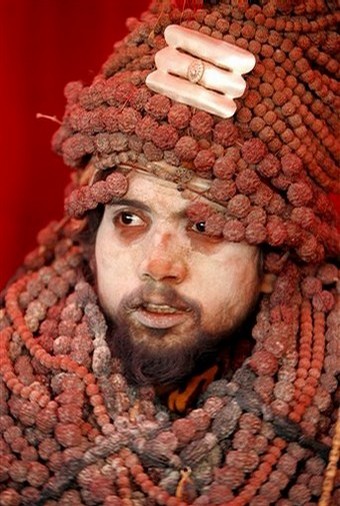
Tantra (Sanskrit: ; "weave" denoting continuity), (anglicised tantricism or tantrism) or tantram (Sanskrit) is a religious philosophy according to which Shakti is usually the main deity worshipped, and the universe is regarded as the divine play of shakti and shiva. The word Tantra also applies to any of the scriptures commonly identified with the worship of Shakti. Tantra deals primarily with spiritual practices and ritual forms of worship, which aim at liberation from ignorance and rebirth. The tantric movement has influenced the Hindu, Bön, Buddhist, and Jain religious traditions. Tantra in its various forms has existed in India, Nepal, China, Japan, Tibet, Korea, Cambodia, Burma, Indonesia and Mongolia. Although he cautions against attempting a rigorous definition of tantra, David Gordon White offers the following definition:

Tantra is that Asian body of beliefs and practices which, working from the principle that the universe we experience is nothing other than the concrete manifestation of the divine energy of the Godhead that creates and maintains that universe, seeks to ritually appropriate and channel that energy, within the human microcosm, in creative and emancipatory ways.

Part 1: The Basic of Tantrism

Tantra has been one of the most neglected branches of Indian spiritual studies despite the considerable number of texts devoted to this practice, which dates back to the 5th-9th century AD.

Many people still consider tantra to be full of obscenities and unfit for people of good taste. It is also often accused of being a kind of black magic. However, in reality, tantra is one of the most important Indian traditions, representing the practical aspect of the Vedic tradition.

The religious attitude of the tantriks is fundamentally the same as that of the Vedic followers. It is believed that the tantra tradition is a part of the main Vedic tree. The more vigorous aspects of Vedic religion were continued and developed in the tantras. Generally tantriks worship either Goddess Shakti or Lord Shiva.

The Meaning of "Tantra"

The word "tantra" is derived from the combination of two words "tattva" and "mantra". "Tattva" means the science of cosmic principles, while "mantra" refers to the science of mystic sound and vibrations. Tantra therefore is the application of cosmic sciences with a view to attain spiritual ascendancy. In another sense, tantra also means the scripture by which the light of knowledge is spread: Tanyate vistaryate jnanam anemna iti tantram. 


Black magic is the belief of practices of magic that draws on assumed malevolent powers. This type of magic is invoked when wishing to kill, steal, injure, cause misfortune or destruction, or for personal gain without regard to harmful consequences to others. As a term, "black magic" is normally used by those that do not approve of its uses, commonly in a ritualistic setting; the argument of "magic having no colour, and it is merely the application and use by its user," backs the claim that not everything termed as "black magic" has malevolent intentions behind it, and some would consider it to have beneficial and benevolent uses. These uses could include killing diseases or pests.

Practitioners who use magic in this way argue that the effect itself is malevolent by causing death to insects (as in the above example), but as an indirect consequence of black magic, good can be a result, such as in the form of less pests around. In this school of thought, there is no separation between benevolent and malevolent magic as there is no universal morality against which magic can be measured. A rather different view on Black Magic is used in the system of Chaos Magick. In this branch of occult practice, spells sometimes correspond to colours, depending on the supposed effect (i.e, red-magick, which is magic concerned with combat, such as low-level curses). Black Magic, according to Chaos Magick, corresponds to magic that is performed around the themes of death, separation, severance and entropy. This can refer to powerful curses meant to bring the strongest effect, spells to sever emotional ties to objects or people, and so on. 


Read more on Tantra and Black Magic at http://theunexplainedmysteries.com/tantra.html

Friday, February 11, 2011

Zana - Wild Neanderthal Ape Woman

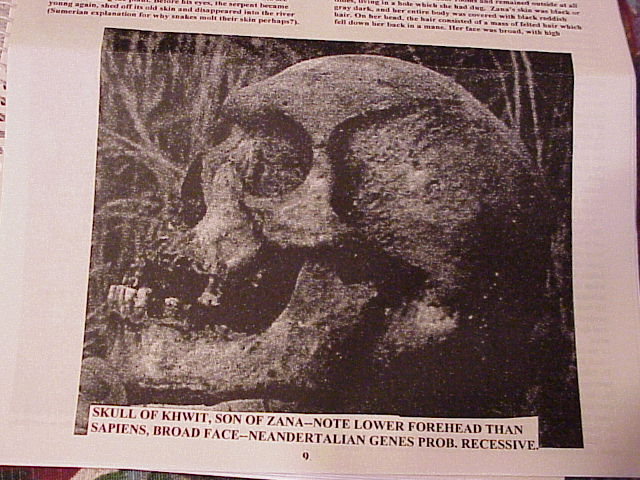
In the mid-eighteenth century, hunters in the Ochamchir region of Georgia (a Province of Russia on the edge of the Black sea) captured a ‘wild woman’ who had ape-like features, a massive bosom, thick arms, legs, and fingers, and was covered with hair. This ‘wild woman’, named Zana by her captors, was so violent at first that she had to spend many years in a cage with food being tossed to her. Eventually, she was domesticated and would perform simple tasks, like grinding corn. She had an incredible endurance against cold, and couldn’t stand to be in a heated room.

Zana enjoyed gorging herself on grapes from the vine, and also had a weakness for wines, often drinking so heavily she would sleep for hours. As Colin Wilson points out in The Encyclopedia of Unsolved Mysteries, this is likely how she became the mother of many children to different fathers. These children usually died when she tried to wash them in the freezing river. The villagers started to take her children away from her and raise them as their own; unlike their mother, the children developed the ability to communicate as well as any other villager.

Zana died in the village about 1890; the youngest of her children died in 1954. Her story was researched by Professor Porchnev who interviewed many old people (one as old as a hundred and five) who remembered Zana, as well as two of her grandchildren. The grandchildren had dark skin, and the grandson, named Shalikula, had jaws so powerful that he could lift a chair with a man sitting in it. It is believed that Zana may have somehow been a surviving member a previous evolutionary state of man.

She was given the name Zana by Russian researchers after she was captured naked and living in the wilderness by hunters in the Ochamchir region of Georgia in the year 1850. From all accounts, she was the closest thing to a live, captured version of a Bigfoot creature on record. Some thought she might have been a throwback to the Neanderthal. 


Read more on Zana Ape Woman

The Amityville Incident - The Amityville Horror

There won’t be many people reading this list who have not heard of the Amityville horror movie – and the majority will no doubt have watched it. What you may not know is that it is based on true events. The authors of the original book (George and Kathy Lutz) were convinced right up to their deaths that the story was true. In 1975, the couple moved in to a home in Amityville, New York. Unbeknownst to them, 13 months earlier, the son of the previous owners shot and killed all six members of his family – claiming to have been directed by voices in his head. The killer (Ronald DeFeo) is still in prison in New York and will remain there until his death. Most strangely, all six of the victims were found lying face down in their beds with no signs of a struggle or sedatives having been administered.

Within 28 days of moving in to the house, George and Kathy Lutz fled – claiming a series of horrific experiences forced them to leave. The family experienced foul smells, loud voices, physical attacks, and unexplained noises. All members of the family, at one time or another, witnessed glowing red eyes in the house. Kathy discovered a small hidden room that was painted red and the family dog refused to go near it. A priest was called in to bless the house and he also witnessed some of the phenomena which he later testified to on camera. The current owners, and those after the Lutzes claim to have had no unusual experiences in the house. The distinctive Dutch style windows have been remodeled to keep curiosity seekers away.The Amityville Horror


112 Ocean Avenue remained empty for thirteen months after the DeFeo murders. In December 1975, George and Kathleen Lutz bought the house for what was considered to be a bargain price of $80,000. The six-bedroom house was built in Dutch Colonial style, and had a distinctive gambrel roof. It also had a swimming pool and a boathouse, as it was located on a canal. George and Kathy married in July 1975 and each had their own homes, but they wanted to start afresh with a new property. Kathy had three children from a previous marriage, Daniel, 9, Christopher, 7, and Melissa (Missy), 5. They also owned a crossbreed Malamute/Labrador dog named Harry. During their first inspection of the house, the real estate broker told them about the DeFeo murders of the previous November, and asked if this changed their opinion about wanting to buy it. After discussing the matter, they decided that it was not an issue. 

Read more on The Amityville Horror 

The Devil’s Footprints

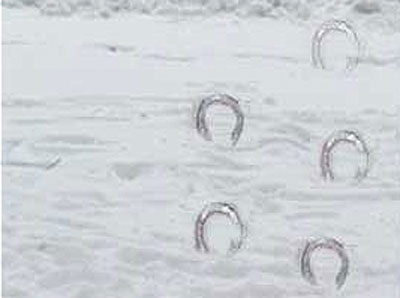
The Devil’s Footprints was the name given to a peculiar phenomenon that occurred in Devon, England on 8 February 1855. After a light snowfall, during the night, a series of hoof-like marks appeared in the snow. These footprints, measuring 1.5 to 2.5 inches wide and eight inches apart, continued throughout the countryside for a total of over 100 miles, and, although veering at various points, for the greater part of their course followed straight lines. Houses, rivers, haystacks and other obstacles were travelled straight over, and footprints appeared on the tops of snow-covered roofs and high walls which lay in the footprints’ path, as well as leading up to and exiting various drain pipes of as small as a four inch diameter. Reports of similar anomalous, obstacle-unheeded footprints exist from other parts of the world, although none is of such a scale as that of the case of the Devil’s Footprints.

Incident

On the night of 8–9 February 1855 and one or two later nights, after a light snowfall, a series of hoof-like marks appeared in the snow. These footprints, measuring 1.5 to 2.5 inches wide and eight inches apart, continued throughout the countryside for a total of over 100 miles, and, although veering at various points, for the greater part of their course followed straight lines.Houses, rivers, haystacks and other obstacles were travelled straight over, and footprints appeared on the tops of snow-covered roofs and high walls which lay in the footprints' path, as well as leading up to and exiting various drain pipes of as small as a four inch diameter.

The area in which the prints appeared extended from Exmouth, up to Topsham, and across the river Exe to Dawlish and Teignmouth. R.H. Busk, in an article published in Notes and Queries decades later, stated that footprints also appeared further afield, as far south as Totnes and Torquay, and that there were other reports of the prints further afield in Weymouth (Dorset) and even Lincolnshire. In each case, the prints would go on for miles and miles before abruptly stopping.

There were also attendant rumours about sightings of a "devil-like figure" in the Devon area during the scare. Many townspeople armed themselves and attempted to track down the beast responsible, without success. 


Read more on Devil's Footprints 

The lake that glows in the dark: Eerie Phenomenon

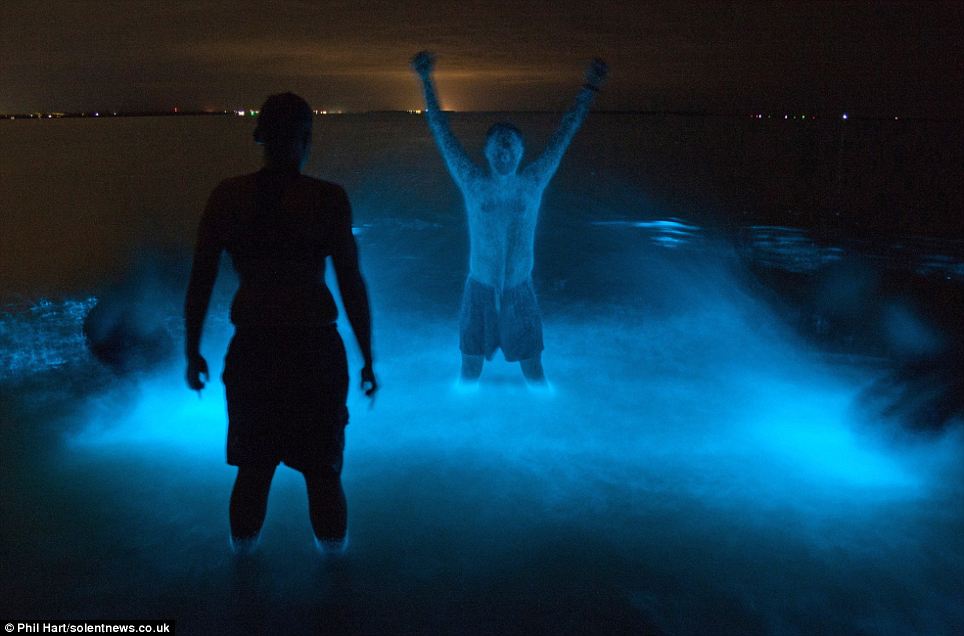
Swimming is supposed to give you a healthy glow, but these swimmers weren't quite sure what was going on when they took a late-night dip and turned a fluorescent shade of blue.

'It was like we were playing with radioactive paint,' said photographer Phil Hart who snapped the bizarre sight as his friends emerged from a lake in the dark of night.

The light is created by a chemical reaction called bioluminescence, which happens when a naturally-occuring micro-organism in the water is disturbed. 


Phil, 34, put his camera on a very slow shutter speed and threw sand and stones into the water to cause the reaction and capture as much of the blue haze as possible.

These images are particularly stunning because the concentration of the micro-organism 'Noctiluca Scintillans' was abnormally high when he took the photos at Gippsland Lakes in Victoria, Australia. 


Phil said: 'To be there watching this bioluminescence is spellbinding and to see it like this is very rare.

'I am a program director with an organisation that has been running canoeing camps on the Gippsland Lakes for 50 years. Nobody can remember the bioluminescence ever being as bright as this. 


Read more on Glowing Lake   

Tuesday, January 18, 2011

Vimana : Ancient Indian Aircraft

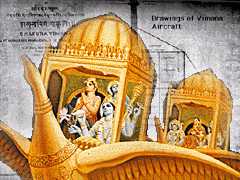
A vimana is a Sanskrit word with several meanings ranging from temple or palace to mythological flying machines described in Sanskrit epics. Some modern UFO enthusiasts (like Desmond Leslie, co-author with George Adamski, in 1953, of one of the first books on UFOs entitled Flying Saucers Have Landed) have pointed to the Vimana as evidence for advanced technological civilizations in the distant past, or as support for ancient astronaut theories. Others have linked the flying machines to the legend of the Nine Unknown Men. Many researchers into the UFO enigma tend to overlook a very important fact. While it assumed that most flying saucers are of alien, or perhaps Governmental Military origin, another possible origin of UFOs is ancient India and Atlantis. Informations about Ancient Indian flying vehicles comes from ancient Indian sources; written texts that have come down to us through the centuries. There is no doubt that most of these texts are authentic; many are the well known ancient Indian Epics themselves, and there are literally hundreds of them. Most of them have not even been translated into English yet from the old Sanskrit.

The Indian Emperor Ashoka started a “Secret Society of the Nine Unknown Men”: great Indian scientists who were supposed to catalogue the many sciences. Ashoka kept their work secret because he was afraid that the advanced science catalogued by these men, culled from ancient Indian sources, would be used for the evil purpose of war, which Ashoka was strongly against, having been converted to Buddhism after defeating a rival army in a bloody battle.

The “Nine Unknown Men” wrote a total of nine books, presumably one each. Book number one was “The Secrets of Gravitation!”. This book, known to historians, but not actually seen by them dealt chiefly with “gravity control.” It is presumably still around somewhere, kept in a secret library in India, Tibet or elsewhere (perhaps even in North America somewhere). One can certainly understand Ashoka’s reasoning for wanting to keep such knowledge a secret, assuming it exists. If the Nazis had such weapons at their disposal during World War II, Ashoka was also aware devastating wars using such advanced vehicles and other “futuristic weapons” that had destroyed the ancient Indian “Rama Empire” several thousand years before.

Few years ago, the Chinese discovered some Sanskrit documents in Lhasa, Tibet and sent them to the University of Chandrigarh to be translated. Dr. Ruth Reyna of the University said recently that the documents contain directions for building interstellar spaceships! Their method of propulsion, she said, was “anti-gravitational” and was based upon a system analogous to that of “laghima,” the unknown power of the ego existing in man’s physiological makeup, “a centrifugal force strong enough to counteract all gravitational pull.”

According to Hindu Yogis, it is this “laghima” which enables a person to levitate. Dr. Reyna said that on board these machines, which were called “Astras” by the text, the ancient Indians could have sent a detachment of men onto any planet, according to the document, which is thought to be thousands of years old. The manuscripts were also said to reveal the secret of “antima”, “the cap of invisibility” and “garima”, “how to become as heavy as a mountain of lead.” 


Read more  on Vimana : Ancient Indian Aircraft

Friday, January 14, 2011

Earth's shift adds a 13th Zodiac sign - OPHIUCHUS (THE SERPENT BEARER)

You may be celebrating your fortune based on your horoscope as a Capricorn today, but you might be surprised to find that you’re probably a Sagittarius by now.

A set of new zodiac sign dates was unveiled recently, the Minnesota-based Star Tribune reported, with each symbol’s covered dates being moved by a month thanks to the moon’s gravitational pull that, as astrologers note, ‘wobbled’ the Earth’s rotation on its axis recently.

“The ancient Babylonians based zodiac signs on the constellation the sun was ‘in’ on the day a person was born. During the ensuing millenniums, the moon's gravitational pull has made the Earth "wobble" around its axis, creating about a one-month bump in the stars' alignment,” Star Tribune’s Bill Ward noted.

A blog post on the Washington Post website have also shed light on this matter, citing the explanation provided by Park Kunkle, a board member of the Minnesota Planetarium Society.

“The moon's gravitational pull has slowly moved the Earth in its axis, creating about a one-month bump in the stars' alignment... Now, during what we think as the month of Pisces, the sun is actually in the sign of Aries…”

Thus the adjustment of zodiac dates as follows:

Capricorn: Jan. 20 - Feb. 16
Aquarius: Feb. 16 - March 11
Pisces: March 11- April 18
Aries: April 18- May 13
Taurus: May 13- June 21
Gemini: June 21- July 20
Cancer: July 20- Aug. 10
Leo: Aug. 10- Sept. 16
Virgo: Sept. 16- Oct. 30
Libra: Oct. 30- Nov. 23
Scorpio: Nov. 23- Nov. 29
Ophiuchus: Nov. 29- Dec. 17
Sagittarius: Dec. 17- Jan. 20


Kunkle added that science has not proven a clear connection between the stars and the universe and its direct affects on people’s character and behavior. “Sure, we can connect harvest to the stars. But personality? No.”

"Historically, people looked at the sky to understand the world around us," he said. "But today I don't think people who are into astrology look at the sky very much." 


The constellation, Ophiuchus, has been known since ancient times, and is better known as Serpentarius, the Serpent Holder. It is included in the list of 48 constellations described by Ptolemy. Ophiuchus is depicted as a man handling a serpent; his body dividing the large snake into two parts, giving way to the symbol used today as an Asclepius - the medical staff. Astrologers have not included Ophiuchus in the wheel of Astrological signs because the Sun spends only about nineteen days in this 13th sign of the Mazzaroth. Not that there wasn't a 13th sign in the Heavens, but as far as Astrologers were concerned, the Sun traveled from the constellation 'Scorpius' and then proceeded directly into the sign of Sagittarius. In reality, this was not the case. The Sun, for 19 days of the year, travels through the star constellation 'Ophiuchus' before entering Sagittarius from Scorpius - see chart below. thus The sign of Ophiuchus is patterned after the original 'Serpent Holder', Enki, a Sumerian god. 


Read more at 13th Zodiac sign - OPHIUCHUS (THE SERPENT BEARER)

Thursday, January 6, 2011

Top 10 Strange Mass Animal Deaths

Read complete list of Mass Animal Deaths
Maryland Dead fish 2 million fish found dead in Maryland - Authorities in Maryland are investigating the deaths of about 2 million fish in Chesapeake Bay. "Natural causes appear to be the reason," the Maryland Department of the Environment said in a news release. "Cold water stress exacerbated by a large population of the affected species (juvenile spot fish) appears to be the cause of the kill." The investigation comes days after the deaths of an estimated 100,000 fish in northwest Arkansas. "The affected fish are almost exclusively juvenile spot fish, 3 to 6 inches in length," the Maryland department said. Large winter kills of spot fish have occurred at least twice before in the state, in 1976 and 1980, the department said.
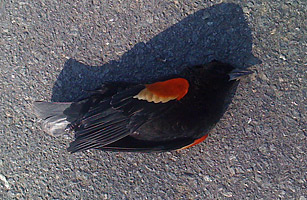
Mass Death of Birds, Arkansas Some residents in an Arkansas town must have felt transported to an earlier age of superstition when, over the first weekend of the new year, thousands of red-winged blackbirds fell dead from the sky. Like a grim omen, the same phenomenon occurred two days later, with some 500 blackbirds dropping dead in Louisiana. Scientists have puzzled over what killed them, ruling out disease or some form of poisoning. Instead, initial autopsies revealed internal trauma and hemorrhaging, possibly as a result of some violent midair collision among the blackbirds, who tend to fly in very tight formations. They could have also been disoriented by a passing thunderstorm and waterlogged by its rainfall. In any event, EPA officials swiftly arrived on the scene, wearing gas masks and fully covered in hazmat gear while cleaning away the corpses. These blackbirds certainly won't be baked in a pie.
bees colony collapse It started in 2006. Scores of honeybees began dying for seemingly no reason, prompting scientists to come up with the term "colony collapse disorder." According to the Department of Agriculture, reported bee-colony death rates in the U.S. were 29% in 2009, rising to 34% in 2010. And although a handful of plausible explanations have been offered — fungal infection, pesticides, climate change — no one really knows why they're dying. But it's not just honeybees: a recent study by the University of Illinois suggests that the four main types of bumblebee populations have plummeted more than 90% in the past 20 years.
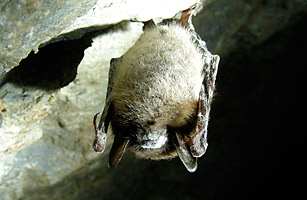
bats white nose A mysterious fungal disease has been killing bats across the U.S. since the first cases were reported in New York in 2006. More than 1 million bats have died in the 14 states and two Canadian provinces where the so-called white-nose syndrome has been identified in the nocturnal mammals. The fungus itself doesn't kill the creatures, but rather attacks the hibernating animals on their mouth and nose and prevents them from sleeping. When they are aroused from their slumber, the bats leave their caves for food and burn up body-fat reserves, eventually freezing or starving to death. Wildlife commissions across the nation have ordered the closure of hundreds of caves and abandoned mines until a source of the disease and a possible cure or treatment can be identified.
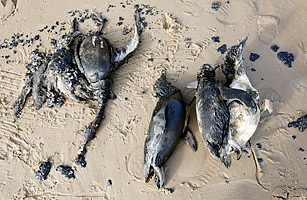
dead penguins Over the course of two months in 2009, millions of sardines, thousands of flamingos, hundreds of penguins and nearly 60 pelicans died in seemingly unrelated incidents. First, it was the penguins. About 1,200 were found dead in late March on a remote beach in southern Chile. Next, in April, millions of sardines washed ashore nearby. Then thousands of the rare Andean flamingo abandoned their nests in the north of Chile, leaving their 2,000 chicks to die in their shells. Lastly, in late May, nearly 60 pelicans were found dead on the South American nation's central coast. What's worse, no one could say concretely why these animals had died. While some pointed to global warming, overfishing, pollution or disease, most blamed Chile's especially dry and hot 2009 summer.

Monday, January 3, 2011

The Bloody Countess

Countess Elizabeth Bathory, Elizabeth (Erzsebet) Bathory ( 7 August 1560 – 21 August 1614), was a Hungarian countess from the renowned Bathory family, has often been described as “Countess Dracula.” She is possibly the most prolific female serial killer in history and is remembered as the "Blood Countess" and as the "Bloody Lady of Cachtice", after the castle near Trencsén (Trencín), in the Kingdom of Hungary, where she spent most of her adult life. The Báthory family defended Hungary against the Ottoman Turks. After her husband's death, she and four collaborators were accused of torturing and killing hundreds of girls and young women, with one witness attributing to them over 600 victims, though she was only convicted on 80 counts. In 1610, she was imprisoned in Cachtice Castle, where she remained bricked in a set of rooms until her death four years later. She was never formally tried in court. The case has led to legendary accounts of the Countess bathing in the blood of virgins in order to retain her youth. These stories have led to comparisons with Vlad III the Impaler of Wallachia, on whom the fictional Count Dracula is partly based, and to modern nicknames of the Blood Countess, Bloody Countess and Countess Dracula. The Bathory family was an old and illustrious one—one of the oldest in Transylvania in fact.

The family traced its descendency from Vid Bathory, a legendary and mighty warrior who had allegedly slain a dragon with a mace in what is now eastern Romania. This may have created the motif for the Romanian Christian knight Iorgi—also said to have killed a dragon— who later became St. George, patron saint of England. They were also related by what looks to have been incestuous marriages amongst various other members of similar clans. Her mother, Anna Bathory, was the sister of King Stephen of Poland, and her father Iorgi (George—her mother’s third husband) was the ruler of several countries.

However, instances of inbreeding had led to rumours of madness and monstrous births in former years. Elizabeth Bathory was born into this troubled lineage in 1560. Her mother was a devout Calvinist and an exceptionally strong character, and her father, George, was a hard-working man who had held several administrative posts under the Hapsburgs. She had at least one elder brother, one of the many Stephens (a popular name among the male Bathorys) and two younger sisters, Klara and Sofia, who disappeared from history without trace. In 1571 at age 11, Elizabeth was promised in marriage to the fifteen yearold Count Ferenc (Francis) Nadasdy, fabulously wealthy and reckoned to be one of the most eligible bachelors in Hungary at that time.

Such young betrothals were not uncommon and were usually for political reasons rather than any sort of romantic notions. In order to acquire the notable family name, Francis changed his own to that of Bathory, giving him the tradition of that family, as well as its notoriety. Francis and Elizabeth waited four years to marry, finally doing so on 8th May 1575. Elizabeth was sent from the Bathory castle and into the care of her mother-in-law, the formidable Lady Ursula Kasnizsai. Whilst she was at the court of Lady Nadasdy, plagues and epidemics raged through Eastern Europe, carrying away the poor and wretched in the villages of Hungary.

The tides of illnesses and disease, however, simply lapped around the walls of the castle at Savarin, keeping everyone there confined. Elizabeth found herself increasingly under the control of her severe and dominant mother-in-law. It was around this time that she was, according to legend, visited by a “black stranger,” perhaps a forest demon to whom she is said to have given herself. What actually might have transpired is that she had an affair with one (or more) of the servants, leading to the supposition that she may very well have been sexually promiscuous. When her mother-in-law died, Elizabeth joined her husband at the remote Csejthe Castle. 


Read more at The Bloody Countess

Wednesday, December 22, 2010

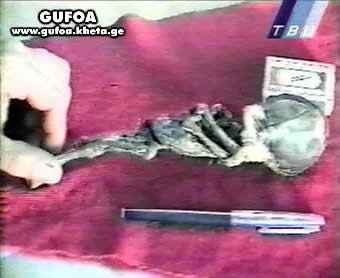
Alionshenka-the-Alien - Russian 'Kyshtym' Alien

Mysterious dwarfish alien brutally murdered in Russia's remote village

Researchers looking into the case of “Alionshenka the Alien” have arrived at a sensational conclusion: the mysterious creature did not catch his death of cold as previously thought. They believe the supposed alien was killed.

“He didn’t die from natural causes,” said Vadim Chernobrov, a coordinator with the public research center Kosmopoisk. “We found out that his skull had been fractured,” Chernobrov added.

The mysterious dwarf was found near the town of Kyshtym of the Chelyabinsk region. Stanislav Samoshkin is a morbid anatomist who performed autopsy on the body of the dwarf in a local hospital. He was the first to claim that the creature was a non-human being.

“The human skull consists of six bones. The skull of that creature was made up of four bones,” Samoshkin said.

Russian and foreign researchers have been trying to unravel the mystery of the “Uralian alien” for eleven years. The story looks like a detective novel in progress. The body of the dwarf was reportedly stolen. The key witness to the case, an old woman who actually named the dwarf “Alioshenka”, died a sudden death.


Researchers believe that Tamara’s account is a true story. She has been repeating it word by word for years without adding up any new details.

“He was giving off that smell, you know, one of a kind. You can’t take it for any other smell. Actually, the smell was pretty agreeable yet somewhat nauseous at the same time. And he didn’t pass any liquid or solid waste matter. He was sweating, and that was all. I saw the mother-in-law wipe the sweat off his face with a rag,” Tamara added.

The old woman died in a hit-and-run accident in August 1999. She was knocked down by a car just a few days before a team of researchers arrived in the town from Moscow. Researchers phoned her relatives shortly before the accident occured. Academician Mark Milkhiker was going to put Prosvirina in a state of hypnosis, a method used for helping the patient recover information buried in his subconscious.

Prosvirina’s relatives are confident that the death of the old woman was not an accident.

“You can hardly see a vehicle crossing this town during the day. Where the hell did that car come from?” Tamara asked.  


Read more at Alionshenka-the-Alien - Russian 'Kyshtym' Alien

Monday, December 13, 2010

Mona Lisa's Eyes Reveal Code

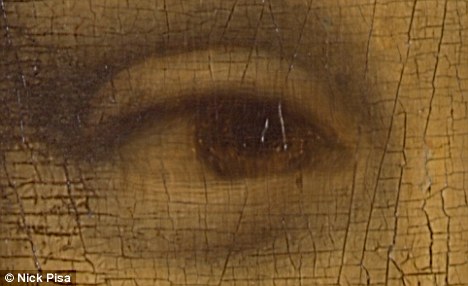
Art detectives have discovered tiny letters and numbers placed in the eyes of the Mona Lisa.

Like something out of Dan Brown's Da Vinci Code the tiny letters have been identified for the first time under magnification, in the right eye the letters spell out Da Vinci's own initials LV suggesting that he placed them there deliberately.

Intrigue is usually focused on her enigmatic smile.

But the Mona Lisa was at the centre of a new mystery yesterday after art detectives took a fresh look at the masterpiece – and noticed something in her eyes. 

Hidden in the dark paint of her pupils are tiny letters and numbers, placed there by the artist Leonardo da Vinci and revealed only now thanks to high-­magnification techniques.

Experts say the barely distinguishable letters and numbers represent something of a real-life Da Vinci code.

The revelation could have come straight from the pages of Dan Brown’s best-seller The Da Vinci Code, in which the Mona Lisa is said to contain hidden clues about the Holy Grail.

Silvano Vinceti, president of Italy’s National Committee for Cultural Heritage, which spotted the symbols, said: ‘To the naked eye the symbols are not visible but with a magnifying glass they can clearly be seen.

‘In the right eye appear to be the letters LV which could well stand for his name, Leonardo da Vinci, while in the left eye there are also symbols but they are not as defined.

‘It is very difficult to make them out clearly but they appear to be the letters CE, or it could be the letter B.

‘In the arch of the bridge in the background the number 72 can be seen or it could be an L and the number 2.

‘You have to remember the ­picture is almost 500 years old so it is not as sharp and clear as when first painted.

‘From the preliminary investigations we have carried out we are confident they are not a mistake and were put there by the artist.


Read more at Mona Lisa Mystery


The Underground Army of Terracotta Warriors

An old Chinese saying says, “treat death as life.” In China, rulers took this saying very seriously. After death they were buried with lavish supplies of dishes, food, silk and musical instruments. In earlier times living things such as wives, servants, or pets were also buried with the Emperor, often still alive. The afterlife was so important to people because it was believed to be a prolongation of life. Everything that was buried in the tomb was thought to be a necessity for one who wanted to be prepared for a grand afterlife. In Lintong County, thirty-five kilometers east of the Chinese city Xi’an, a tomb was found that contained a whole army, armed and ready for battle. This army was created for burial complex of the first Emperor of China, Emperor Qin Shihuang .

Qin Shihuang was the first emperor of the Qin dynasty. He was known as a great leader and a conqueror of many lands. He was a destroyer, a builder, and an unforgiving tyrant. Qin Shihuang's accomplishments turned China into a great empire. He formed a centralized government, standardized the Chinese currency and script, and set up a code of laws. He also uniformed the system of measures and built many roads. One of his greatest accomplishments is considered to be constructing and building one half of what today is the Great Wall of China. While the pits with Qin Shihuangs imperial army has been dug up, the actual tomb has not. The supposed contents of the mausoleum are by the tellings of the grand historian, Sima Qian.

In his historical records dated 1 B.C Sima Qian described how the tomb was made and what was put inside it. A project to uncover the tomb though, was started a few years ago but because of a lack of funds, it came to a screeching halt. Yuan Zhongyi is the head of a small group of archaeologists working on the site of the tomb. So far, only a fifth of the fifty-one square mile tomb has been uncovered. Scientific know-how and reliable technology are scarce making it even harder to fund the excavation of the mausoleum.

Many perishable items such as silk and wood have remained inside the tomb for almost two thousand years. The tomb would answer many questions formed by the mysterious terra-cotta army. The army was actually not meant to be seen. It was made to be a “spirit army” and was not intended for display. Inside the pits it was noticed that all the figures face east. They were thought to be this way because Qin had many armies in the east that he had conquered and could have been suspicious of them. He would have wanted to be ready for battle, even in death. All the pits put together represent Qin Shihaung’s actual imperial guards that were stationed at the east of the capitol. The layout of the soldiers and horses were a replica of what Qin’s Imperial army looked like during his reign from 221—210 BC.

The first pit is thought to be the right-wing infantry division. The second was the left-wing cavalry division. Pit number three was the command unit and the fourth pit was thought to be the central force. The first life-size terra-cotta figure was discovered in the 1920’s. A Chinese peasant was digging a well and came upon it. The water disappeared suddenly from the well and the peasant, thinking this was a sign of evil, quickly re-covered what he had dug. The soldier, once again, was buried. It wasn't found again until the 1970’s when archeologists dug up what was soon to be the first actual pit discovered. 
The first pit was discovered in 1974. It is the largest of the four pits and covers almost four acres. It is five meters deep and contains eleven parallel corridors and nine access ramps on the sides . There are nearly 6,000 military men inside the first pit. They make up all parts of the army such as bowmen, archers, charioteers, men with arms, and men without arms. They stand in a contemporary military formation made up of 4 parts; the vanguard, the main force, the outer flanks, and the rear guard. The main force contains six horse-drawn wooden chariots with charioteers. Horses that are about 1.5 meters high and 2 meters long lead these chariots. Over the first pit is the exhibition hall of the museum for Qin Shihuang’s terra-cotta warriors. It is about 230 meters long and has a roof made of glass to allow the sunlight to illuminate the army and horses. 

Tuesday, December 7, 2010

The Incorruptibles

Incorruptibility is a Roman Catholic belief that supernatural intervention allows some human bodies to avoid the normal process of decomposition after death. Bodies that reportedly undergo little or no decomposition, or delayed decomposition, and are sometimes referred to as incorrupt or incorruptible or as an incorruptible. Although it is recognised as supernatural in Roman Catholicism, it is no longer counted as a miracle in the recognition of a saint.

Incorruptibility is seen as distinct from the good preservation of a body, or mummification. Incorruptible bodies are often said to have the odour of sanctity, exuding a sweet or floral, pleasant aroma. As of yet, none of these cases has been verified scientifically.

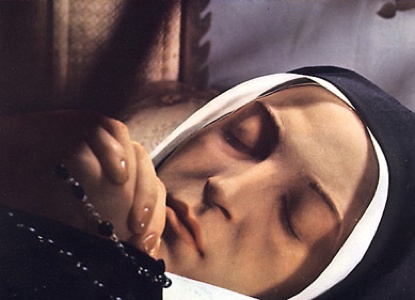
Incorruptibles are the bodies of saints that miraculously do not decay -- even after decades or even a century or more. The bodies often lie in public view in churches and shrines. Saints include: St. Clare of Assisi, St. Vincent De Paul, St. Bernadette Soubirous, St. John Bosco, Blessed Imelda Lambertini, St. Catherine Labouré, and many others. Even the body of Pope John XXIII is reputed to be remarkable well preserved. The case of Blessed Margaret of Metola is recounted in the Fortean Times article, Saints Preserve Us: "She died in 1330, but in 1558 her remains had to be transferred because her coffin was rotting away. Witnesses were amazed to find that like the coffin, the clothes had rotted, but Margaret's crippled body hadn't."


1. Saint Bernadette of Lourdes, Died 1879

Saint-Bernadette-of-Lourdes
St Bernadette was born Bernadette Soubirous in Lourdes, France. From February to July 1858, she reported eighteen apparitions of “a Lady.” Despite initial skepticism from the Roman Catholic Church, these claims were eventually declared to be worthy of belief after a canonical investigation. After her death, Bernadette’s body remained “incorruptible”, and the shrine at Lourdes went on to become a major site for pilgrimage, attracting millions of Catholics each year.


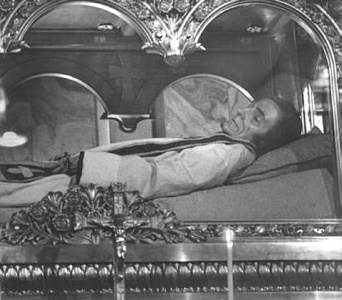
2. Saint John Vianney, Died 1859

saint john vianney
St. Jean Baptiste Marie Vianney (May 8, 1786 – August 4, 1859) was a French parish priest who became a Catholic saint and the patron saint of parish priests. He is often referred to, even in English, as the “Curé d’Ars” (the parish priest of the village of Ars). He became famous internationally for his priestly and pastoral work in his parish due to the radical spiritual transformation of the community and its surroundings. 


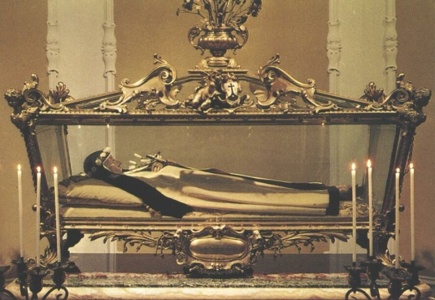
3. Saint Teresa Margaret, Died 1770

saint-teresa-margaret-body
In March 19, 1934, Pope Pius XI entered Blessed Teresa Margaret of the Sacred Heart in the register of saints. In Germany, the new saint is virtually unknown outside of the Carmelite Order. Her life was quiet and hidden. She died on March 7, 1770 at the age of 22, and of this short lifespan, she spent five years in the Carmelite monastery in Florence. She performed no brilliant, attention-getting deeds, nor did her reputation reach the wider world. She spent her life living quietly and with virtue.


Read more on The Incorruptible Saints

Monday, December 6, 2010

Hidden Shambhala Mountains

For thousands of years rumors and reports have circulated that somewhere beyond Tibet, among the icy peaks and secluded valleys of Central Asia, there lies an inaccessible paradise, a place of universal wisdom and ineffable peace called Shambhala. Legends say that only the pure of heart can live in Shambhala, enjoying perfect ease and happiness and never knowing suffering, want or old age. Love and wisdom reign and injustice is unknown. The inhabitants are long-lived, wear beautiful and perfect bodies and possess supernatural powers; their spiritual knowledge is deep, their technological level highly advanced, their laws mild and their study of the arts and sciences covers the full spectrum of cultural achievement, but on a far higher level than anything the outside world has attained. By definition Shambhala is hidden. Of the numerous explorers and seekers of spiritual wisdom who attempt to locate Shambhala, none can pinpoint its physical location on a map, although all say it exists in the mountainous regions of Eurasia. Many have also returned believing that Shambhala lies on the very edge of physical reality, as a bridge connecting this world to one beyond it.

In Tibetan Buddhist tradition, Shambhala (also spelled Shambala or Shamballa; Tibetan: bde 'byung, pron. De-jung) is a mythical kingdom hidden somewhere in Inner Asia. It is mentioned in various ancient texts, including the Kalachakra Tantra and the ancient texts of the Zhang Zhung culture which predated Tibetan Buddhism in western Tibet. The Bön scriptures speak of a closely related land called Olmolungring. Whatever its historical basis, Shambhala gradually came to be seen as a Buddhist Pure Land, a fabulous kingdom whose reality is visionary or spiritual as much as physical or geographic. It was in this form that the Shambhala myth reached the West, where it influenced non-Buddhist as well as Buddhist spiritual seekers--and to some extent, popular culture in general. The Sanskrit name means “place of peace, of tranquility.” Though it’s true location has never been found, its beginnings are unknown and its existence is unproven, Shambhala is recognized and honored by at least eight major religions, and is regarded by most esoteric traditions as the true center of the planet and the world’s spiritual powerhouse.

It is said to be inhabited by adepts from every race and culture who form an inner circle that secretly guides human evolution. This remarkable kingdom reputedly exists both above and below ground, with a network of tunnels hundreds of miles long. “Cars of strange design flash along their length,” writes Andrew Tomas, author of Shambhala, Oasis of Light, “and they are illumined by a brilliant, artificial light which affords growth to the grains and vegetables and long life without disease to the people.”

Victoria LePage writes in her superbly researched book, Shambhala: “Modern society is in desperate need of a zone of order, a mandalic center within spiraling chaos.” And she maintains, the quest for this center leads us directly to Shambhala, which she calls “The World Axis.” LePage, who has been studying Shambhala for nearly fifty years, says that many marvels are supposed to have been seen in this underground world: museums, libraries, stores of jewels, and technological inventions thousands of years before their time. And, according to Chinese lore, the aircraft and space vehicles of the Immortals of Shambhala journey among the stars, observing the habitats of other races and kingdoms. It would be easy to dismiss Shambhala as pure mythical fantasy, were it not for a very credible explorer who searched for, found and returned to tell us something about his experiences in Shambhala. 


Read more on Shambhala Mountains

The Sleeping Prophet

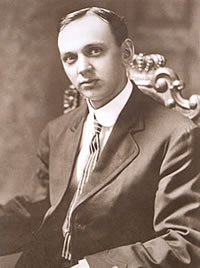
Born in Kentucky 1877, Edgar Cayce was known as “the Sleeping Prophet,” because he uttered predictions and medical cures while in a deep trance. Until his death in Virginia, 68 years later, Cayce dictated thousands of “life-readings” he allegedly obtained from a kind of spiritual record he claimed to be able to read while experiencing an altered state of consciousness. Until his 47th year, he never uttered a word about Atlantis. But in 1922, he suddenly began recalling life in a place with which he was otherwise allegedly unfamiliar. Cayce said that his trance statements should be taken into account only to the extent that they led to a better life for the recipient. Moreover, he invited his audience to test his suggestions rather than accept them on faith. Other abilities that have been attributed to Cayce include astral projection, prophesying, mediumship, viewing the Akashic Records or "Book of Life", and seeing auras. Cayce said he became interested in learning more about these subjects after he was informed about the content of his readings, which he reported that he never actually heard himself.

Cayce’s descriptions of the doomed civilization are sometimes remarkable for their uncanny credibility. For example, his portrayal of the migration of Atlanteans into the Nile Valley following the destruction of their Empire is entirely convincing. Many otherwise obscure names of persons and places he associates with the Atlantis experience likewise seem to reflect real events. His son, Hugh Lynn Cayce, knew his father “did not read material on Atlantis, and that he, so far as we know, had absolutely no knowledge of the subject.” The evocative, often verifiable detail of his readings in which Atlantis was described is all the more astounding when we realize he knew little about the vanished culture in his waking hours. As his son wrote: They are the most fantastic, the most bizarre, the most impossible information in the Edgar Cayce files. If his unconscious fabricated this material or wove it together from existing legends and writings, we believe that it is the most amazing example of a telepathic-clairvoyant scanning of existing legends and stories in print or of the minds of persons dealing with the Atlantis theory.

Edgar Cayce’s conscious ignorance of the sunken civilization is not surprising. His formal education was meager, and his points of reference were more spiritual than historical or academic. His grasp of the past was often biblical, rather than scholastic. It seems clear then, that the subject was outside the purview of both his background and essentially Christian view of the world. But his readings are selfevidently plausible, because they often contain information that made little or no sense at the time they were uttered, but have been since confirmed by subsequent verification.

Perhaps most impressive of all is that obscure, even fleeting, references he made to Atlantis during the early 1920s were occasionally repeated only once, but within an exact same frame of reference, after more than two decades. Persuasive as these give even skeptics pause, and encourage many investigators, regardless of their spiritual beliefs, to reconsider everything he had to say about Atlantis. His prediction of finding its first physical remains not far from the United States was a case in point described in the “Bimini” entry. Until Cayce spoke of Bimini, and even long after some of his “life-readings” were published, no researchers bothered to consider that small island as a possible remnant of Atlantean Civilization. But how did the massive stone structure come to lie at the bottom of the sea? According to Cayce’s “life-readings,” the Atlantean lands underwent three major periods of inundation. They did not disappear altogether in a single cataclysm. The natural disaster described by Plato represented only the final destruction of Atlantis. 


Read more on The Sleeping Prophet

LinkWithin

Related Posts with Thumbnails