According
to legends, It is written that in 1684 many young girls who lived in
the area met the devil in their dreams. After seducing them, he sent
them to visit the monks at Lucedio's Abbey. The girls managed to corrupt
the abbey and convert the monks to Satanism. From that moment on, a
long history of evil rituals, tortures, homicides, cruelty and even
cases of child molestation began. Things were so twisted that the abuse
reached Rome and Pope Pio VI closed the Abbey. That was on September 10,
1784 - one hundred years later.
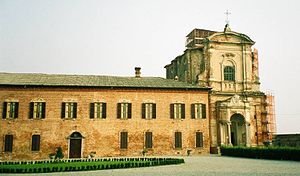
Lucedio Abbey is a haunted monastery in Italy that was featured
on Scariest Places on Earth and Ghost Hunters International. It is a
place where torture, murder and disturbing black magic rituals were
performed and many say it is one of Italy's most haunted places. Lucedio
Abbey dates back to 1123. During that time, Cistercian monks resided
there and introduced rice cultivation to the area. What nobody suspected
was that these monks had lost faith in God and turned their backs on
Christianity. The evil monks took to worshipping the devil and performed
horrific and disturbing black magic rituals within the walls of the
holy building.
The Ghosts of LUCEDIO ABBEY : Unexplained Encounters

According
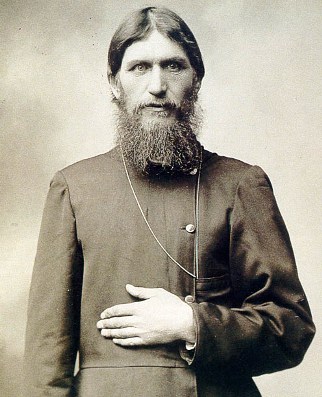
to legends, Russian mystic Grigori Rasputin (1869-1916) was first
poisoned with enough cyanide to kill ten men, but he wasn’t affected. So
his killers shot him in the back with a revolver. Rasputin fell but
later revived. So, he was shot again three more times, but Rasputin
still lived. He was then clubbed, and for good measure thrown into the
icy Neva River.
The mysterious Grigory Efimovich Rasputin, a peasant who claimed powers
of healing and prediction, had the ear of Russian Tsarina Aleksandra.
The aristocracy could not stand a peasant in such a high position.
Peasants could not stand the rumors that the tsarina was sleeping with
such a scoundrel. Rasputin was seen as "the dark force" that was ruining
Mother Russia.
To save the monarchy, several members of the aristocracy attempted to
murder the holy man. On the night of December 16-17, 1916, they tried to
kill Rasputin. The plan was simple. Yet on that fateful night, the
conspirators found that Rasputin would be very difficult to kill.
The Mad Monk
Tsar Nicholas II and Tsarina Aleksandra (the emperor and empress of
Russia) had tried for years to give birth to an heir. After four girls
were born, the royal couple was desperate. They called in many mystics
and holy men. Finally, in 1904, Aleksandra gave birth to a baby boy,
Aleksei Nikolayevich. Unfortunately, the boy who had been the answer to
their prayers was afflicted with "the Royal disease," hemophilia. Every
time Aleksei began to bleed, it would not stop. The royal couple became
frantic to find a cure for their son. Again, mystics, holy men and
healers were brought in. Nothing helped until 1908, when Rasputin was
called upon to come aid the young tsarevich during one of his bleeding
episodes.
Rasputin the Mad Monk - The Immortal Russian

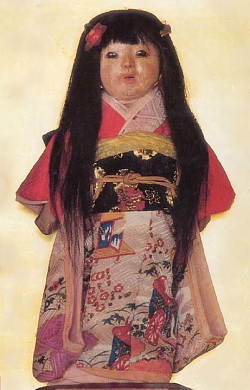
The haunted japanese doll Okiku, possessed by the spirit of a 10 year old girl who took refuge inside it. Some time after the funeral
of the girl, the hair of the doll began to grow. Although the doll’s
hair is cut regularly, the hair grows again and again. A mysterious doll
possessed by the spirit of a child has captured the curiosity of people
across Japan for decades. The legendary Okiku doll, named after the
girl who long ago used to play with it, is a 40-centimeter (16-in) tall
kimono-clad figure with beady black eyes -- and hair that grows.
The Okiku doll has resided at the Mannenji temple in the town of
Iwamizawa (Hokkaido prefecture) since 1938. According to the temple, the
traditional doll initially had
short cropped hair, but over time it has grown to about 25 centimeters
(10 in) long, down to the doll's knees. Although the hair is
periodically trimmed, it reportedly keeps growing back.
It is said that the doll was originally purchased in 1918 by a 17-year-old boy named Eikichi Suzuki while visiting
Sapporo for a marine exhibition. He bought the doll on Tanuki-koji --
Sapporo's famous shopping street -- as a souvenir for his 2-year-old
sister, Okiku. The young girl loved the doll and played with it every
day, but the following year, she died suddenly of a cold. The family
placed the doll in the household altar and prayed to it every day in
memory of Okiku.
Some time later, they noticed the hair had started to grow. This was
seen as a sign that the girl's restless spirit had taken refuge in the
doll.
This doll was originally purchased in 1918 by a Eikichi Suzuki in Sapporo, where he saw a beautiful Japanese doll
with a Kimono. Eikichi bought this doll for her sister, who is two
years old named Okiku. She loved this doll and play it every day. But
unfortunately, Okiku died shortly afterwards of a fever. Then at his funeral,
family want to put a doll into his coffin, but somehow they forgot. The
girl’s family then put the doll on the household altar and pray for
every day in order to commemorate Okiku.
Some time later, they saw the hair began grows. According to this story
is the spirit of the girl who took refuge inside the doll.
Okiku - Ghost Story of Japanese Haunted Devil Doll
In
Staffordshire, England, there is a sculpture that has invited the wits
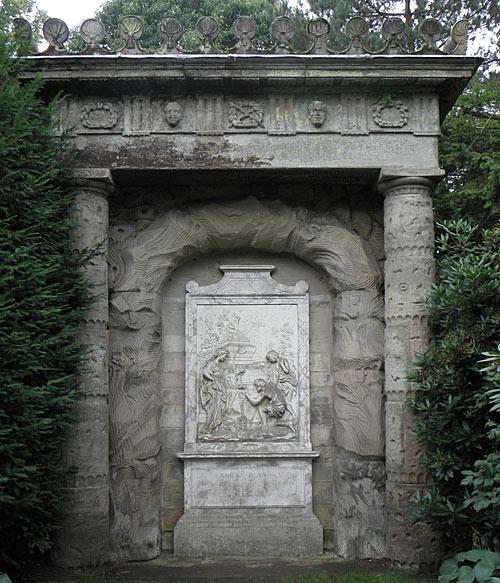
and intellect of many intellectuals in an attempt to decode an inscription reading DOUOSVAVVM. Although the Shepherd’s Monument was constructed back in the 18th century, the letters found therein were never solved, even 250 years after it was completed. The Shugborough inscription is a sequence of letters - O U O S V A V V, between the letters D M - carved on the 18th-century Shepherd's Monument in the grounds of Shugborough Hall in Staffordshire, England, below a mirror image of Nicolas Poussin's painting,
the Shepherds of Arcadia. It has never been satisfactorily explained,
and has been called one of the world's top uncracked ciphertexts. The
inscription became widely known after being mentioned in the 1982 book
The Holy Blood and the Holy Grail by Michael Baigent, Richard Leigh, and
Henry Lincoln.

The monument was built sometime between 1748 and 1763, commissioned by
Thomas Anson, paid for by his brother, Admiral George Anson, and
fashioned by the Flemish sculptor Peter Scheemakers. The relief copy of
the Poussin painting is contained within a rustic arch, and shows
a woman and three shepherds, two of whom are pointing to a tomb. On the
tomb is carved the Latin text Et in arcadia ego ("I am also in Arcadia"
or "I am, even in Arcadia"). The carving displays a number of small
alterations from the original painting, and an extra sarcophagus has been placed on top of the main tomb. Above the Poussin scene are two stone heads, one showing a smiling bald-headed man, the other bearing a likeness to the goat-horned Greek god Pan.
Shugborough Inscription - Shepherd’s Monument Inscription

In
popular medieval legend, a White Lady is fabled to appear by day as
well as by night in a house in which a family member is soon to die.
According to The Nuttall Encyclopaedia, these spirits were regarded as
the ghosts of deceased ancestresses.
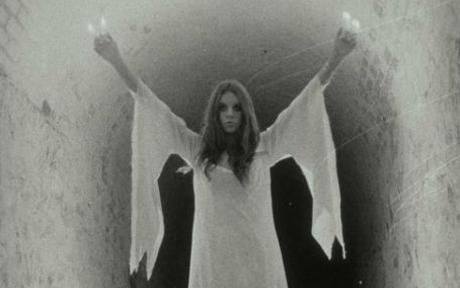
Castle Huntly, Scotland, is said to be haunted by a young woman dressed
in flowing white robes. There are various stories concerning her
history, one of which is that she was a daughter of the Lyon family who
occupied the castle in the 17th century. When her affair with a
manservant was discovered she was banished to a tower on the
battlements. Unable to endure her suffering, she threw herself to her
death from the tower. The ghost of the White Lady has been seen a number
of times over the years, often on the grounds surrounding the castle.
She has also been seen in the room in which she was imprisoned.
Darwen is reportedly haunted by a ghost. In Darwen's old cemetery there is a gravestone of a supposed white lady,
whose eyes open when they are touched. There have been reported
sightings of her ghost walking around the area at night, seeking her
child. The white lady of Darwen is said to have died during childbirth,
or to have been raped and murdered by a group of men who stole her
child. She is said to manifest in response to the spoken phrase "White
lady, white lady, I stole your black baby", before attacking the speaker
and causing them to faint. Local folklore says that the white lady of
Darwen killed a group of teenagers who were on a camping trip in the
White Hall Park in the late 1980s, within two hours of them visiting her
grave.
The White Lady of Willow Park is native to a small,
heavily-wooded park of Newton-le-Willows, Merseyside, in northwest
England. She is thought to be the tormented spirit of a bride who was
drowned in the lake by her husband on their wedding night. Variations on
her method of death include being bricked up in a cave and hanging
herself in the kitchen.
Urban Legends of White Lady Ghost

Initially
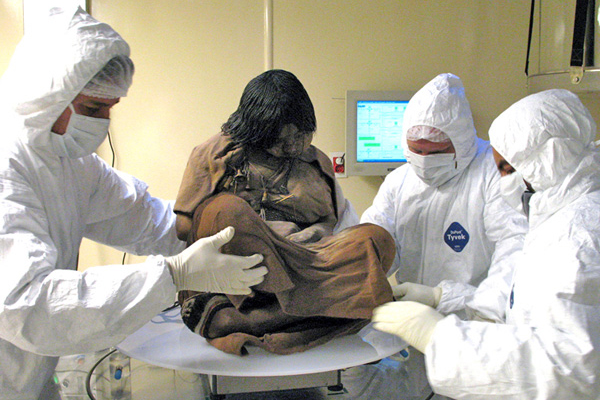
this might look to you like any normal girl being treated by a
doctor,the girl in the photo is not any normal living girl but the mummy of a 15 year old child who has been dead for about 500 years.
She was found in 1999 near Llullaillaco's 6739 meter summit. An
Argentine-Peruvian expedition found the perfectly preserved body and she
was nicknamed "La doncella" which means “The maiden”. According
to the Inca she was chosen to go and live with the gods. But in reality
she was a sacrifice to the Inca Gods and had been brutally killed in the
name of religion.
Scientists say that her organs are intact and its as if she had died
just a few weeks ago. From testing the samples of her hair they could
determine the type of diet she was on before her death. This lead to the
discovery that the Incan fattened their children before killing them.
Months or even years before the sacrifice pilgrimage these children were
given diets which were those of the elite, consisting of maize and
animal proteins.
Judging from the condition of the body, it is believed that she was
drugged and left to die in the mountains. It would not have taken much
time for her to die due to the high exposure. The Incan high priests
took their victims to high mountaintops for sacrifice. As the journey
was extremely long and arduous, especially so for the younger victims,
coca leaves were fed to them to aid them in their breathing so as to
allow them to reach the burial site alive. Upon reaching the burial
site, the children were given an intoxicating drink to minimize pain,
fear, and resistance, then killed them either by strangulation, a blow
to their head or by leaving them to lose consciousness in the extreme
cold and die of exposure.
Mummy Juanita - Inca Girl Frozen For 500 Years

The
game was played as night fell upon the region using three separate
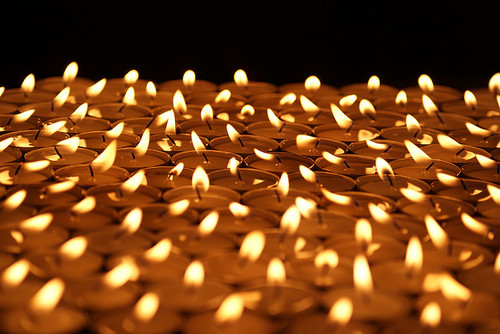
rooms. In preparation, participants would light 100 andon in the third
room and position a single mirror on the surface of a small table. When
the sky was at its darkest, guests gathered in the first of the three
rooms, taking turns orating tales of ghoulish encounters and reciting
folkloric tales passed on by villagers who claimed to have experienced
supernatural encounters. These tales soon became known as kaidan. Upon
the end of each kaidan, the story-teller would enter the third room and
extinguished one andon, look in the mirror and make their way back to
the first room. With each passing tale, the room slowly grew darker and
darker as the participants reached the one hundredth tale, creating a
safe haven for the evocation of spirits.
However, as the game reached the ninety-ninth tale, many participants
would stop, fearful of invoking the spirits they had been summoning.
While the exact origins of Hyakumonogatari Kaidankai are unknown, it was
believed that it was first played amongst the samurai class as a test
of courage. In Ogita Ansei's 1660 nursery tale "Otogi Monogatari" a
version of the game was described in which the narrative tells of
several young samurai telling tales in the Hyakumonogatari Kaidankai
fashion. In the tale, as one samurai finished the one hundredth tale, he
began to extinguish the candle when suddenly he sees a giant gnarled
hand descend upon him from above. While some of the samurai cowered in
fear, a swipe of his sword revealed the hand to be merely the shadow of a
spider.
At first, the game of Hyakumonogatari Kaidankai was popular amongst the
aristocratic warrior class, but it soon garnered favorable reputation
amongst the working class peasants and town people. With a heightened
interest in telling newer and original kaidan, people began scouring the
countryside for tales of the mysterious, many of which combined a
mixture of ghostly vengeance and elements of karma in Buddhism.
Japanese culture and heritage are rich with spirituality and
superstition. In Japan, you should "cleanse" yourself after going to a
funeral by throwing salt over your body. Cutting your fingernails in the
evening is bad luck, and so is using or referring to the number four
(homonym for death) or nine (homonym for suffering). However, few
practices are quite as fascinating as the 100 ghost stories game. This
was a popular parlor game called Hyakumonogatari Kaidankai, from the Edo
period (1603 - 1868). It worked as follows:
Urban Legend of 100 Candles Game - Hyakumonogatari Kaidankai

The
Bloody Benders were a family of serial killers who owned an inn and
small general store in Labette County of southeastern Kansas from 1871
to 1873. The family consisted of John Bender, his wife Mrs. Bender
(later referred to as Kate, Sr., since no one knew her given name), son
John, Jr., and daughter Kate. While Bender mythology holds that John and
Kate were brother and sister, contemporary newspapers reported that
several of the Benders' neighbors have stated that they claimed to be
married, possibly a common law marriage.
They are believed to have killed about a dozen travelers before their
crimes were discovered and the family fled, with their fate uncertain.
Much folklore and legend surrounds the Benders, making it difficult to
separate fact from fiction.
Background
Following the American Civil War, the United States government moved the
Osage Indians from Labette County, Kansas to a new Indian Territory
located in what would eventually be Oklahoma. The newly-vacant land was
then made available to homesteaders. In October 1870, five families of
spiritualists settled in and around Osage township of western Labette
County, approximately 7 mi (11 km) northeast of where Cherryvale would
be established seven months later. One of the families was John Bender
Sr. and John Bender Jr. who registered 160 acres (65 ha) of land located
adjacent the Great Osage Trail, which was then the only open road for
traveling further west. After building a cabin, a barn with corral and a
well, in the fall of 1871, Kate (Ma) Bender and her daughter Kate
arrived and the cabin was divided into two rooms by a canvas
wagon-cover. The Benders used the smaller room at the rear for living
quarters, while the front room was converted into a "general store"
where a few dry goods were sold. The front section also contained their
kitchen and dining table, where travelers could stop for a meal or even
spend the night. Ma and Kate Bender also planted a 2 acres (0.81 ha)
vegetable garden and apple tree orchard north of the cabin.
Bender family
John (Pa) Bender Sr. was around sixty years old and spoke very little
English. When he did speak it, it was so guttural that it was usually
unintelligible. Ma Bender, who also allegedly spoke very little English,
was 55 years of age and was so unfriendly that her neighbors took to
calling her a "she-devil". John Bender Jr. was around 25 years old,
handsome with auburn hair and mustache and spoke English fluently, but
with a German accent. John was prone to laughing aimlessly, which led
many to consider him a "half-wit". Kate Bender, who was around 23, was
cultivated and attractive and she spoke English well with very little
accent. A self-proclaimed healer and psychic, she distributed flyers
advertising her supernatural powers and her ability to cure illnesses.
She also conducted séances and gave lectures on spiritualism, for which
she gained notoriety for advocating free love. Kate's popularity became a
large attraction for the Benders' inn. Although the elder Benders kept
to themselves, Kate and her brother regularly attended Sunday school in
nearby Harmony Grove. The Benders' inn was a simple one room house
divided into living quarters and the kitchen and store area.
The Bloody Benders: Horror in the Old West

The
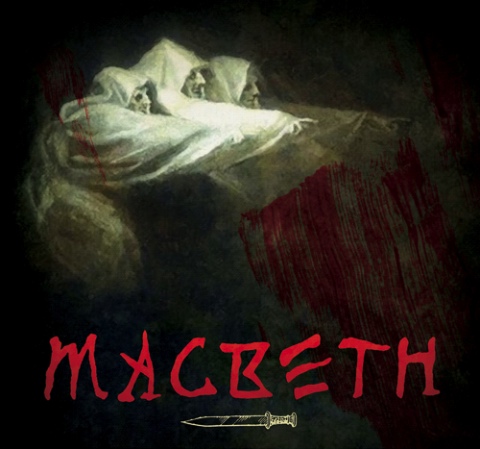
Scottish Play and the The Bard's Play are euphemisms for William
Shakespeare's Macbeth. The first is a reference to the play's Scottish
setting, the second a reference to Shakespeare's popular nickname.
According to a theatrical superstition, called the Scottish curse,
speaking the name Macbeth inside a theatre will cause disaster. A
variation of the superstition forbids direct quotation of the play
(except during rehearsals) while inside a theater.
Because of this superstition, the lead character is most often referred
to as the Scottish King or Scottish Lord. Sometimes Mackers is used to
avoid saying the name, mostly in North America.
As success or failure in the theater can be influenced by so many
intangible and unpredictable factors, it's not surprising that actors
and other theater types maintain a variety of long-standing
superstitions, which often are taken very seriously. (The most famous is
the insistence on saying "break a leg" rather than "good luck.")
Two such superstitions float around Macbeth. The first is that it's bad
luck to even say “Macbeth” except during rehearsal or performance. When
referring to the work one instead uses circumlocutions, such as “the
Scottish play” or “Mackers” or “the Scottish business” or “the Glamis
comedy” or just “that play." Some say this rule applies only when inside
a theater; it’s OK, therefore, to use the dread name in other settings –
like classrooms, for instance.
The remedy, if someone does happen to utter the unutterable, is to leave
the room, close the door, turn around three times, say a dirty word (or
spit, some say), then knock on the door and ask to be let back in. If
you can’t do all that, you simply quote from Hamlet, act 1, scene 4:
“Angels and ministers of grace defend us!”
The second superstition is that the play itself brings ill luck to cast
and crew, and many productions of Macbeth have, in fact, encountered
unfortunate circumstances. The supposed origin story for this is that
Shakespeare used “authentic” witches’ chants in the play; as punishment,
real witches cast a curse on the play, condemning it for all time.
The Curse of Macbeth

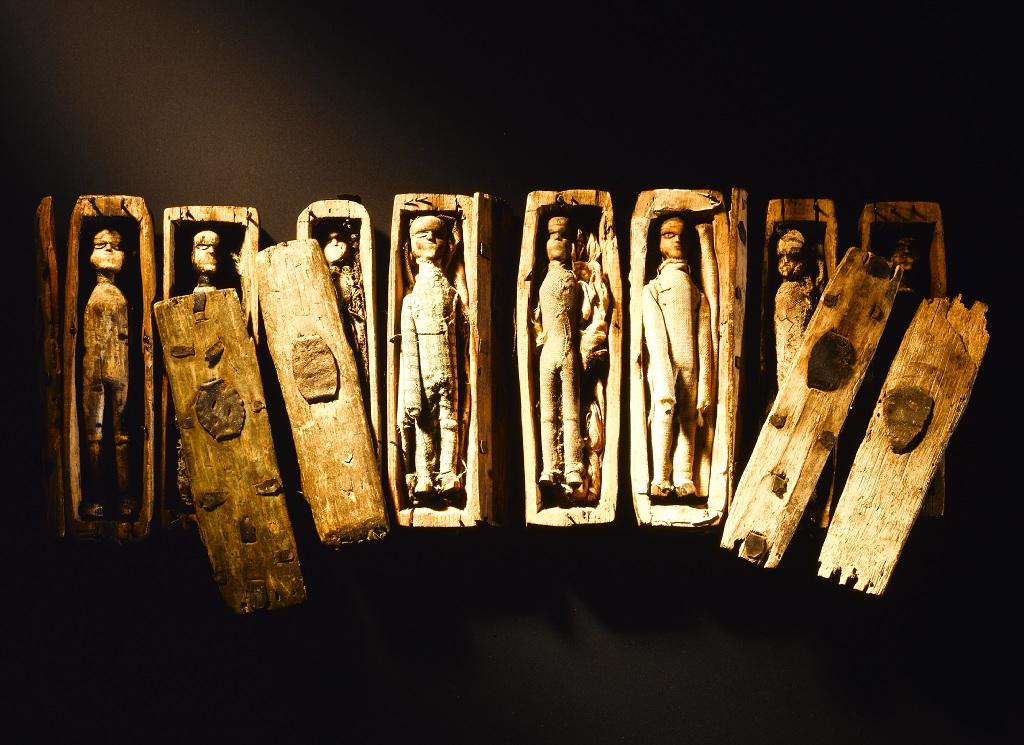
Set in Scotland's magnificent capital, Edinburgh, Murder dolls
is a tale of serial killers, Bodysnatchers and grisly science. The
story begins on a misty morning in 1836 with the discovery of 17
miniature wooden coffins. Inside each one, is an eerie, dressed doll.
The discovery of the dolls has led to some interesting theories –
everything from the work of a madman to tales of witchcraft. But some
believe that Edinburgh's miniature coffins may be connected to
Scotland's most notorious serial killers –Burke and Hare - two Irish
laborers who murdered seventeen victims in the 1800's. But how are the
dolls connected to the 17 murder victims – and who made them?
Burke and Hare are notorious even today, but in the time of
Ghosts of Albion their crimes are a matter of relatively recent memory.
Their murder spree, known as the West Port murders, began in Edinburgh
from late 1827 and continued for most of 1828. Their victims were
drugged and suffocated to keep them intact; the bodies were sold to a Dr
Robert Knox for dissection. In the end, a neighbour discovered the
body of their last victim and alerted the police. However, the evidence
of murder wasn't actually that good, and Hare was offered immunity if
he confessed and testified against Burke. Burke made his own confession
- in which he claimed that Dr Knox knew nothing of the origin of the
bodies they sold him - but was sentenced to death and hanged in January
1829.
Less well known is that Burke's lover (Helen M'Dougal) and Hare's wife
(Margaret, née Laird) were also implicated, though they were released
for lack of proof - both narrowly escaped death from an outraged public -
M'Dougal is thought to have left the country, while Margaret Hare's
dropped off the map. William Hare also dropped off the map, though
popular folklore invented a variety of painful ends for him. Despite
Burke's claim that Dr Knox was not involved, the scandal destroyed his
reputation in Edinburgh, and he went to London, and died in 1862.
At first theories on the dolls significance ranged from witchcraft
to child’s toys, but eventually it began to seem that the 17 tiny
figures could be effigies for the 17 murder victims a decade earlier.
Between 1827-1828 William Burke and William Hare lured in and murdered
their lodgers in a scheme to provide fresh bodies to the local anatomy
school. Dr. Robert Knox, a brilliant and well known local anatomy
lecturer purchased the bodies, and most likely knew that something was a
bit suspicious about his supply chain.
Mystery of Burke & Hare Murderdolls
One
of the most storied sites in all of southern New Jersey is a mysterious
body of water known as the Blue Hole. Located deep in the Pine Barrens
of Winslow, on the border of Camden and Gloucester Counties, this small
but legendary pool is said to not only be bottomless, but also a
frequent pit stop of the Jersey Devil.
A number of legends exist: that it is bottomless with powerful currents,
that the water is freezing cold year-round, and that the Jersey Devil
is active in the area.
New Jersey has probably spawned the most well known cryptozological,
paranormal oddity of the century, the Jersey Devil. The Beast, a
creature not scientifically proven to exist, has terrorized the
population of New Jersey for over 270 years. But in the back woods ,
hiding in the remote crevices of the Pine Barrens, there awaits a less
well known but equally mysterious legend, the Blue Hole.
Located deep in the Pine Barrens of Winslow Township, NJ, lies a
circular, perfectly crystal clear body of water(weird, as all sources of
water in the Pine Barrens are tea colored). This small but legendary
pool is not only said to be bottomless but a frequent pit stop of the
Jersey Devil, his personal portal to Hell, they say. Still as glass, the
water looks inviting, especially on a hot summer day. Yet locals warn
their children to stay away and whatever they do, don't swim in it.
Tales of unexplained whirpools and mysterious drownings have long been
part of the pools lore. For those who were lucky enough to get away have
claimed they felt an icy hand pulling them down into the chilly depths.

After people became afraid of it, the blue hole was largely abandoned.
Perhaps farmers and families in the area warned children against going
to the Blue Hole because the Jersey Devil lived there, and it would hurt
or steal them. Locals still go to the area and use it as a party spot.
There are many other 'blue holes' in the immediate vicinity, as well as
quicksand and other seasonal ponds and lakes that form from springs
seeping from high water table levels. What can not be so easily
explained is the color of the lake compared to other brackish waters in
the vicinit
The Devils Puddle - Legend Of The Blue Hole

There are legends and
myths that have been around for centuries and have seared themselves
into our minds and culture. Then there are those that have been brought
to life by way of modern technologies reminding us of nightmares that
should have been buried and forgotten. One such legend is known through
internet popularity as Slender man.
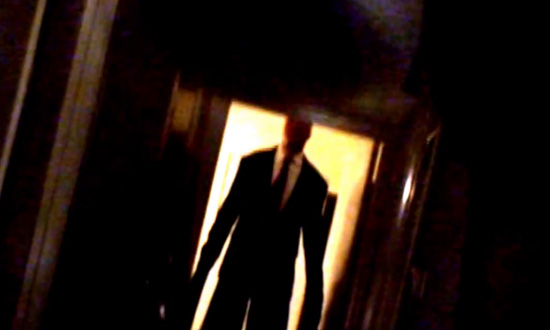
The creature known as Slender man is said to have the appearance of a
tall, lanky man in a black suit. Not so scary, right? Just wait.
He towers at six to seven feet with unusually thin limbs. His face, if
you can call it that, is featureless and white, though some say that it
can morph into whatever you fear the most. His arms, however, can
stretch out to grab his victims and bend in unnatural ways with long,
talon-like fingers used to scratch at the windows of children. Yes
that’s right. While he haunts everyone who has the misfortune to see
him, he prefers to devour those that are 16 and younger. He is also said
to have multiple arms sometimes seen as long tentacles used to ensnare
whomever catches his eye, or should I say, the void where his face
should be.
Slender man is a silent stalker that likes to hide in plain sight and is
usually spotted in wooded areas where he could blend in amongst the
trees and dark corners of the forest. When he finds his victim of
choice, he follows them home and upon being seen through the window, can
use a form of hypnosis that compels you to walk right into his spindly
arms. Usually glimpsed at a distance, once he’s close enough to get a
good look at, that’s when he slinks into your home appearing in dark
hallways or blank t.v. screens.
American legend says that he was once a man who was tortured viciously,
first being beaten with a log, then impaled with a 2 foot stick and hung
from a tree with his arms and legs pulled from their sockets.
When captured, you will wake to find Slender man standing above you. He
will ask one question and if you’re lucky and get it right, he breaks
both your arms and legs. But if you are wrong, then he slowly sticks his
fingers down your throat pulling out the heart. In circles on the
internet Slender man is claimed to be the creation of a website called
Somethingawful.com. Many say that this alone debunks the mysterious
legend and closes the case on the creature’s fictitious existence. Well,
not quite.
It appears that the Slender man myth goes back a lot farther than is
claimed. He is based on something called Der Grossman, meaning “tall
man”, which is the Germanic version. Legend says that children would
site him in the Black Forest days before their disappearance. All that
was left behind would be the mutilated remains of livestock and in a few
cases, village inhabitants would be found several miles from their
homes impaled on the higher branches of the trees.
The Real Life Legend of Slender Man

The Hellfire Club
was a name for several exclusive clubs for high society rakes
established in Britain and Ireland in the 18th century, and was more
formally or cautiously known as the Order of the Friars of St. Francis
of Wycombe. These clubs were rumoured to be the meeting places of
"persons of quality" who wished to take part in immoral acts, and the
members were often very involved in politics. Neither the activities nor
membership of the club are easy to ascertain. The club motto was Fais
ce que tu voudras (Do what thou wilt), a philosophy of life associated with François Rabelais' fictional abbey at Thélème and later used by Aleister Crowley.
Throughout history, secret societies have captured the public's
attention. They have been the basis for many conspiracy theories mainly
based on their tight secrecy. The question still remains today if they
really were secret societies set to overtake the world or if they were
just bored people who wanted to give the world something to talk about.
One of those secret societies was the Hell Fire Club in England.
There has been much speculation about the layout and the design of the
Hellfire Caves. Map of the Hellfire Caves with female reproductive
system showing the perfect match of the Ovary, Womb, Pubis, Shaft and
Testicles. Just a coincidence?
The purpose of this club was to enliven the "dull traditional Sunday"
with drinks and rude songs. According to a contemporary satire "Religion
is their scorn, foul vice their Pride, The Clergy is their Subject to
deride". It is generally assumed that during these rakes' meeting
parodies of religious rites were carried out, though these were probably
more akin to Blackadder's and Melchett's drinking nights than to the
generally imagined Satanic ritual.
The Hell Fire Club was established in the early 1700s by Sir Francis
Dashwood. It began as a mockery of religion but became something much
more. Dashwood was always at odds with religion and was not quiet about
his feelings in that regard. He took many opportunities to mock
religion, especially Catholicism. This included the establishment of The
Friars of St. Francis of Weycomb (some called it Medmenham which was
the name of the abbey the group made its home in) as the Hell Fire Club
was originally known as. According to Daniel Pratt Mannix, "The original
Hell-Fire Club had been abolished by special order of the Lord
High Chancellor, because even in that broadminded time the members had
carried things a little too far when they celebrated Mass on the body of
a naked girl stretched out on one of the barroom tables." Dashwood
recreated the group under the new name but the public kept calling the
group The Hell Fire Club.
Hell Fire Club Secret Society - Sex, Satanism and Secret Societies

In
a dense mountain forest high up in the Austrian Alps, 60 miles from
Salzburg, the mysterious Lake Toplitz lies isolated. It is surrounded by
cliffs and forests in the picturesque Salzkammergut lake district
within the Totes Gebirge, or dead mountains. Luftwaffe
Commander-in-Chief Hermann Goering had a villa not far from the lake. He
would sit in the local bar with Adolf Hitler himself, communing
contentedly with the villagers.
This region was intended to be the Alpenfestung, the Reich's Alpine
Fortress and last redoubt, but by April 1945, Hitler was dead, the
Allies were closing in, and the Reich found itself out of time. Allied
artillery echoed in the mountains. Many of the last leaders of the Nazi
regime fled here - some to make a last stand, others to try to preserve
some shred of the Reich in hope of a future rebirth. Among the artifacts
hidden here is rumored to be a horde of Nazi gold.
Supposedly, the Nazis stashed vast quantities of gold and other
priceless plunder, including the lost panels from Russia’s Amber
Chamber, as well as documents detailing the whereabouts of other Third
Reich caches. These rumors have lured treasure hunters into its depths,
some to their death.
Local villagers hired by the German army to transport heavy loads to the
lake shore helped fuel rumors of sunken treasure. "Based on what they
testified, something was definitely submerged in the lake — whether it’s
a treasure remains to be seen," said Albrecht Syen, landlord of the
local Fischer Hut and custodian of memorabilia from past dives. "There’s
official documentation of a large delivery taken to the lake, but
nobody knows what happened to it."
Ida
Weisenbacher was a 21-year-old farm girl when Nazi soldiers arrived at
her door on February 23, 1945. "It was five o'clock in the morning, we
were still in bed when we heard the knock on the door," claims
Weisenbacher. "'Get up immediately. Hitch up the horse wagon, we need
you.'" The soldiers needed the wagon because their truck had reached the
end of the road and only horses could venture further to the lake's
shore. "A commander was there. He told us to bring these boxes as fast
as possible to Lake Toplitz," says Weisenbacher.
According to Weisenbacher, each box was labeled with bold letters and a
number. Three wagonloads were taken to Lake Toplitz. "When I brought the
last load, I saw how they went on to the lake and dropped the boxes
into the water.... The S.S. kept shoving me away but I saw the boxes
were sunk into the lake."
The Lost Treasure of Treacherous Lake Toplitz

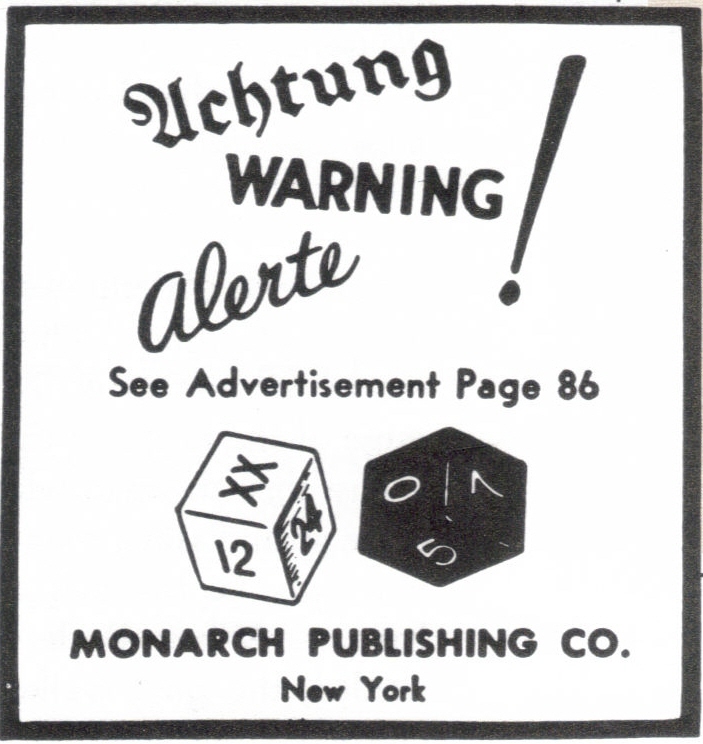
A few weeks before the Pearl Harbor attack,
a pair of strange ads appeared in the New Yorker. They seemed to be
advertising a dice game called The Deadly Double. One of the ads showed a
pair of dice with the characters 0, 5, 7, xx, 24, and 12 on the visible
faces. Above were warnings in a variety of languages: "Achtung!
Warning! Alerte!" The other ad showed people in a bunker and explained
that the dice game was essential air raid survival gear. The company
logo was a suspiciously Germanic looking double eagle.
The ads have a somewhat strange design, but only in retrospect did they
appear to contain a coded message. The numbers could allude to the date
of the Pearl Harbor attack (12/7), with the other numbers representing
codes to be deciphered by sleeper agents in the U.S. The Deadly Double itself was thought to refer to the twin threats of Germany and Japan.
Like many mysteries, retellings of this story emphasize the unknown and
leave out crucial facts. The 0 and 5 are sometimes thought to foretell
the exact time of the attack, but the first aircraft opened fire on
Pearl Harbor at 7:48 a.m. local time. Books on mysterious events like to
leave this story unresolved, as though the identity of the ads' creator
remains unknown to this day. In truth, it was traced to a game company
in Chicago that made a dice game called the Deadly Double. Their war-themed ad might seem like poor taste today, but the numbers on the dice matching the date of Pearl harbor was pure coincidence. Still, it was weird enough that the FBI got involved.
No
sooner had the Japanese bombed Pearl Harbor, Hawaii on December 7,
1941, that the home front became obsessed that lurking in the shadows
was a Japanese traitor or Nazi spy, saboteur, or subversive hiding
behind every bush, gathering all of the United States’ valuable
information.
As a result of the attack on Pearl Harbor, the nation was on high alert for spies, especially “suspicious looking Orientals.”
Many law enforcement officials took matters into their own hands. At a
major naval base in Norfolk, Virginia, the chief of police located all
Japanese aliens living in his city and ordered them jailed – all
fourteen of them. In Newark, New Jersey, police officers’ were given
the authority to board trains and arrest all suspicious looking
Orientals and to use their own judgement when determining if an
individual of Oriental origin “looked suspicious” or not. Other state’s
followed, singling out many individuals as “suspicious looking
Orientals.”
Creepy Coincidence of the Deadly Double - Pearl Harbor advance-knowledge Conspiracy Theory