The year was 1859. Four unsavory characters were serving as mercenaries
for the Peruvian Army. A Spaniard (Diego Alvarez), an Irishman
(Killorain), an Englishman (Luke Barrett) and an American (Brown). They
figured there had to be a way to make better money and were looking for
opportunities.
One of the men ran into a renegade priest named Father Matteo. The
priest told the man of a treasure hidden and guarded at a church in the
town of Pisco. The four came up with a plan, deserted from the army and
made their way to Pisco.
Alvarez and Killorain were both Catholic and started to attend mass
regularly. They became model parishioners. After some time they went to
the local priests with a terrible story. They had found out that a
renegade priest by the name of Father Matteo knew about the treasure and
was gathering up a large group of bandits to come and steal the
treasure.
The Priests believed the story. These men could know nothing of the
treasure on their own. Father Matteo must be up to something. Alvarez
came up with a plan to save the treasure. They could load the treasure
onto a ship and move it to the safety of Callao. Alvarez and his three
friends would gladly donate their services as guards.
So it came to pass that the priests loaded the following on a ship in the tiny harbor of Pisco:
- 14 tons gold ingots
- 7 great golden candlesticks, studded with jewels
- 38 long diamond necklaces
- A quantity of jeweled rings
- A quantity of jeweled bracelets
- A quantity of jeweled crucifixes
- 1 chest uncut stones
- 1 chest Spanish doubloons
- Various other jewels and ornaments
Hidden Treasures - Treasure Chest of the Church of Pisco

The
Isdal woman (Norwegian: Isdalskvinnen) is the subject of an unsolved
case involving an unidentified woman found dead at Isdalen Valley in
Bergen, Norway on 29 November 1970. Considered one of Norway's most
profound mysteries, the case has been the subject of intense speculation
over the years regarding the identity of the victim, the events leading
up to her death and the cause of death. Public interest in the case
remains significant.
The woman was found in a part of Isdalen popularly known as "Death
Valley", which lies in the direction towards Mount Ulriken. Next to the
scene police found a burned-out passport. The autopsy showed that the
woman had suffered blunt force trauma to the neck and had taken several
sleeping pills before she died. The official police report concluded
suicide, but this conclusion is highly controversial.
Discovery
On 29 November 1970 at approximately 13:15, while hiking in the hills of
Isdalen valley outside of Bergen, a university professor and his two
young daughters came across the partially charred remains of a naked
woman hidden among some rocks at a remote hiking trail. Present at the
scene were large amounts of sleeping pills, and bottles of petrol. A
full scale murder investigation was immediately initiated and the case
has since evolved to become the most comprehensive criminal case by the
Bergen police.
Investigation
Police traced the woman to two suitcases that were found in an NSB train
station in Bergen. Police also found that the labels had been removed
from every piece of clothing she wore, and that her fingerprints had
been sanded away.
In addition, police discovered a prescription for a lotion, but both the
doctor's name and date had been removed. Within the lining on one
suitcase police discovered 500 German marks. Partial fingerprints were
found on a few pieces of broken glass. They were insufficient for an
identification, but police suspected that they belonged to the dead
woman. The police had made phantom drawings on the basis of witness
descriptions and analysis made from the body; these drawings were
published in the media and disseminated via INTERPOL in a number of
countries.
The Mysterious Norwegian Woman - The Isdal Woman Spy Thriller

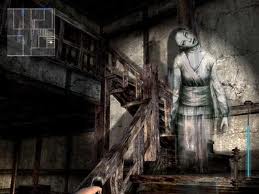
The Himuro Mansion (or Himikyru Mansion) is a japanese urban legend
about the dark history of a haunted house and the horrible murders of
an entire family who lived there. They say that the video game Fatal
Frame was based on a true story. Eager to solve the mystery, many people
have scoured maps, trying to find the real location of Himuro Mansion.
According to the legend, the Himuro Mansion is a large, traditional
Japanese house that is located in a rocky area somewhere on the
outskirts of Tokyo. The mansion became famous for being the site of the
worst mass murder in the history of Japan.
Terrible rituals were performed deep in Himuro Mansion, such as
the Strangling Ritual, the Demon Tag Ritual, and the Blinding Ritual.
The Strangling Ritual and Blinding Ritual were performed in a hidden
room, not shown on the house's original plans. This room is connected to
the house by a long lattice corridor that starts at the Rubble Room.
These rituals were part of the Himuro family's duty to keep the Hell
Gate sealed. The family was able to do this for many years until Kirie's
ritual failed and caused The Calamity, killing most of the occupants of
the mansion and unleashing the Malice, cursing the mansion and all who
die within it. The Himuro Family Master then killed all those in the
house who survived The Calamity before taking his own life.
A
folklorist named Ryozo Munakata moved in with his family to study the
mansion, but he and his family disappeared, killed by the mansion's
curse. Years later, Junsei Takamine and his research team went to
investagte the masion for Takamine's newest work and disappeard, leading
Mafuyu Hinasaki to the masion in search of them, where he too
disappeared. His younger sister, Miku Hinasaki, then arrives at the
mansion and breaks the mansion's curse to rescure her brother.
The Himuro family were said to have practiced ancient and
forgotten Shinto rituals that had long ago been outlawed in Japan. One
of these occult rituals was called “The Strangling Ritual” and involved
the sacrificial murder of a young girl. The purpose of this
gruesome ritual was to protect the Himuro family from bad karma which
they believed would emerge from a portal in the mansion’s courtyard.
Himuro Mansion Haunting - Urban Legend of Haunted House & Horrible Murders

Some
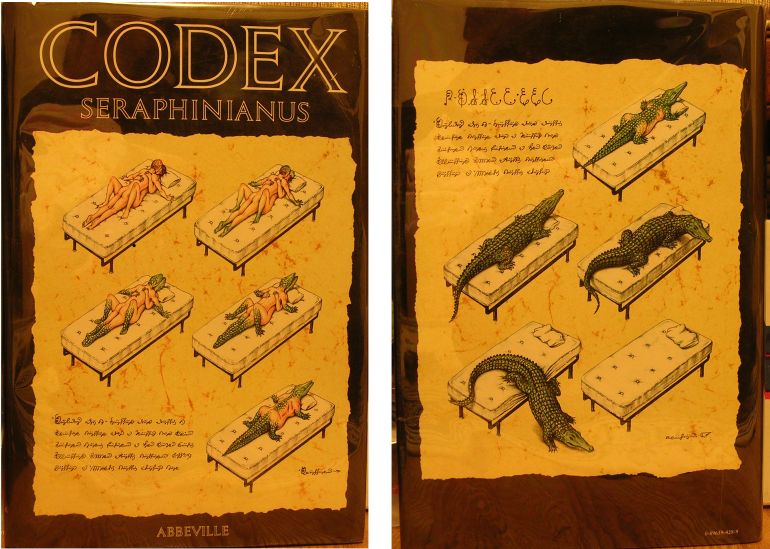
people think it's one of the weirdest books ever published. An art book
unlike any other art book. A unique and disturbing surreal parody.
Grotesque and beautiful. It's very hard to describe. Codex Seraphinianus
by Italian artist Luigi Serafini is a window on a bizarre fantasy world
complete with its own unique (unreadable) alphabet and numerous
illustrations that borrow from the modern age but veer into the
extremely unusual.
Codex Seraphinianus, originally published in 1981, is an illustrated
encyclopedia of an imaginary world, created by the Italian artist,
architect and industrial designer Luigi Serafini during thirty months,
from 1976 to 1978. The book is approximately 360 pages long (depending
on edition), and written in a strange, generally unintelligible
alphabet. Originally published in Italy, the book has since been
released in a number of different countries.
The word "Codex" in the title means "book" or "code" (from Latin
caudex), and "Seraphinianus" is derived from the author's last name,
Serafini (which in Italian, refers to the seraphs). Literally, Codex
Seraphinianus means Serafini's code. It was first published in two
volumes by Franco Maria Ricci in 1981. The pictures in this AbeBooks
article are from the 1983 American edition published by Abbeville - 370
pages of the Twilight Zone. There is also a 1993 single volume edition
and a revised 2006 Italian edition with new illustrations - this final
edition is the most affordable version.
Created in the late 1970s, the book's blurb on the cover flap talks
about Codex Seraphinianus being a book for the "age of information"
where coding and de-coding messages is increasingly important in
genetics, computer science and literary criticism. "The Codex presents
the creative vision of this time..." goes on the blurb. If Serafini was
so influenced by "information" in the 1970s to create this maverick art
book, then what must he make of today's information age? Codex
Seraphinianus Covers featuring Facebook, Twitter, blogs and Google?
Countless websites and blogs can be found pondering the meaning of Codex
Seraphinianus or simply admiring a truly original piece of
art/fantasy/imagination - call it what you will.
Codex Seraphinianus - The World's Weirdest Book

Born
into a wealthy family with Hungarian origins from Bucharest, Romania,
the family relocated to the town of Berkerekul (former Yugoslavia) when
Renczi was ten. By the age of fifteen, she had become increasingly
unmanageable by her parents and had frequently run away from home with
numerous boyfriends, many of whom were significantly older than herself.
Early childhood friends described Renczi as having an almost
pathological desire for constant male companionship and possessing a
highly jealous and suspicious nature. Although Vera Renczi was a
stunningly beautiful woman (according to the standards of the time, I
guess), she was also one of the most prolific female serial killers in
history, driven by a pathological need for devotion from men.
Renczi's first marriage was to a wealthy Bucharest businessman many
years her senior and she bore him a son named Lorenzo. Left at home
daily while her older husband worked, she began to suspect that her
husband was being unfaithful. One evening, in a jealous rage, Renczi
tinctured the man's dinner wine with arsenic and began to tell family,
friends, and neighbors that he had abandoned her and their son. After
approximately a year of "mourning", she then declared that she had heard
word of her supposedly estranged husband's death in a car accident
Shortly after hearing the news of her first husband's "automobile
accident" Renczi again remarried, this time to a man nearer her own age.
However, the relationship was a tumultuous one and Renczi was again
plagued by the suspicion that her new husband was involved in
extramarital affairs. After only months of marriage the man vanished and
Renczi then told friends and family that the man had abandoned her.
After a year had passed, she then claimed to have received a letter from
her husband proclaiming his intentions of leaving her forever. This
would be her last marriage.
Vera Renczi – The Black Widow Serial Killer Who Killed All Of Her Lovers

The most extraordinary and credible research into the ghost phenomenon ever documented is the so-called "Ghosts of Flight 401."
On December of 1972, an Eastern Airlines Tri-Star jetliner, Flight 401,
crashed into a Florida swamp. The pilot, Bob Loft (on the left), and
flight engineer Don Repo (on the right), were two of the 101 people who
perished in the air crash. Not long after the crash, the ghosts of Loft
and Repo were seen on more than twenty occasions by crew members on
other Eastern Tri-Stars, especially those planes which had been fitted
with parts salvaged from the Flight 401 wreckage. The apparitions of
Loft and Repo were invariably described as being extremely lifelike.
They were not only reported by people who had known Loft and Repo, but
their ghosts were also subsequently identified from photographs by
people who had not known Loft and Repo.
The strange tales of the ghostly airmen of Flight of 401
circulated in the airline community. An account of the paranormal
happenings even appeared in a 1974 US Flight Safety Foundation's
newsletter. John G. Fuller, the best-selling author of The Ghost of Flight 401,
carried out an exhaustive investigation into the hauntings with the aid
of several cautious airline personnel. A mass of compelling testimony
was produced as a result. The website Flight 401 – The Black Box Story
provides an account of the crash as told using material from the Black
Box. It highlights how poor cockpit resource management caused a tiny
light bulb to distract the pilots and bring down a Tristar jetliner.
The cause of the crash was found to be a couple of minor design faults
in the controls, and Lockheed rapidly corrected them. However, it was
after some of the undamaged parts of the aircraft were subsequently
recycled onto other planes that the mysterious incidents began to be
reported. Although Eastern Airlines refuses to discuss the matter,
researchers have interviewed numerous individuals claiming to have
encountered the ill-fated pair on L-1011s. As the reports would have it,
Loft and Repo have devoted their after-lives to watching over the
passengers and crew of these Lockheed passenger planes.
Many of the testimonies are extremely persuasive. Many come from people
in highly responsible positions: pilots, flight officers, even a vice
president of Eastern Airlines, who allegedly spoke with a captain he
assumed was in charge of the flight, before recognizing him as the late
Loft.
Ghosts of Flight 401 - The official airline of the paranormal

The
Great Train Robbery is the name given to a £2.6 million train robbery
(the equivalent of £41 million today) committed on 8 August 1963 at
Bridego Railway Bridge, Ledburn near Mentmore in Buckinghamshire,
England. The bulk of the stolen money was not recovered. Three robbers
were never found, two convicted robbers escaped. One convicted was most
likely never involved, and died in prison. Though there were no firearms
involved, the standard judgment was 30 years.
Planning the robbery
The robbery was planned by several parties with no overall mastermind.
Although the robbery operation itself was planned and executed by the
late Bruce Reynolds, the target and the information came from a still
unknown individual dubbed the "Ulsterman". The key field organisers were
Gordon Goody, Buster Edwards and Charlie Wilson, with Brian Field being
the key link between the robbers and the informant.
At 6:50 PM on Wednesday 7 August 1963 the travelling post office (TPO)
"Up Special" train set off from Glasgow Central Station, Scotland en
route to Euston Station in London. The train was hauled by an English
Electric Type 4 (later Class 40) diesel-electric locomotive numbered at
the time as D326 (later renumbered 40 126). The train consisted of 12
carriages and carried 72 Post Office staff who sorted mail during the
journey.
Mail was loaded onto the train at Glasgow and also during station stops
en route, as well as from line-side collection points where local post
office staff would hang mail sacks on elevated track-side hooks which
were caught by nets deployed by the on-board staff. Sorted mail on the
train could also be dropped off at the same time. This process of
exchange allowed mail to be distributed locally without delaying the
train with unnecessary station stops. One of the carriages involved in
the robbery is preserved at the Severn Valley Railway.
The second carriage behind the engine was known as the HVP (High Value
Packages) coach, which carried large quantities of money, as well as
registered mail for sorting. Usually the value of the shipment was in
the region of £300,000, but because there had been a Bank Holiday
weekend in Scotland, the total on the day of the robbery was £2.6
million (equivalent to about £43 million in 2012 RPI terms).
The Great Train Robbery - Unsolved Mystery
Please Don't Touch - Unless You Want a Baby!
More than 2,000 women have reported that they became pregnant shortly after touching the wooden fertility statues.
Many of them had been told by doctors they would never be able to
conceive. Some are very serious about touching the statues, believing in
their powers to help them conceive. Others want to avoid touching the fertlity statues
- for the very same reason! The five-foot tall wooden statues were
acquired from the Ivory Coast of West Africa in 1993 and were placed in
the lobby of Ripley Entertainment's corporate headquarters in Orlando.
Within months, 13 women, including staffers and office visitors were
pregnant.
A Little History
The five foot tall wooden statues were acquired from the Baule people of
the Ivory Coast of West Africa and within a year of going on display at
Ripley Entertainment’s head office in Orlando, Florida, 13 office staff
and visitors became pregnant.
The
idea of fertility statues appear in a variety of cultures. Fertility
statues serve both as a tribute to whatever fertility gods that the
locals believe in, as well as often a mystical totem which helps the
women of a given tribe to conceive and bear healthy children. These
fertility statues may resemble people, or they can look like some
particular animal that is associated with fertility in that culture.
Archaeological digs have turned up a variety of these sorts of statues,
from the Norse goddess Freya riding a boar to the statue of a fat woman
found in the ruins of the Tarxien temples on the island of Malta.
The Legend of the African Fertility Statues
 |
|
According to legend, Pope Joan was a woman who concealed her gender and
ruled as pope for two years, from 853-855 ad. Her identity was exposed
when, riding one day from St. Peter's to the Lateran, she stopped by the
side of the road and, to the astonishment of everyone, gave birth to a
child.
Pope Joan was a legendary female Pope who allegedly reigned for a few
years some time during the Middle Ages. The story first appeared in
13th-century chronicles, and was subsequently spread and embellished
throughout Europe. It was widely believed for centuries, though modern
religious scholars consider it fictitious, perhaps deriving from
historicized folklore regarding Roman monuments or from anti-papal
satire.
The first mention of the female pope appears in the chronicle of Jean de
Mailly, but the most popular and influential version was that
interpolated into Martin of Troppau's Chronicon Pontificum et
Imperatorum, later in the 13th century. Most versions of her story
describe her as a talented and learned woman who disguises herself as a
man, often at the behest of a lover. In the most common accounts, due to
her abilities, she rises through the church hierarchy, eventually being
elected pope. However, while riding on horseback, she gives birth, thus
exposing her gender. In most versions, she dies shortly after, either
being killed by an angry mob or from natural causes. Her memory is then
shunned by her successors.
Mysterious Woman Pope Who Just Won't Go Away

Lurking in the dark waters
of Long Island Sound is a mysterious place known as Plum Island. Just
ten miles off the coast of Connecticut, this tiny speck of land has long
been rumored to be the epicenter of top-secret biowarfare research. The
U.S. government acknowledges that the island is home to a scientific facility. Its stated purpose is to study animal-borne diseases.
But investigators are beginning to uncover startling new facts about
this forbidding place. Insiders and ex-employees have come forward to
tell their stories. From security breaches in germ labs, to escaped diseases and potential mass epidemics, this is the real Plum Island story. But the government denies anything is wrong.
Plum Island's Secret Past
Although the origins of Plum Island are shrouded in secrecy,
investigations have revealed the startling fact that, in the 1950s, the
lab was run by a German scientist named Erich Traub, who was brought to
America after the Second World War. His specialty in the Third Reich was
virus and vaccine research.
Along with rocket scientists like Werner von Braun, Traub was spirited
out of post-war Germany to help jump-start the Cold War against the
Soviet Union. The well-documented U.S. government project to recruit German scientists and technicians was known as Operation Paperclip. President Truman approved the project, so long as only nominal Nazi party members without SS affiliation were recruited. However, because the Nazi party
promoted so many of its top scientists, Operation Paperclip ended up
white-washing the pasts of many of its recruits in order to get them
into the U.S.
Traub's particular expertise was in disease-carrying insects—in
particular, the common tick. Ticks are often carried aloft by birds, and
can therefore quickly spread
over large swaths of territory. Called "vectors," ticks and mosquitoes
are also genetically similar. Both contain bacteriophages or plasmids
that transfer genetic material into a cell, or from one bacterium to
another. In other words, they can infect whatever host animal with which
they come in contact. Multiply this by millions, and ticks become the
perfect insect army.
The Government's Secret Lab 257 - The Horrific Secrets of Plum Island

The
Lost Dutchman Gold Mine (also known by many similar names) is,
according to legend, a very rich gold mine hidden in the southwestern
United States. The location is generally believed to be in the
Superstition Mountains, near Apache Junction, east of Phoenix, Arizona.
There are also theories that the mine lies a considerable distance
beyond the Superstition Mountains, in Mexico. There have been many
opinions about how to find it, and each year people search for it. Some
have died on the search.
The mine is named for German immigrant Jacob Waltz, who purportedly
discovered it in the 19th century and kept its location a secret.
("Dutchman" was a common, though inaccurate, American slang term for
"German," derived from the German word for "German" – "Deutsch").
The Superstition Mountains to the east of Phoenix, AZ reportedly hold a
legendary motherlode of gold known as the Lost Dutchman Gold Mine. Truth
and fiction about this mine have been unrevokably mixed up through the
years, producing 62 varieties of the legend. But before we get into
those, here are some genuine facts about the Lost Dutchman Gold Mine:
There really was a Lost Dutchman, although he wasn’t Dutch. Jakob
Waltz was nicknamed Dutch (i.e. from the Netherlands) because he was
Deutsch (i.e. from Germany; a common error, see also ‘Pennsylvania
Dutch’). A man of that name was born in Württemberg in 1810 and
emigrated to the US. From the 1860s onward, he homesteaded in Arizona,
pursuing mining and prospecting as a hobby – a quite unsuccessful one.
Waltz fell ill and died in 1891, but not before revealing the location
of an alleged gold mine to Julia Thomas, the neighbour who cared for
him. As early as Sept 1, 1892, a local newspaper relates how Thomas and
others were trying to locate the mine. When they failed, it is reported
they sold copies of a map for $7 each. After about a decade, the story
sank into obscurity, regaining notoriety when it had acquired more
spectacular aspects, in a fashion not dissimular to a game of Chinese
whispers.
The Lost Dutchman Gold Mine

In Brazil during the 1950's worldwide "UFO Flap" comes a report of one of the most bizarre accounts on record—the seduction of Antonio Villas Boas.
At the time of his alleged abduction, Antônio Vilas-Boas was a
23-year-old Brazilian farmer who was working at night to avoid the hot
temperatures of the day. On October 16, 1957, he was ploughing fields
near São Francisco de Sales when he saw what he described as a "red
star" in the night sky. According to his story, this "star" approached
his position, growing in size until it became recognizable as a roughly
circular or egg-shaped aerial craft, with a red light at its front and a
rotating cupola on top. The craft began descending to land in the
field, extending three "legs" as it did so. At that point, Boas decided
to run from the scene.
According to Boas, he first attempted to leave the scene on his tractor,
but when its lights and engine died after traveling only a short
distance, he decided to continue on foot. However, he was seized by a
1.5 m (five-foot) tall humanoid, who was wearing grey coveralls and a
helmet. Its eyes were small and blue, and instead of speech it made
noises like barks or yelps. Three similar beings then joined the first
in subduing Boas, and they dragged him inside their craft. Antonio
Villas Boas is located in Brazil
Once inside the craft, Boas said that he was stripped of his clothes and
covered from head-to-toe with a strange gel. He was then led into a
large semicircular room, through a doorway that had strange red symbols
written over it. (Boas claimed that he was able to memorize these
symbols and later reproduced them for investigators.) In this room the
beings took samples of Boas' blood from his chin. After this he was then
taken to a third room and left alone for around half an hour. During
this time, some kind of gas was pumped into the room, which made Boas
become violently ill.
Shortly after this, Boas claimed that he was joined in the room by
another humanoid. This one, however, was female, very attractive, and
naked. She was the same height as the other beings he had encountered,
with a small, pointed chin and large, blue catlike eyes. The hair on her
head was long and white (somewhat like platinum blonde) but her underarm and pubic hair were bright red. Boas said he was strongly attracted to the woman,
and the two had sexual intercourse. During this act, Boas noted that
the female did not kiss him but instead nipped him on the chin.
Famous Alien Abduction of Antonio Villas Boas: Alien Female Seduction

The
Victorio Peak Treasure is one of the most famous treasures in the
United States, second only perhaps to the Lost Dutchman Mine. In
November 1937, a deer hunter and former medicine showman known as Doc
Noss went searching for fresh water near the peak and discovered the
hidden entrance to a tunnel. An old ladder lead into a maze of tunnels
around a large cavern containing an old chest inscribed with the words
"Sealed Silver" in Old English.
Doc Noss was born in Oklahoma and traveled all over the Southwest
seeking excitement. In 1933, he married Ova "Babe” Beckworth and the two
settled down in Hot Springs, New Mexico, which later changed its name
to Truth or Consequences. In November 1937, Doc, Babe, and four others
left on a deer hunt into the Hembrillo Basin. Setting up camp on the
desert floor at the base of Victoria Peak, the men headed into the
wilderness, while their wives stayed at camp. Hunting by himself, Doc
scouted the base of the mountain. When it began to rain, Doc sought
shelter under a rocky overhang near the summit of the mountain. While
waiting for the rain to subside he noticed a stone that looked as if it
had been "worked” in some fashion. Reaching down, he was unable to budge
it, but after digging around the rock, he got his hands under it.
Lifting the rock, he found a hole that lead straight down into the
mountain.
November 1937, Doc, Babe, and four others left on a deer hunt into the
Hembrillo Basin. Setting up camp on the desert floor at the base of
Victorio Peak, the men headed into the wilderness, while their wives
stayed at camp. Hunting by himself, Doc scouted the base of the
mountain. When it began to rain, Doc sought shelter under a rocky
overhang near the summit of the mountain. While waiting for the rain to
subside he noticed a stone that looked as if it had been “worked” in
some fashion. Reaching down, he was unable to budge it, but after
digging around the rock, he got his hands under it. Lifting the rock,
he found a hole that lead straight down into the mountain.
Peering into the darkness, Doc saw an old man-made shaft with a thick,
wooden pole attached at one side. Doc thought that he had discovered an
old abandoned mineshaft. When the rain finally stopped, Doc returned to
camp, telling Babe of the discovery. The two decided to keep the
discovery between themselves and return to the inspect the shaft later.
The Search for Gold at Victorio Peak

In
November 1874 an unusual article appeared in the introductory volume of
The American Medical Weekly, a Louisville medical journal. It was
written by Dr. LeGrand G. Capers and was titled, "Attention
Gynaecologists!—Notes from the Diary of a Field and Hospital Surgeon,
C.S.A." In the article Dr. Capers recounted an unusual case of
artificial insemination he had witnessed on a Civil War battlefield in
Mississippi, in which a bullet had passed through a soldier's testicles,
and then traveled on before hitting a woman and impregnating
her. The event was said to have occurred on May 12, 1863 at around 3
p.m. at the "battle of R." (battle of Raymond), where "Gen. G's brigade"
(Brigadier General John Gregg) of the Confederate forces fought Grant's
army led by "Gen. L." (Major General John A. Logan).

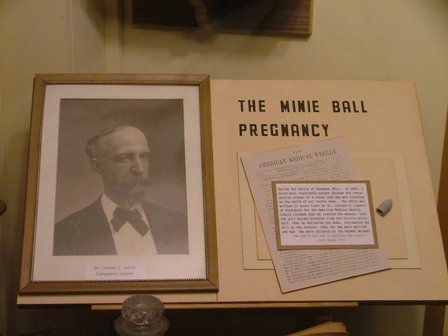
In 1874, The American Medical Weekly ran an article by a Dr. LeGrand
Capers (that's him in the picture) who claimed he witnessed this very
thing on a Civil War battlefield. Apparently there was a house very
close to the Confederate lines, and a bullet (a "minnie ball") hit a
soldier, "carrying away the left testicle", and then continued
its course toward the house. One of the daughters in the house had also
been hit by a stray bullet, which was lost in the abdominal cavity
somewhere.
Because the doctor was stationed with the army nearby, he continued to
check on the wounded girl over the next several months. Around the
six-month mark, he discovered that the girl was pregnant. Around the nine-month mark, she gave birth to a nine-pound baby boy.
The family was beyond embarrassed that their unmarried daughter was apparently having "indiscretions",
but the girl swore that she was a virgin. The doctor examined her and
said it was true - she had never had sex. Meanwhile, the little boy was
very sick and he had some incredible swelling in the groin area. The
doctor decided to operate, and when he did, he pulled out a minnie ball.
He put two and two together and figured out that the bullet must have picked up some semen
went it ripped through the soldier's testicle, and managed to
impregnate the girl when it lodged inside of her stomach. Supposedly,
the girl and the soldier ended up getting married and having two more
kids.
The problem? The doctor had invented the whole story in order to mock
the ridiculous stories that were coming out of the battlefield. But it
was taken as fact, and was even reprinted in 1959 in the New York State
Journal of Medicine.
Son of a gun : Case of the Miraculous Bullet

The
vanishing hitchhiker (the ghostly hitchhiker, the disappearing
hitchhiker, the phantom hitchhiker or the hitchhiker) story is an urban
legend in which people traveling by vehicle meet with or are accompanied
by a hitchhiker who subsequently vanishes without explanation, often
from a moving vehicle. Vanishing hitchhikers have been reported for
centuries and the story is found across the world, with many variants.
The popularity and endurance of the legend has helped it spread into
contemporary popular culture.
ONE OF THE most persistent and entertaining types of ghost stories is
that of the phantom or vanishing hitchhiker. It's also one of the most
chilling because, if true,it brings ghosts in very close contact with
mortals. More disconcerting still, the stories depict the specters as
looking, acting, and sounding like living people - even physically
interacting with the unsuspecting drivers who pick them up.
The archetypal modern vanishing hitchhiker is a figure seen in the
headlights of a car traveling by night with a single occupant. The
figure adopts the stance of a hitchhiker. The motorist stops and offers
the figure a lift. The journey proceeds, sometimes in total silence, and
at some subsequent point, the passenger appears to vanish while the
vehicle is in motion. In many cases, the hitchhiker vanishes when a
(normally red) vehicle reaches the hitchhiker's destination. The basic
story usually goes something like this: a weary driver traveling at
night picks up a strange hitchhiker, drops him or her off at some
destination, then somehow later finds out that the hitchhiker had in
fact died months or years earlier - often on that very same date. Like
many "true" ghost stories, tales of phantom hitchhikers are difficult to
verify, and are most often relegated to the category of urban legend or
folklore. But there are many such stories, and it's up to you whether
or not you believe any of them. Here are a few:
Red-Headed Hitchhiker of Route 44
There's a classic urban legend called the Phantom Hitchhiker, which goes something like this.
One night, a man's driving down a dark country road when he notices a
young lady hitchhiking by the side of the road. She's pretty, with long
blonde hair, and she's wearing a blue dress. The man thinks, "She looks
safe. Why not pick her up?" The young lady gets in the passenger seat
and says "There's a big white farm house about a mile down the road.
Could you drop me off there?"
Phantom Hitchhikers : The Vanishing hitchhiker Ghost Stories