In Japanese Buddhism, jikininki ("human-eating ghosts"; pronounced shokujinki in modern Japanese) , also called wendigo are the spirits of greedy, selfish or impious individuals who are cursed after death to seek out and eat human corpses. They do this at night, scavenging for newly dead bodies and food offerings left for the dead. They sometimes also loot the corpses they eat for valuables, which they use to bribe local officials to leave them in peace. Nevertheless, jikininki lament their condition and hate their repugnant cravings for dead human flesh.
Often, jikininki are said to look like decomposing cadavers, perhaps with a few inhuman features such as sharp claws or glowing eyes. They are a horrifying sight, and any mortal who views one finds himself or herself frozen in fear. However, several stories give them the ability to magically disguise themselves as normal human beings and even to lead normal "lives" by day.
Jikininki are preta of the 26th class in Japanese Buddhism. They are also sometimes considered a form of rakshasa or gaki ("hungry ghosts"). In the latter case, they may be freed from their deplorable existence through remembrances and offerings or through the prayers of a holy and/or righteous man that has a truly holy spirit and has done nothing to dishonor his or her family.
Jikininki Demon - One of Worst Mythological Demons
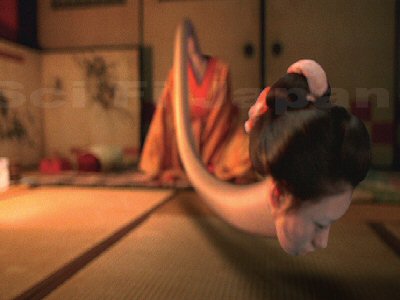
Rokurokubi which are related to Nure-onna are yokai found in Japanese folklore. They look like normal human beings by day, but at night they gain the ability to stretch their necks to great lengths. They can also change their faces to those of terrifying Oni to better scare mortals.
In their daytime human forms, rokurokubi often live undetected and may even take mortal spouses. Many rokurokubi become so accustomed to such a life that they take great pains to keep their demonic forms secret. They are tricksters by nature, however, and the urge to frighten and spy on human beings is hard to resist. Some rokurokubi thus resort to revealing themselves only to drunkards, fools, the sleeping, or the blind in order to satisfy these urges. Other rokurokubi have no such compunctions and go about frightening mortals with abandon. A few, it is said, are not even aware of their true nature and consider themselves normal humans. This last group stretch their necks out while asleep in an involuntary action; upon waking up in the morning, they find they have weird dreams regarding seeing their surroundings in unnatural angles.
According to some tales, rokurokubi were once normal human beings but were transformed by karma for breaking various precepts of Buddhism. Often, these rokurokubi are truly sinister in nature, eating people or drinking their blood rather than merely frightening them. These demonic rokurokubi often have a favored prey, such as others who have broken Buddhist doctrine or human men.
Tanuki often imitated rokurokubi when playing practical jokes on people. In a folktale collected for his book, Kwaidan by Lafcadio Hearn, the nukekubi is misidentified as rokurokubi, an error that also appears in the Fighting Fantasy book, Sword of the Samurai, and in Stephen Dedman's novel The Art of Arrow-Cutting. The nukekubi is a similar but slightly different being from Japanese folklore belonging to the same overall class; instead of necks that stretch, the nukekubi have heads that completely detach. The book Even More Short & Shivery by Robert D. San Souci has a tale called Rokuro-kubi, but, again, the descriptions in the book are nukekubi, not rokurokubi.

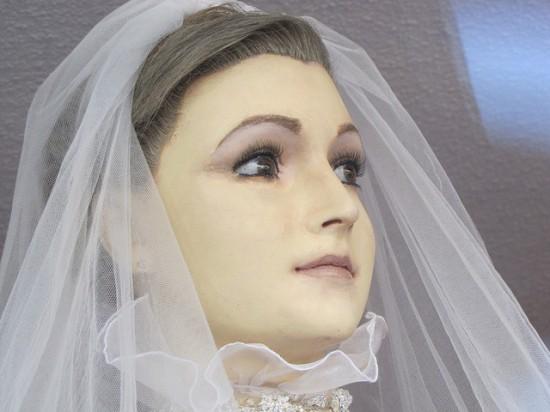
La Pascualita or Little Pascuala is a bridal mannequin that has “lived” in a store window in Chihuahua, Mexico for the past 75 years. That is quite a long time for a bridal gown shop to retain a mannequin, but then the dummy has a rather strange history behind it. According to an urban legend, La Pascualita isn’t a dummy at all, but the perfectly preserved corpse of the previous owner’s daughter.
Peering through the glass at a mannequin's veined hands, sparkling eyes and eerie smile, the small crowd gathered outside a store in northern Mexico tries to settle a macabre riddle beguiling many.Is the tall, slender bridal figure in the window a richly detailed shop's dummy or, as a local legend says, the decades-old embalmed corpse of the former store owner's daughter?.
The haunting figure known as 'La Pascualita,' or 'Little Pascuala' first appeared 75 years ago in the window of the bridal gown store in the city of Chihuahua.Since then, the striking realism of the dummy has spawned supernatural tales and reports of a miracle, and even inspired a foot-stomping accordion ballad played on local radio.
The figure has drawn a stream of people from across the desert state of Chihuahua over the past eight decades, and is now attracting curious visitors from South America, the United States and Europe, the owners of the La Popular store say.As cars and trucks rumble by the shop on a busy city street, the entranced visitors smudge their noses up against the store window and try to decide for themselves if it's a corpse.
"She looks good for all the years that she's been here," Yolanda Robles, who trekked to the shop out of curiosity from Phoenix, Arizona, said as she studied the rosary-clutching figurine."There are just so many details, like her hair and the nails on her hand, that it just has to be true," she added.
La Pascualita – The Mexican Corpse Bride
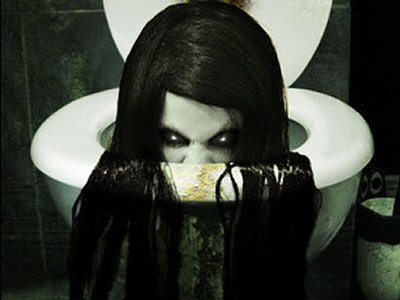
There was once a little girl that hated life and she wanted to get rid of every trace of herself off the planet. Soon, She killed herself and people found out. The people that found out died a few days later. Their limbs torn apart. They say if you know of The White Death, She will come and find you and constantly knock on your door. Each knock gets louder.
You can't tell anyone about her, But if you do, She strikes. Killing you and then goes for the person you told. My friend told me of the White Death and i always hear knocks on my door.
I can't take it anymore so i'm telling you people so it can stop. She doesn't want anyone to know about her, Thats why she kills. Now that you know of her, She'll be coming for you. Don't tell anyone you'll be torn apart limb..by limb. I'm sorry i told you this... no matter where you go, She will find you and keep knocking till you kill yourself. Or you tell someone else.
I am currently sitting in front of my computer, scared witless. Every moment could be my last. My friend is here with me and he is the sole reason why my life is in danger. It may not make sense at first, but let me explain.
It all started earlier today, when a friend of mine burst into my house and slammed the door behind him. His eyes were wide with fear and he stood there with his back against the door, breathing heavily. I asked him what had happened and he told me this story:
He had been living with his Aunt for the past year because his parents were in Mexico. They were doing mission work at a small hospital in Southern Mexico. The previous night, a bedraggled man had stumbled through the entrance of the hospital. He was screaming in Spanish and appeared to be out of his mind with terror.
The White Death - Creepy Urban Legend
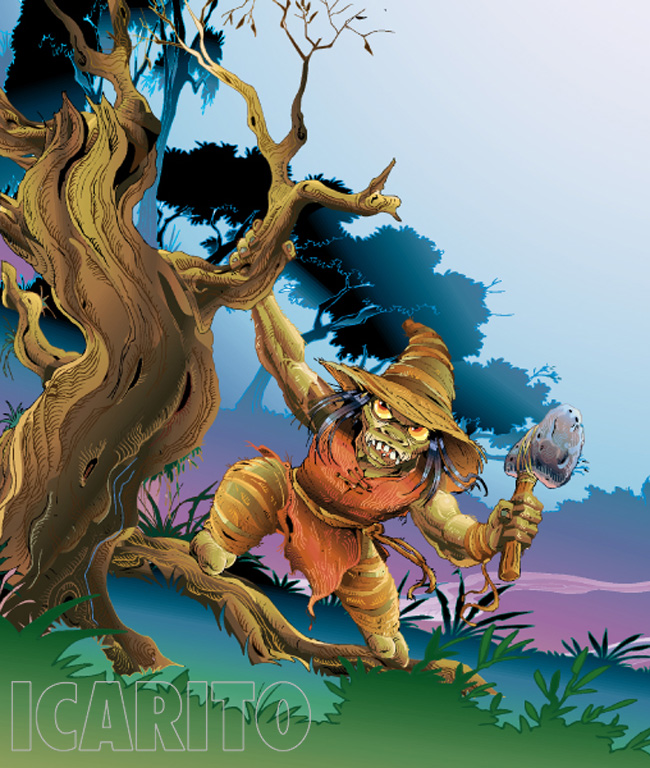
Chiloé, an island off the south of Chile, is said to be home to the Trauco, a sexually potent Dwarf with the power to paralyze women with a look, before having sex with them. The Trauco is described as being ugly and goblin-like, often wearing a hat and suit. His feet are stumps and he communicates through a series of grunts. Some reports suggest the Trauco doesn’t even need to have intercourse with his victims, that he can, in fact, impregnate them with his gaze.
Often, when a single woman on Chiloé falls pregnant people assume the Trauco is the father. In these cases the women are considered blameless as the Trauco is said to be irresistible to women.
El Trauco’s wife, La Fiura, is said to be a grotesquely ugly dwarf with the ability to cast a “sickness spell” against anyone who rejects her sexual advances. Her breath is so foul it can physically scar a human and turn animals lame. Despite her appearance, she is generally irresistible to men and, after having intercourse with them, she drives them insane.
The Trauco is a mythical entity who inhabits the woods of Chiloé, an island in the south of Chile. It has a powerful magnetism that attracts young and middle-aged women. According to myth, the Trauco's wife is the wicked and ugly Fiura. The trauco carries a small stone-headed hatchet that he uses to strike trees in the forest to symbolize his sexual potency.
Whoever the Trauco chooses will go to him, even if she is sleeping, and fall enraptured at his feet. No woman can resist his magical attraction; all have sexual intercourse with him. Men of Chiloé fear the Trauco, as his gaze can be deadly.
When a single woman is pregnant and no one steps forward as the father, people assume that the Trauco is the father. Because the Trauco is irresistible, the woman is considered blameless. The Trauco is sometimes invoked to explain sudden or unwanted pregnancies, especially in unmarried women.
http://theunexplainedmysteries.com/Trauco-and-La-Fiura-Demons.html
Various
types of folklore can be found all over the world. Japan in particular
has some very interesting, as well as creepy urban legends. The majority
of them are based on onryo, or vengeful spirits that have had something
unfortunate or tragic happen to them when they were alive and who let
their anger out on innocent victims- often by frightening and/or killing
them.
Tek Tek or Teke-Teke

Tek Tek or Teke-Teke is an urban legend from Japan about a girl who fell
under a train and was cut in half. She took a long time todie and now
her ghost roams through Japan, dragging her top half along using her
claw-like hands. Every time she moves, she makes a "teke-teke" sound.
There is a story about a young boy who was leaving his school one
evening when he heard a noise behind him. Looking back, he saw a
beautiful girl sitting at a window. The girl had her arms propped up on
the window sill and was just staring out at him. He wondered why she was
there, because it was an all-boys school.
When she saw him looking back at her, the girl smiled and hugged herself
so that she was holding her elbows. Then suddenly, she leaped out of
the window and landed on the ground outside. The boy realized with
horror, that she was missing the lower half of her body.
She made her way towards him, clawing along the ground and running on
her elbows making a tek-tek-tek-tek-tek sound. The boy was filled with
terror and revulsion. He tried to run, but he was frozen to the spot.
Within seconds, she was upon him and she took out a scythe and cut him
in half, making him into one of her own.
When kids tell this story, they warn each other about Tek-Tek. They say
she carries a sharp saw or a scythe, and if she catches you, she'll cut
you in half and you'll become just like her. She is said to chase
children who play at dusk. She is also known as "bata-bata" (again, the
sound of it running on its (elbows) or ; The Girl That Runs On Her
Elbows.
Aka Manto (Red Cape)
 http://theunexplainedmysteries.com/Japanese-Urban-Legends.html

There are legends and
myths that have been around for centuries and have seared themselves
into our minds and culture. Then there are those that have been brought
to life by way of modern technologies reminding us of nightmares that
should have been buried and forgotten. One such legend is known through
internet popularity as Slender man.
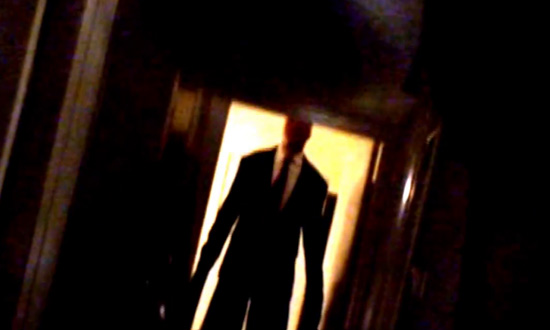
The creature known as Slender man is said to have the appearance of a tall, lanky man in a black suit. Not so scary, right? Just wait.
He towers at six to seven feet with unusually thin limbs. His face, if
you can call it that, is featureless and white, though some say that it
can morph into whatever you fear the most. His arms, however, can
stretch out to grab his victims and bend in unnatural ways with long,
talon-like fingers used to scratch at the windows of children. Yes
that’s right. While he haunts everyone who has the misfortune to see
him, he prefers to devour those that are 16 and younger. He is also said
to have multiple arms sometimes seen as long tentacles used to ensnare
whomever catches his eye, or should I say, the void where his face
should be.
Slender man is a silent stalker that likes to hide in plain sight
and is usually spotted in wooded areas where he could blend in amongst
the trees and dark corners of the forest. When he finds his victim of choice,
he follows them home and upon being seen through the window, can use a
form of hypnosis that compels you to walk right into his spindly arms.
Usually glimpsed at a distance, once he’s close enough to get a good look
at, that’s when he slinks into your home appearing in dark hallways or
blank t.v. screens.
American legend says that he was once a man who was tortured viciously,
first being beaten with a log, then impaled with a 2 foot stick and hung
from a tree with his arms and legs pulled from their sockets.
When captured, you will wake to find Slender man standing above you. He will ask one question and if you’re lucky and get it right, he breaks
both your arms and legs. But if you are wrong, then he slowly sticks
his fingers down your throat pulling out the heart. In circles on the
internet Slender man is claimed to be the creation of a website called
Somethingawful.com. Many say that this alone debunks the mysterious
legend and closes the case on the creature’s fictitious existence. Well,
not quite.
It appears that the Slender man myth goes back a lot farther than is
claimed. He is based on something called Der Grossman, meaning “tall
man”, which is the Germanic version. Legend says that children would site
him in the Black Forest days before their disappearance. All that was
left behind would be the mutilated remains of livestock and in a few
cases, village inhabitants would be found several miles from their homes
impaled on the higher branches of the trees.
http://theunexplainedmysteries.com/SlenderMan-Legends.html

According
to legends, It is written that in 1684 many young girls who lived in
the area met the devil in their dreams. After seducing them, he sent
them to visit the monks at Lucedio's Abbey. The girls managed to corrupt
the abbey and convert the monks to Satanism. From that moment on, a
long history of evil rituals, tortures, homicides, cruelty and even
cases of child molestation began. Things were so twisted that the abuse
reached Rome and Pope Pio VI closed the Abbey. That was on September 10,
1784 - one hundred years later.
Lucedio Abbey is a haunted monastery in Italy that was featured
on Scariest Places on Earth and Ghost Hunters International. It is a
place where torture, murder and disturbing black magic rituals were
performed and many say it is one of Italy's most haunted places. Lucedio
Abbey dates back to 1123. During that time, Cistercian monks resided
there and introduced rice cultivation to the area. What nobody suspected
was that these monks had lost faith in God and turned their backs on
Christianity. The evil monks took to worshipping the devil and performed
horrific and disturbing black magic rituals within the walls of the
holy building.
The Ghosts of LUCEDIO ABBEY : Unexplained Encounters

According
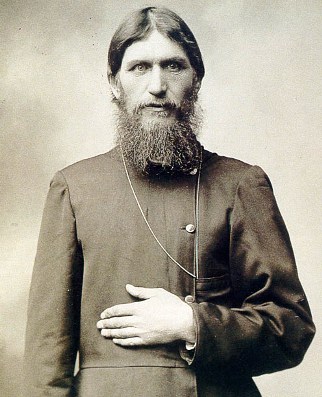
to legends, Russian mystic Grigori Rasputin (1869-1916) was first
poisoned with enough cyanide to kill ten men, but he wasn’t affected. So
his killers shot him in the back with a revolver. Rasputin fell but
later revived. So, he was shot again three more times, but Rasputin
still lived. He was then clubbed, and for good measure thrown into the
icy Neva River.
The mysterious Grigory Efimovich Rasputin, a peasant who claimed powers
of healing and prediction, had the ear of Russian Tsarina Aleksandra.
The aristocracy could not stand a peasant in such a high position.
Peasants could not stand the rumors that the tsarina was sleeping with
such a scoundrel. Rasputin was seen as "the dark force" that was ruining
Mother Russia.
To save the monarchy, several members of the aristocracy attempted to
murder the holy man. On the night of December 16-17, 1916, they tried to
kill Rasputin. The plan was simple. Yet on that fateful night, the
conspirators found that Rasputin would be very difficult to kill.
The Mad Monk
Tsar Nicholas II and Tsarina Aleksandra (the emperor and empress of
Russia) had tried for years to give birth to an heir. After four girls
were born, the royal couple was desperate. They called in many mystics
and holy men. Finally, in 1904, Aleksandra gave birth to a baby boy,
Aleksei Nikolayevich. Unfortunately, the boy who had been the answer to
their prayers was afflicted with "the Royal disease," hemophilia. Every
time Aleksei began to bleed, it would not stop. The royal couple became
frantic to find a cure for their son. Again, mystics, holy men and
healers were brought in. Nothing helped until 1908, when Rasputin was
called upon to come aid the young tsarevich during one of his bleeding
episodes.
Rasputin the Mad Monk - The Immortal Russian

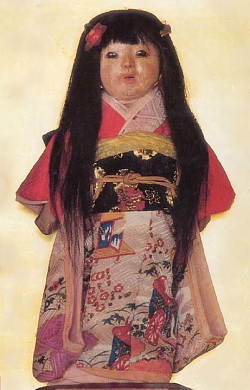
The haunted japanese doll Okiku, possessed by the spirit of a 10 year old girl who took refuge inside it. Some time after the funeral
of the girl, the hair of the doll began to grow. Although the doll’s
hair is cut regularly, the hair grows again and again. A mysterious doll
possessed by the spirit of a child has captured the curiosity of people
across Japan for decades. The legendary Okiku doll, named after the
girl who long ago used to play with it, is a 40-centimeter (16-in) tall
kimono-clad figure with beady black eyes -- and hair that grows.
The Okiku doll has resided at the Mannenji temple in the town of
Iwamizawa (Hokkaido prefecture) since 1938. According to the temple, the
traditional doll initially had
short cropped hair, but over time it has grown to about 25 centimeters
(10 in) long, down to the doll's knees. Although the hair is
periodically trimmed, it reportedly keeps growing back.
It is said that the doll was originally purchased in 1918 by a 17-year-old boy named Eikichi Suzuki while visiting
Sapporo for a marine exhibition. He bought the doll on Tanuki-koji --
Sapporo's famous shopping street -- as a souvenir for his 2-year-old
sister, Okiku. The young girl loved the doll and played with it every
day, but the following year, she died suddenly of a cold. The family
placed the doll in the household altar and prayed to it every day in
memory of Okiku.
Some time later, they noticed the hair had started to grow. This was
seen as a sign that the girl's restless spirit had taken refuge in the
doll.
This doll was originally purchased in 1918 by a Eikichi Suzuki in Sapporo, where he saw a beautiful Japanese doll
with a Kimono. Eikichi bought this doll for her sister, who is two
years old named Okiku. She loved this doll and play it every day. But
unfortunately, Okiku died shortly afterwards of a fever. Then at his funeral,
family want to put a doll into his coffin, but somehow they forgot. The
girl’s family then put the doll on the household altar and pray for
every day in order to commemorate Okiku.
Some time later, they saw the hair began grows. According to this story
is the spirit of the girl who took refuge inside the doll.
Okiku - Ghost Story of Japanese Haunted Devil Doll
In
Staffordshire, England, there is a sculpture that has invited the wits
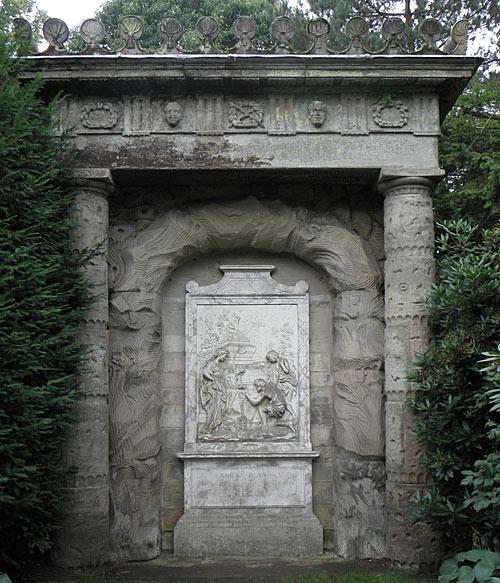
and intellect of many intellectuals in an attempt to decode an inscription reading DOUOSVAVVM. Although the Shepherd’s Monument was constructed back in the 18th century, the letters found therein were never solved, even 250 years after it was completed. The Shugborough inscription is a sequence of letters - O U O S V A V V, between the letters D M - carved on the 18th-century Shepherd's Monument in the grounds of Shugborough Hall in Staffordshire, England, below a mirror image of Nicolas Poussin's painting,
the Shepherds of Arcadia. It has never been satisfactorily explained,
and has been called one of the world's top uncracked ciphertexts. The
inscription became widely known after being mentioned in the 1982 book
The Holy Blood and the Holy Grail by Michael Baigent, Richard Leigh, and
Henry Lincoln.

The monument was built sometime between 1748 and 1763, commissioned by
Thomas Anson, paid for by his brother, Admiral George Anson, and
fashioned by the Flemish sculptor Peter Scheemakers. The relief copy of
the Poussin painting is contained within a rustic arch, and shows
a woman and three shepherds, two of whom are pointing to a tomb. On the
tomb is carved the Latin text Et in arcadia ego ("I am also in Arcadia"
or "I am, even in Arcadia"). The carving displays a number of small
alterations from the original painting, and an extra sarcophagus has been placed on top of the main tomb. Above the Poussin scene are two stone heads, one showing a smiling bald-headed man, the other bearing a likeness to the goat-horned Greek god Pan.
Shugborough Inscription - Shepherd’s Monument Inscription

In
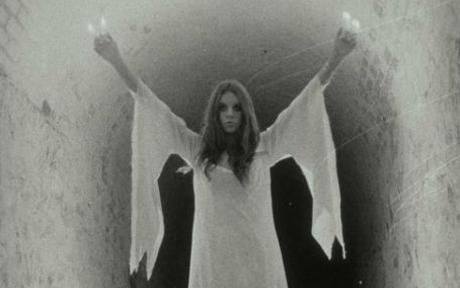
popular medieval legend, a White Lady is fabled to appear by day as
well as by night in a house in which a family member is soon to die.
According to The Nuttall Encyclopaedia, these spirits were regarded as
the ghosts of deceased ancestresses.
Castle Huntly, Scotland, is said to be haunted by a young woman dressed
in flowing white robes. There are various stories concerning her
history, one of which is that she was a daughter of the Lyon family who
occupied the castle in the 17th century. When her affair with a
manservant was discovered she was banished to a tower on the
battlements. Unable to endure her suffering, she threw herself to her
death from the tower. The ghost of the White Lady has been seen a number
of times over the years, often on the grounds surrounding the castle.
She has also been seen in the room in which she was imprisoned.
Darwen is reportedly haunted by a ghost. In Darwen's old cemetery there is a gravestone of a supposed white lady,
whose eyes open when they are touched. There have been reported
sightings of her ghost walking around the area at night, seeking her
child. The white lady of Darwen is said to have died during childbirth,
or to have been raped and murdered by a group of men who stole her
child. She is said to manifest in response to the spoken phrase "White
lady, white lady, I stole your black baby", before attacking the speaker
and causing them to faint. Local folklore says that the white lady of
Darwen killed a group of teenagers who were on a camping trip in the
White Hall Park in the late 1980s, within two hours of them visiting her
grave.
The White Lady of Willow Park is native to a small,
heavily-wooded park of Newton-le-Willows, Merseyside, in northwest
England. She is thought to be the tormented spirit of a bride who was
drowned in the lake by her husband on their wedding night. Variations on
her method of death include being bricked up in a cave and hanging
herself in the kitchen.
Urban Legends of White Lady Ghost

Initially
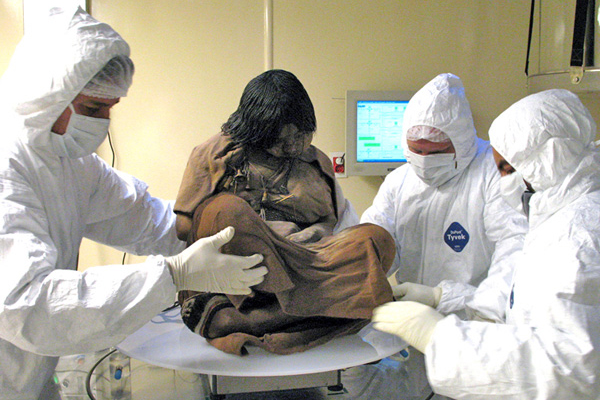
this might look to you like any normal girl being treated by a
doctor,the girl in the photo is not any normal living girl but the mummy of a 15 year old child who has been dead for about 500 years.
She was found in 1999 near Llullaillaco's 6739 meter summit. An
Argentine-Peruvian expedition found the perfectly preserved body and she
was nicknamed "La doncella" which means “The maiden”. According
to the Inca she was chosen to go and live with the gods. But in reality
she was a sacrifice to the Inca Gods and had been brutally killed in the
name of religion.
Scientists say that her organs are intact and its as if she had died
just a few weeks ago. From testing the samples of her hair they could
determine the type of diet she was on before her death. This lead to the
discovery that the Incan fattened their children before killing them.
Months or even years before the sacrifice pilgrimage these children were
given diets which were those of the elite, consisting of maize and
animal proteins.
Judging from the condition of the body, it is believed that she was
drugged and left to die in the mountains. It would not have taken much
time for her to die due to the high exposure. The Incan high priests
took their victims to high mountaintops for sacrifice. As the journey
was extremely long and arduous, especially so for the younger victims,
coca leaves were fed to them to aid them in their breathing so as to
allow them to reach the burial site alive. Upon reaching the burial
site, the children were given an intoxicating drink to minimize pain,
fear, and resistance, then killed them either by strangulation, a blow
to their head or by leaving them to lose consciousness in the extreme
cold and die of exposure.
Mummy Juanita - Inca Girl Frozen For 500 Years

The
game was played as night fell upon the region using three separate
rooms. In preparation, participants would light 100 andon in the third
room and position a single mirror on the surface of a small table. When
the sky was at its darkest, guests gathered in the first of the three
rooms, taking turns orating tales of ghoulish encounters and reciting
folkloric tales passed on by villagers who claimed to have experienced
supernatural encounters. These tales soon became known as kaidan. Upon
the end of each kaidan, the story-teller would enter the third room and
extinguished one andon, look in the mirror and make their way back to
the first room. With each passing tale, the room slowly grew darker and
darker as the participants reached the one hundredth tale, creating a
safe haven for the evocation of spirits.
However, as the game reached the ninety-ninth tale, many participants
would stop, fearful of invoking the spirits they had been summoning.
While the exact origins of Hyakumonogatari Kaidankai are unknown, it was
believed that it was first played amongst the samurai class as a test
of courage. In Ogita Ansei's 1660 nursery tale "Otogi Monogatari" a
version of the game was described in which the narrative tells of
several young samurai telling tales in the Hyakumonogatari Kaidankai
fashion. In the tale, as one samurai finished the one hundredth tale, he
began to extinguish the candle when suddenly he sees a giant gnarled
hand descend upon him from above. While some of the samurai cowered in
fear, a swipe of his sword revealed the hand to be merely the shadow of a
spider.
At first, the game of Hyakumonogatari Kaidankai was popular amongst the
aristocratic warrior class, but it soon garnered favorable reputation
amongst the working class peasants and town people. With a heightened
interest in telling newer and original kaidan, people began scouring the
countryside for tales of the mysterious, many of which combined a
mixture of ghostly vengeance and elements of karma in Buddhism.
Japanese culture and heritage are rich with spirituality and
superstition. In Japan, you should "cleanse" yourself after going to a
funeral by throwing salt over your body. Cutting your fingernails in the
evening is bad luck, and so is using or referring to the number four
(homonym for death) or nine (homonym for suffering). However, few
practices are quite as fascinating as the 100 ghost stories game. This
was a popular parlor game called Hyakumonogatari Kaidankai, from the Edo
period (1603 - 1868). It worked as follows:
Urban Legend of 100 Candles Game - Hyakumonogatari Kaidankai

The
Bloody Benders were a family of serial killers who owned an inn and
small general store in Labette County of southeastern Kansas from 1871
to 1873. The family consisted of John Bender, his wife Mrs. Bender
(later referred to as Kate, Sr., since no one knew her given name), son
John, Jr., and daughter Kate. While Bender mythology holds that John and
Kate were brother and sister, contemporary newspapers reported that
several of the Benders' neighbors have stated that they claimed to be
married, possibly a common law marriage.
They are believed to have killed about a dozen travelers before their
crimes were discovered and the family fled, with their fate uncertain.
Much folklore and legend surrounds the Benders, making it difficult to
separate fact from fiction.
Background
Following the American Civil War, the United States government moved the
Osage Indians from Labette County, Kansas to a new Indian Territory
located in what would eventually be Oklahoma. The newly-vacant land was
then made available to homesteaders. In October 1870, five families of
spiritualists settled in and around Osage township of western Labette
County, approximately 7 mi (11 km) northeast of where Cherryvale would
be established seven months later. One of the families was John Bender
Sr. and John Bender Jr. who registered 160 acres (65 ha) of land located
adjacent the Great Osage Trail, which was then the only open road for
traveling further west. After building a cabin, a barn with corral and a
well, in the fall of 1871, Kate (Ma) Bender and her daughter Kate
arrived and the cabin was divided into two rooms by a canvas
wagon-cover. The Benders used the smaller room at the rear for living
quarters, while the front room was converted into a "general store"
where a few dry goods were sold. The front section also contained their
kitchen and dining table, where travelers could stop for a meal or even
spend the night. Ma and Kate Bender also planted a 2 acres (0.81 ha)
vegetable garden and apple tree orchard north of the cabin.
Bender family
John (Pa) Bender Sr. was around sixty years old and spoke very little
English. When he did speak it, it was so guttural that it was usually
unintelligible. Ma Bender, who also allegedly spoke very little English,
was 55 years of age and was so unfriendly that her neighbors took to
calling her a "she-devil". John Bender Jr. was around 25 years old,
handsome with auburn hair and mustache and spoke English fluently, but
with a German accent. John was prone to laughing aimlessly, which led
many to consider him a "half-wit". Kate Bender, who was around 23, was
cultivated and attractive and she spoke English well with very little
accent. A self-proclaimed healer and psychic, she distributed flyers
advertising her supernatural powers and her ability to cure illnesses.
She also conducted séances and gave lectures on spiritualism, for which
she gained notoriety for advocating free love. Kate's popularity became a
large attraction for the Benders' inn. Although the elder Benders kept
to themselves, Kate and her brother regularly attended Sunday school in
nearby Harmony Grove. The Benders' inn was a simple one room house
divided into living quarters and the kitchen and store area.
The Bloody Benders: Horror in the Old West