Set in Scotland's magnificent capital, Edinburgh, Murder dolls
is a tale of serial killers, Bodysnatchers and grisly science. The
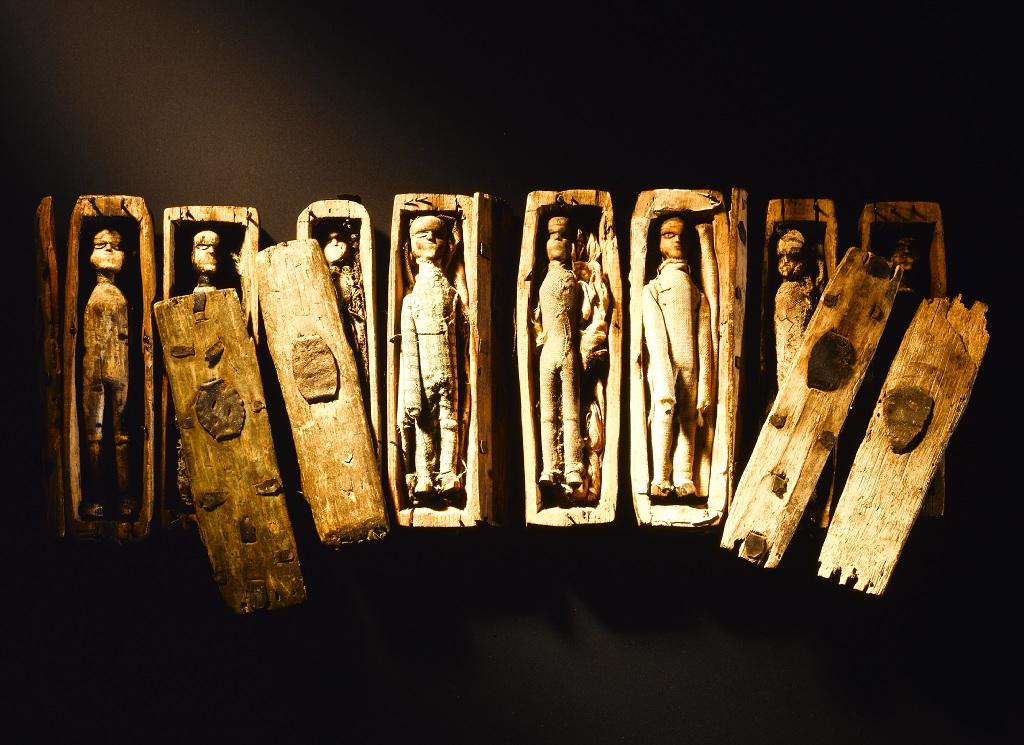
story begins on a misty morning in 1836 with the discovery of 17
miniature wooden coffins. Inside each one, is an eerie, dressed doll.
The discovery of the dolls has led to some interesting theories –
everything from the work of a madman to tales of witchcraft. But some
believe that Edinburgh's miniature coffins may be connected to
Scotland's most notorious serial killers –Burke and Hare - two Irish
laborers who murdered seventeen victims in the 1800's. But how are the
dolls connected to the 17 murder victims – and who made them?
Burke and Hare are notorious even today, but in the time of
Ghosts of Albion their crimes are a matter of relatively recent memory.
Their murder spree, known as the West Port murders, began in Edinburgh
from late 1827 and continued for most of 1828. Their victims were
drugged and suffocated to keep them intact; the bodies were sold to a Dr
Robert Knox for dissection. In the end, a neighbour discovered the
body of their last victim and alerted the police. However, the evidence
of murder wasn't actually that good, and Hare was offered immunity if
he confessed and testified against Burke. Burke made his own confession
- in which he claimed that Dr Knox knew nothing of the origin of the
bodies they sold him - but was sentenced to death and hanged in January
1829.
Less well known is that Burke's lover (Helen M'Dougal) and Hare's wife
(Margaret, née Laird) were also implicated, though they were released
for lack of proof - both narrowly escaped death from an outraged public -
M'Dougal is thought to have left the country, while Margaret Hare's
dropped off the map. William Hare also dropped off the map, though
popular folklore invented a variety of painful ends for him. Despite
Burke's claim that Dr Knox was not involved, the scandal destroyed his
reputation in Edinburgh, and he went to London, and died in 1862.
At first theories on the dolls significance ranged from witchcraft
to child’s toys, but eventually it began to seem that the 17 tiny
figures could be effigies for the 17 murder victims a decade earlier.
Between 1827-1828 William Burke and William Hare lured in and murdered
their lodgers in a scheme to provide fresh bodies to the local anatomy
school. Dr. Robert Knox, a brilliant and well known local anatomy
lecturer purchased the bodies, and most likely knew that something was a
bit suspicious about his supply chain.
Mystery of Burke & Hare Murderdolls
One
of the most storied sites in all of southern New Jersey is a mysterious
body of water known as the Blue Hole. Located deep in the Pine Barrens
of Winslow, on the border of Camden and Gloucester Counties, this small
but legendary pool is said to not only be bottomless, but also a
frequent pit stop of the Jersey Devil.
A number of legends exist: that it is bottomless with powerful currents,
that the water is freezing cold year-round, and that the Jersey Devil
is active in the area.
New Jersey has probably spawned the most well known cryptozological,
paranormal oddity of the century, the Jersey Devil. The Beast, a
creature not scientifically proven to exist, has terrorized the
population of New Jersey for over 270 years. But in the back woods ,
hiding in the remote crevices of the Pine Barrens, there awaits a less
well known but equally mysterious legend, the Blue Hole.
Located deep in the Pine Barrens of Winslow Township, NJ, lies a
circular, perfectly crystal clear body of water(weird, as all sources of
water in the Pine Barrens are tea colored). This small but legendary
pool is not only said to be bottomless but a frequent pit stop of the
Jersey Devil, his personal portal to Hell, they say. Still as glass, the
water looks inviting, especially on a hot summer day. Yet locals warn
their children to stay away and whatever they do, don't swim in it.
Tales of unexplained whirpools and mysterious drownings have long been
part of the pools lore. For those who were lucky enough to get away have
claimed they felt an icy hand pulling them down into the chilly depths.

After people became afraid of it, the blue hole was largely abandoned.
Perhaps farmers and families in the area warned children against going
to the Blue Hole because the Jersey Devil lived there, and it would hurt
or steal them. Locals still go to the area and use it as a party spot.
There are many other 'blue holes' in the immediate vicinity, as well as
quicksand and other seasonal ponds and lakes that form from springs
seeping from high water table levels. What can not be so easily
explained is the color of the lake compared to other brackish waters in
the vicinit
The Devils Puddle - Legend Of The Blue Hole

There are legends and
myths that have been around for centuries and have seared themselves
into our minds and culture. Then there are those that have been brought
to life by way of modern technologies reminding us of nightmares that
should have been buried and forgotten. One such legend is known through
internet popularity as Slender man.
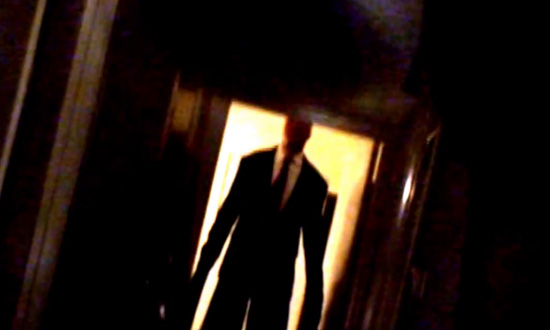
The creature known as Slender man is said to have the appearance of a
tall, lanky man in a black suit. Not so scary, right? Just wait.
He towers at six to seven feet with unusually thin limbs. His face, if
you can call it that, is featureless and white, though some say that it
can morph into whatever you fear the most. His arms, however, can
stretch out to grab his victims and bend in unnatural ways with long,
talon-like fingers used to scratch at the windows of children. Yes
that’s right. While he haunts everyone who has the misfortune to see
him, he prefers to devour those that are 16 and younger. He is also said
to have multiple arms sometimes seen as long tentacles used to ensnare
whomever catches his eye, or should I say, the void where his face
should be.
Slender man is a silent stalker that likes to hide in plain sight and is
usually spotted in wooded areas where he could blend in amongst the
trees and dark corners of the forest. When he finds his victim of
choice, he follows them home and upon being seen through the window, can
use a form of hypnosis that compels you to walk right into his spindly
arms. Usually glimpsed at a distance, once he’s close enough to get a
good look at, that’s when he slinks into your home appearing in dark
hallways or blank t.v. screens.
American legend says that he was once a man who was tortured viciously,
first being beaten with a log, then impaled with a 2 foot stick and hung
from a tree with his arms and legs pulled from their sockets.
When captured, you will wake to find Slender man standing above you. He
will ask one question and if you’re lucky and get it right, he breaks
both your arms and legs. But if you are wrong, then he slowly sticks his
fingers down your throat pulling out the heart. In circles on the
internet Slender man is claimed to be the creation of a website called
Somethingawful.com. Many say that this alone debunks the mysterious
legend and closes the case on the creature’s fictitious existence. Well,
not quite.
It appears that the Slender man myth goes back a lot farther than is
claimed. He is based on something called Der Grossman, meaning “tall
man”, which is the Germanic version. Legend says that children would
site him in the Black Forest days before their disappearance. All that
was left behind would be the mutilated remains of livestock and in a few
cases, village inhabitants would be found several miles from their
homes impaled on the higher branches of the trees.
The Real Life Legend of Slender Man

The Hellfire Club
was a name for several exclusive clubs for high society rakes
established in Britain and Ireland in the 18th century, and was more
formally or cautiously known as the Order of the Friars of St. Francis
of Wycombe. These clubs were rumoured to be the meeting places of
"persons of quality" who wished to take part in immoral acts, and the
members were often very involved in politics. Neither the activities nor
membership of the club are easy to ascertain. The club motto was Fais
ce que tu voudras (Do what thou wilt), a philosophy of life associated with François Rabelais' fictional abbey at Thélème and later used by Aleister Crowley.
Throughout history, secret societies have captured the public's
attention. They have been the basis for many conspiracy theories mainly
based on their tight secrecy. The question still remains today if they
really were secret societies set to overtake the world or if they were
just bored people who wanted to give the world something to talk about.
One of those secret societies was the Hell Fire Club in England.
There has been much speculation about the layout and the design of the
Hellfire Caves. Map of the Hellfire Caves with female reproductive
system showing the perfect match of the Ovary, Womb, Pubis, Shaft and
Testicles. Just a coincidence?
The purpose of this club was to enliven the "dull traditional Sunday"
with drinks and rude songs. According to a contemporary satire "Religion
is their scorn, foul vice their Pride, The Clergy is their Subject to
deride". It is generally assumed that during these rakes' meeting
parodies of religious rites were carried out, though these were probably
more akin to Blackadder's and Melchett's drinking nights than to the
generally imagined Satanic ritual.
The Hell Fire Club was established in the early 1700s by Sir Francis
Dashwood. It began as a mockery of religion but became something much
more. Dashwood was always at odds with religion and was not quiet about
his feelings in that regard. He took many opportunities to mock
religion, especially Catholicism. This included the establishment of The
Friars of St. Francis of Weycomb (some called it Medmenham which was
the name of the abbey the group made its home in) as the Hell Fire Club
was originally known as. According to Daniel Pratt Mannix, "The original
Hell-Fire Club had been abolished by special order of the Lord
High Chancellor, because even in that broadminded time the members had
carried things a little too far when they celebrated Mass on the body of
a naked girl stretched out on one of the barroom tables." Dashwood
recreated the group under the new name but the public kept calling the
group The Hell Fire Club.
Hell Fire Club Secret Society - Sex, Satanism and Secret Societies

In
a dense mountain forest high up in the Austrian Alps, 60 miles from
Salzburg, the mysterious Lake Toplitz lies isolated. It is surrounded by
cliffs and forests in the picturesque Salzkammergut lake district
within the Totes Gebirge, or dead mountains. Luftwaffe
Commander-in-Chief Hermann Goering had a villa not far from the lake. He
would sit in the local bar with Adolf Hitler himself, communing
contentedly with the villagers.
This region was intended to be the Alpenfestung, the Reich's Alpine
Fortress and last redoubt, but by April 1945, Hitler was dead, the
Allies were closing in, and the Reich found itself out of time. Allied
artillery echoed in the mountains. Many of the last leaders of the Nazi
regime fled here - some to make a last stand, others to try to preserve
some shred of the Reich in hope of a future rebirth. Among the artifacts
hidden here is rumored to be a horde of Nazi gold.
Supposedly, the Nazis stashed vast quantities of gold and other
priceless plunder, including the lost panels from Russia’s Amber
Chamber, as well as documents detailing the whereabouts of other Third
Reich caches. These rumors have lured treasure hunters into its depths,
some to their death.
Local villagers hired by the German army to transport heavy loads to the
lake shore helped fuel rumors of sunken treasure. "Based on what they
testified, something was definitely submerged in the lake — whether it’s
a treasure remains to be seen," said Albrecht Syen, landlord of the
local Fischer Hut and custodian of memorabilia from past dives. "There’s
official documentation of a large delivery taken to the lake, but
nobody knows what happened to it."
Ida
Weisenbacher was a 21-year-old farm girl when Nazi soldiers arrived at
her door on February 23, 1945. "It was five o'clock in the morning, we
were still in bed when we heard the knock on the door," claims
Weisenbacher. "'Get up immediately. Hitch up the horse wagon, we need
you.'" The soldiers needed the wagon because their truck had reached the
end of the road and only horses could venture further to the lake's
shore. "A commander was there. He told us to bring these boxes as fast
as possible to Lake Toplitz," says Weisenbacher.
According to Weisenbacher, each box was labeled with bold letters and a
number. Three wagonloads were taken to Lake Toplitz. "When I brought the
last load, I saw how they went on to the lake and dropped the boxes
into the water.... The S.S. kept shoving me away but I saw the boxes
were sunk into the lake."
The Lost Treasure of Treacherous Lake Toplitz

A few weeks before the Pearl Harbor attack,
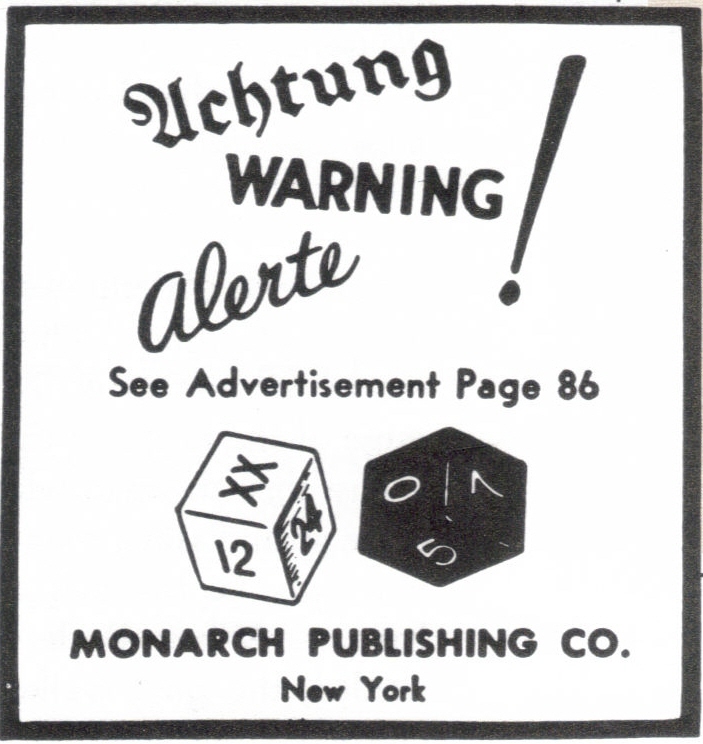
a pair of strange ads appeared in the New Yorker. They seemed to be
advertising a dice game called The Deadly Double. One of the ads showed a
pair of dice with the characters 0, 5, 7, xx, 24, and 12 on the visible
faces. Above were warnings in a variety of languages: "Achtung!
Warning! Alerte!" The other ad showed people in a bunker and explained
that the dice game was essential air raid survival gear. The company
logo was a suspiciously Germanic looking double eagle.
The ads have a somewhat strange design, but only in retrospect did they
appear to contain a coded message. The numbers could allude to the date
of the Pearl Harbor attack (12/7), with the other numbers representing
codes to be deciphered by sleeper agents in the U.S. The Deadly Double itself was thought to refer to the twin threats of Germany and Japan.
Like many mysteries, retellings of this story emphasize the unknown and
leave out crucial facts. The 0 and 5 are sometimes thought to foretell
the exact time of the attack, but the first aircraft opened fire on
Pearl Harbor at 7:48 a.m. local time. Books on mysterious events like to
leave this story unresolved, as though the identity of the ads' creator
remains unknown to this day. In truth, it was traced to a game company
in Chicago that made a dice game called the Deadly Double. Their war-themed ad might seem like poor taste today, but the numbers on the dice matching the date of Pearl harbor was pure coincidence. Still, it was weird enough that the FBI got involved.
No
sooner had the Japanese bombed Pearl Harbor, Hawaii on December 7,
1941, that the home front became obsessed that lurking in the shadows
was a Japanese traitor or Nazi spy, saboteur, or subversive hiding
behind every bush, gathering all of the United States’ valuable
information.
As a result of the attack on Pearl Harbor, the nation was on high alert for spies, especially “suspicious looking Orientals.”
Many law enforcement officials took matters into their own hands. At a
major naval base in Norfolk, Virginia, the chief of police located all
Japanese aliens living in his city and ordered them jailed – all
fourteen of them. In Newark, New Jersey, police officers’ were given
the authority to board trains and arrest all suspicious looking
Orientals and to use their own judgement when determining if an
individual of Oriental origin “looked suspicious” or not. Other state’s
followed, singling out many individuals as “suspicious looking
Orientals.”
Creepy Coincidence of the Deadly Double - Pearl Harbor advance-knowledge Conspiracy Theory

The year was 1859. Four unsavory characters were serving as mercenaries
for the Peruvian Army. A Spaniard (Diego Alvarez), an Irishman
(Killorain), an Englishman (Luke Barrett) and an American (Brown). They
figured there had to be a way to make better money and were looking for
opportunities.
One of the men ran into a renegade priest named Father Matteo. The
priest told the man of a treasure hidden and guarded at a church in the
town of Pisco. The four came up with a plan, deserted from the army and
made their way to Pisco.
Alvarez and Killorain were both Catholic and started to attend mass
regularly. They became model parishioners. After some time they went to
the local priests with a terrible story. They had found out that a
renegade priest by the name of Father Matteo knew about the treasure and
was gathering up a large group of bandits to come and steal the
treasure.
The Priests believed the story. These men could know nothing of the
treasure on their own. Father Matteo must be up to something. Alvarez
came up with a plan to save the treasure. They could load the treasure
onto a ship and move it to the safety of Callao. Alvarez and his three
friends would gladly donate their services as guards.
So it came to pass that the priests loaded the following on a ship in the tiny harbor of Pisco:
- 14 tons gold ingots
- 7 great golden candlesticks, studded with jewels
- 38 long diamond necklaces
- A quantity of jeweled rings
- A quantity of jeweled bracelets
- A quantity of jeweled crucifixes
- 1 chest uncut stones
- 1 chest Spanish doubloons
- Various other jewels and ornaments
Hidden Treasures - Treasure Chest of the Church of Pisco

The
Isdal woman (Norwegian: Isdalskvinnen) is the subject of an unsolved
case involving an unidentified woman found dead at Isdalen Valley in
Bergen, Norway on 29 November 1970. Considered one of Norway's most
profound mysteries, the case has been the subject of intense speculation
over the years regarding the identity of the victim, the events leading
up to her death and the cause of death. Public interest in the case
remains significant.
The woman was found in a part of Isdalen popularly known as "Death
Valley", which lies in the direction towards Mount Ulriken. Next to the
scene police found a burned-out passport. The autopsy showed that the
woman had suffered blunt force trauma to the neck and had taken several
sleeping pills before she died. The official police report concluded
suicide, but this conclusion is highly controversial.
Discovery
On 29 November 1970 at approximately 13:15, while hiking in the hills of
Isdalen valley outside of Bergen, a university professor and his two
young daughters came across the partially charred remains of a naked
woman hidden among some rocks at a remote hiking trail. Present at the
scene were large amounts of sleeping pills, and bottles of petrol. A
full scale murder investigation was immediately initiated and the case
has since evolved to become the most comprehensive criminal case by the
Bergen police.
Investigation
Police traced the woman to two suitcases that were found in an NSB train
station in Bergen. Police also found that the labels had been removed
from every piece of clothing she wore, and that her fingerprints had
been sanded away.
In addition, police discovered a prescription for a lotion, but both the
doctor's name and date had been removed. Within the lining on one
suitcase police discovered 500 German marks. Partial fingerprints were
found on a few pieces of broken glass. They were insufficient for an
identification, but police suspected that they belonged to the dead
woman. The police had made phantom drawings on the basis of witness
descriptions and analysis made from the body; these drawings were
published in the media and disseminated via INTERPOL in a number of
countries.
The Mysterious Norwegian Woman - The Isdal Woman Spy Thriller

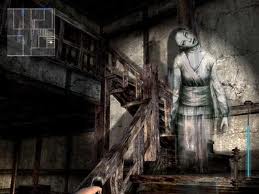
The Himuro Mansion (or Himikyru Mansion) is a japanese urban legend
about the dark history of a haunted house and the horrible murders of
an entire family who lived there. They say that the video game Fatal
Frame was based on a true story. Eager to solve the mystery, many people
have scoured maps, trying to find the real location of Himuro Mansion.
According to the legend, the Himuro Mansion is a large, traditional
Japanese house that is located in a rocky area somewhere on the
outskirts of Tokyo. The mansion became famous for being the site of the
worst mass murder in the history of Japan.
Terrible rituals were performed deep in Himuro Mansion, such as
the Strangling Ritual, the Demon Tag Ritual, and the Blinding Ritual.
The Strangling Ritual and Blinding Ritual were performed in a hidden
room, not shown on the house's original plans. This room is connected to
the house by a long lattice corridor that starts at the Rubble Room.
These rituals were part of the Himuro family's duty to keep the Hell
Gate sealed. The family was able to do this for many years until Kirie's
ritual failed and caused The Calamity, killing most of the occupants of
the mansion and unleashing the Malice, cursing the mansion and all who
die within it. The Himuro Family Master then killed all those in the
house who survived The Calamity before taking his own life.
A
folklorist named Ryozo Munakata moved in with his family to study the
mansion, but he and his family disappeared, killed by the mansion's
curse. Years later, Junsei Takamine and his research team went to
investagte the masion for Takamine's newest work and disappeard, leading
Mafuyu Hinasaki to the masion in search of them, where he too
disappeared. His younger sister, Miku Hinasaki, then arrives at the
mansion and breaks the mansion's curse to rescure her brother.
The Himuro family were said to have practiced ancient and
forgotten Shinto rituals that had long ago been outlawed in Japan. One
of these occult rituals was called “The Strangling Ritual” and involved
the sacrificial murder of a young girl. The purpose of this
gruesome ritual was to protect the Himuro family from bad karma which
they believed would emerge from a portal in the mansion’s courtyard.
Himuro Mansion Haunting - Urban Legend of Haunted House & Horrible Murders

Some
people think it's one of the weirdest books ever published. An art book
unlike any other art book. A unique and disturbing surreal parody.
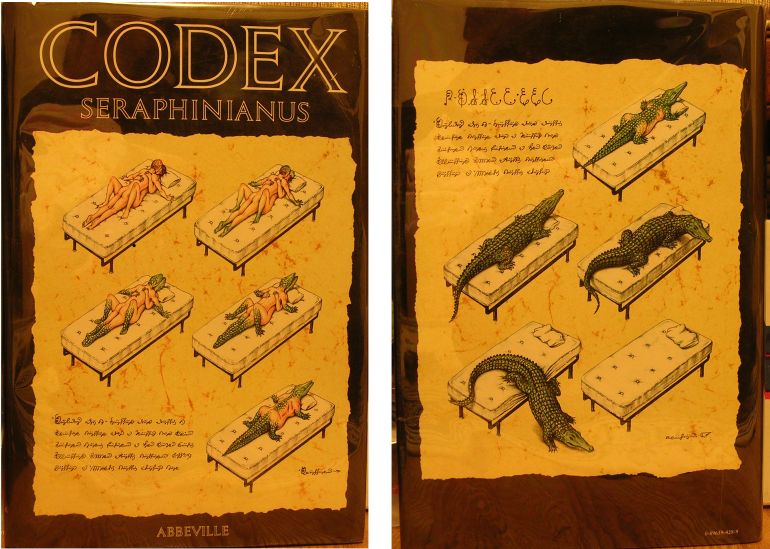
Grotesque and beautiful. It's very hard to describe. Codex Seraphinianus
by Italian artist Luigi Serafini is a window on a bizarre fantasy world
complete with its own unique (unreadable) alphabet and numerous
illustrations that borrow from the modern age but veer into the
extremely unusual.
Codex Seraphinianus, originally published in 1981, is an illustrated
encyclopedia of an imaginary world, created by the Italian artist,
architect and industrial designer Luigi Serafini during thirty months,
from 1976 to 1978. The book is approximately 360 pages long (depending
on edition), and written in a strange, generally unintelligible
alphabet. Originally published in Italy, the book has since been
released in a number of different countries.
The word "Codex" in the title means "book" or "code" (from Latin
caudex), and "Seraphinianus" is derived from the author's last name,
Serafini (which in Italian, refers to the seraphs). Literally, Codex
Seraphinianus means Serafini's code. It was first published in two
volumes by Franco Maria Ricci in 1981. The pictures in this AbeBooks
article are from the 1983 American edition published by Abbeville - 370
pages of the Twilight Zone. There is also a 1993 single volume edition
and a revised 2006 Italian edition with new illustrations - this final
edition is the most affordable version.
Created in the late 1970s, the book's blurb on the cover flap talks
about Codex Seraphinianus being a book for the "age of information"
where coding and de-coding messages is increasingly important in
genetics, computer science and literary criticism. "The Codex presents
the creative vision of this time..." goes on the blurb. If Serafini was
so influenced by "information" in the 1970s to create this maverick art
book, then what must he make of today's information age? Codex
Seraphinianus Covers featuring Facebook, Twitter, blogs and Google?
Countless websites and blogs can be found pondering the meaning of Codex
Seraphinianus or simply admiring a truly original piece of
art/fantasy/imagination - call it what you will.
Codex Seraphinianus - The World's Weirdest Book

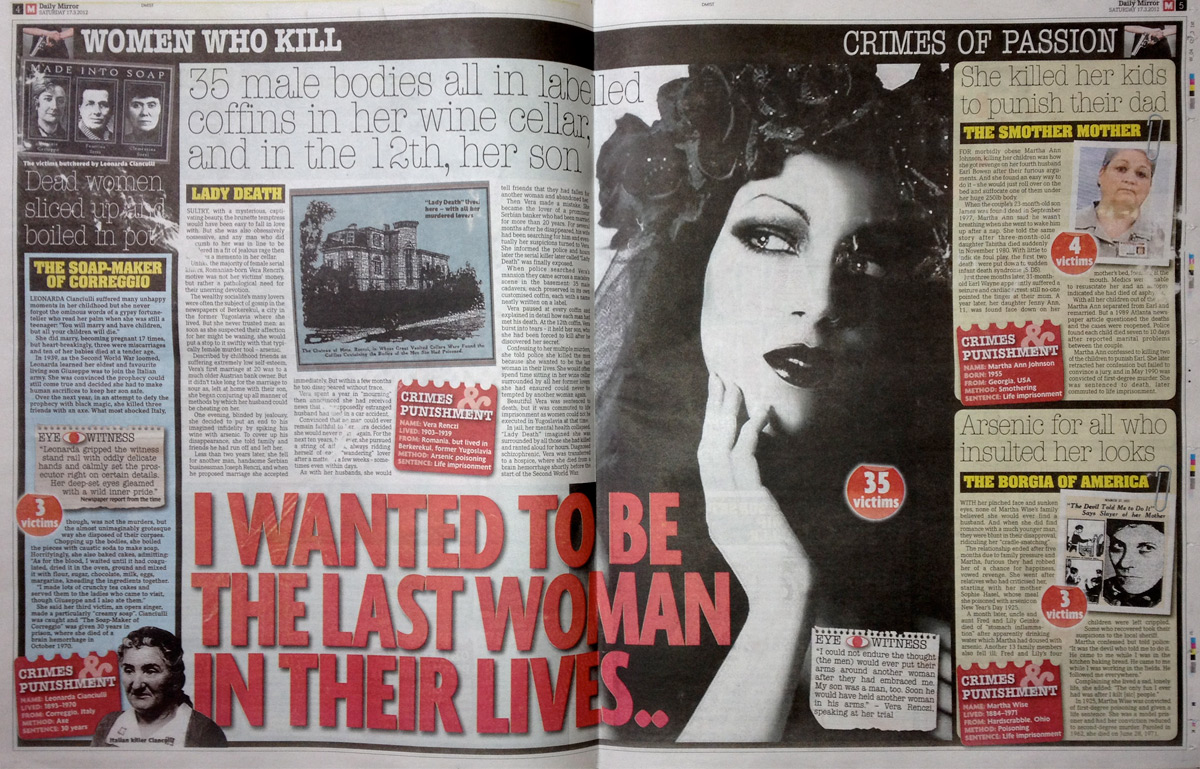
Born
into a wealthy family with Hungarian origins from Bucharest, Romania,
the family relocated to the town of Berkerekul (former Yugoslavia) when
Renczi was ten. By the age of fifteen, she had become increasingly
unmanageable by her parents and had frequently run away from home with
numerous boyfriends, many of whom were significantly older than herself.
Early childhood friends described Renczi as having an almost
pathological desire for constant male companionship and possessing a
highly jealous and suspicious nature. Although Vera Renczi was a
stunningly beautiful woman (according to the standards of the time, I
guess), she was also one of the most prolific female serial killers in
history, driven by a pathological need for devotion from men.
Renczi's first marriage was to a wealthy Bucharest businessman many
years her senior and she bore him a son named Lorenzo. Left at home
daily while her older husband worked, she began to suspect that her
husband was being unfaithful. One evening, in a jealous rage, Renczi
tinctured the man's dinner wine with arsenic and began to tell family,
friends, and neighbors that he had abandoned her and their son. After
approximately a year of "mourning", she then declared that she had heard
word of her supposedly estranged husband's death in a car accident
Shortly after hearing the news of her first husband's "automobile
accident" Renczi again remarried, this time to a man nearer her own age.
However, the relationship was a tumultuous one and Renczi was again
plagued by the suspicion that her new husband was involved in
extramarital affairs. After only months of marriage the man vanished and
Renczi then told friends and family that the man had abandoned her.
After a year had passed, she then claimed to have received a letter from
her husband proclaiming his intentions of leaving her forever. This
would be her last marriage.
Vera Renczi – The Black Widow Serial Killer Who Killed All Of Her Lovers

The most extraordinary and credible research into the ghost phenomenon ever documented is the so-called "Ghosts of Flight 401."
On December of 1972, an Eastern Airlines Tri-Star jetliner, Flight 401,
crashed into a Florida swamp. The pilot, Bob Loft (on the left), and
flight engineer Don Repo (on the right), were two of the 101 people who
perished in the air crash. Not long after the crash, the ghosts of Loft
and Repo were seen on more than twenty occasions by crew members on
other Eastern Tri-Stars, especially those planes which had been fitted
with parts salvaged from the Flight 401 wreckage. The apparitions of
Loft and Repo were invariably described as being extremely lifelike.
They were not only reported by people who had known Loft and Repo, but
their ghosts were also subsequently identified from photographs by
people who had not known Loft and Repo.
The strange tales of the ghostly airmen of Flight of 401
circulated in the airline community. An account of the paranormal
happenings even appeared in a 1974 US Flight Safety Foundation's
newsletter. John G. Fuller, the best-selling author of The Ghost of Flight 401,
carried out an exhaustive investigation into the hauntings with the aid
of several cautious airline personnel. A mass of compelling testimony
was produced as a result. The website Flight 401 – The Black Box Story
provides an account of the crash as told using material from the Black
Box. It highlights how poor cockpit resource management caused a tiny
light bulb to distract the pilots and bring down a Tristar jetliner.
The cause of the crash was found to be a couple of minor design faults
in the controls, and Lockheed rapidly corrected them. However, it was
after some of the undamaged parts of the aircraft were subsequently
recycled onto other planes that the mysterious incidents began to be
reported. Although Eastern Airlines refuses to discuss the matter,
researchers have interviewed numerous individuals claiming to have
encountered the ill-fated pair on L-1011s. As the reports would have it,
Loft and Repo have devoted their after-lives to watching over the
passengers and crew of these Lockheed passenger planes.
Many of the testimonies are extremely persuasive. Many come from people
in highly responsible positions: pilots, flight officers, even a vice
president of Eastern Airlines, who allegedly spoke with a captain he
assumed was in charge of the flight, before recognizing him as the late
Loft.
Ghosts of Flight 401 - The official airline of the paranormal

The
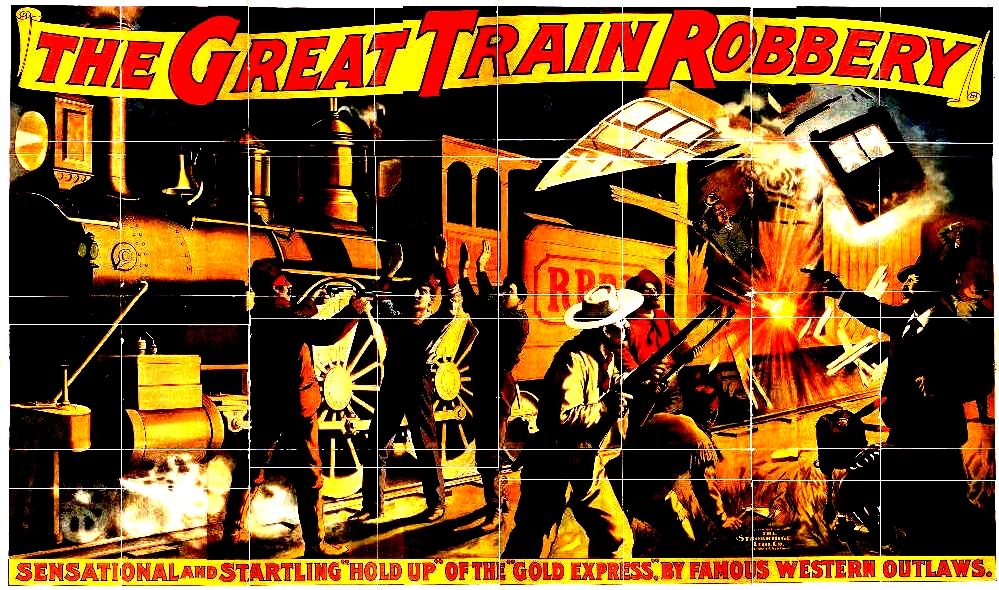
Great Train Robbery is the name given to a £2.6 million train robbery
(the equivalent of £41 million today) committed on 8 August 1963 at
Bridego Railway Bridge, Ledburn near Mentmore in Buckinghamshire,
England. The bulk of the stolen money was not recovered. Three robbers
were never found, two convicted robbers escaped. One convicted was most
likely never involved, and died in prison. Though there were no firearms
involved, the standard judgment was 30 years.
Planning the robbery
The robbery was planned by several parties with no overall mastermind.
Although the robbery operation itself was planned and executed by the
late Bruce Reynolds, the target and the information came from a still
unknown individual dubbed the "Ulsterman". The key field organisers were
Gordon Goody, Buster Edwards and Charlie Wilson, with Brian Field being
the key link between the robbers and the informant.
At 6:50 PM on Wednesday 7 August 1963 the travelling post office (TPO)
"Up Special" train set off from Glasgow Central Station, Scotland en
route to Euston Station in London. The train was hauled by an English
Electric Type 4 (later Class 40) diesel-electric locomotive numbered at
the time as D326 (later renumbered 40 126). The train consisted of 12
carriages and carried 72 Post Office staff who sorted mail during the
journey.
Mail was loaded onto the train at Glasgow and also during station stops
en route, as well as from line-side collection points where local post
office staff would hang mail sacks on elevated track-side hooks which
were caught by nets deployed by the on-board staff. Sorted mail on the
train could also be dropped off at the same time. This process of
exchange allowed mail to be distributed locally without delaying the
train with unnecessary station stops. One of the carriages involved in
the robbery is preserved at the Severn Valley Railway.
The second carriage behind the engine was known as the HVP (High Value
Packages) coach, which carried large quantities of money, as well as
registered mail for sorting. Usually the value of the shipment was in
the region of £300,000, but because there had been a Bank Holiday
weekend in Scotland, the total on the day of the robbery was £2.6
million (equivalent to about £43 million in 2012 RPI terms).
The Great Train Robbery - Unsolved Mystery
Please Don't Touch - Unless You Want a Baby!
More than 2,000 women have reported that they became pregnant shortly after touching the wooden fertility statues.
Many of them had been told by doctors they would never be able to
conceive. Some are very serious about touching the statues, believing in
their powers to help them conceive. Others want to avoid touching the fertlity statues
- for the very same reason! The five-foot tall wooden statues were
acquired from the Ivory Coast of West Africa in 1993 and were placed in
the lobby of Ripley Entertainment's corporate headquarters in Orlando.
Within months, 13 women, including staffers and office visitors were
pregnant.
A Little History
The five foot tall wooden statues were acquired from the Baule people of
the Ivory Coast of West Africa and within a year of going on display at
Ripley Entertainment’s head office in Orlando, Florida, 13 office staff
and visitors became pregnant.
The
idea of fertility statues appear in a variety of cultures. Fertility
statues serve both as a tribute to whatever fertility gods that the
locals believe in, as well as often a mystical totem which helps the
women of a given tribe to conceive and bear healthy children. These
fertility statues may resemble people, or they can look like some
particular animal that is associated with fertility in that culture.
Archaeological digs have turned up a variety of these sorts of statues,
from the Norse goddess Freya riding a boar to the statue of a fat woman
found in the ruins of the Tarxien temples on the island of Malta.
The Legend of the African Fertility Statues
 |
|
According to legend, Pope Joan was a woman who concealed her gender and
ruled as pope for two years, from 853-855 ad. Her identity was exposed
when, riding one day from St. Peter's to the Lateran, she stopped by the
side of the road and, to the astonishment of everyone, gave birth to a
child.
Pope Joan was a legendary female Pope who allegedly reigned for a few
years some time during the Middle Ages. The story first appeared in
13th-century chronicles, and was subsequently spread and embellished
throughout Europe. It was widely believed for centuries, though modern
religious scholars consider it fictitious, perhaps deriving from
historicized folklore regarding Roman monuments or from anti-papal
satire.
The first mention of the female pope appears in the chronicle of Jean de
Mailly, but the most popular and influential version was that
interpolated into Martin of Troppau's Chronicon Pontificum et
Imperatorum, later in the 13th century. Most versions of her story
describe her as a talented and learned woman who disguises herself as a
man, often at the behest of a lover. In the most common accounts, due to
her abilities, she rises through the church hierarchy, eventually being
elected pope. However, while riding on horseback, she gives birth, thus
exposing her gender. In most versions, she dies shortly after, either
being killed by an angry mob or from natural causes. Her memory is then
shunned by her successors.
Mysterious Woman Pope Who Just Won't Go Away