Thursday, December 20, 2012

The Yakuza, the Japanese Mafia -- The Crime Library — Origins and Traditions

Yakuza (also known as gokudo), are members of traditional organized crime syndicates in Japan. The Japanese police, and media by request of the police, call them boryokudan ("violence group"), while the yakuza call themselves "ninkyo dantai" ("chivalrous organizations"). The yakuza are notorious for their strict codes of conduct and very organized nature. They are very prevalent in the Japanese media and operate internationally with an estimated 80,900 members in 2009, the last year for which an estimate is available.

Divisions of origin

Despite uncertainty about the single origin of yakuza organizations, most modern yakuza derive from two classifications which emerged in the mid-Edo Period (1603–1868): tekiya, those who primarily peddled illicit, stolen or shoddy goods; and bakuto, those who were involved in or participated in gambling.

Tekiya (peddlers) were considered one of the lowest social groups in Edo. As they began to form organizations of their own, they took over some administrative duties relating to commerce, such as stall allocation and protection of their commercial activities. During Shinto festivals, these peddlers opened stalls and some members were hired to act as security. Each peddler paid rent in exchange for a stall assignment and protection during the fair.

Throughout history, especially since the modern era, Kyushu island has been the largest source of yakuza members, including many renowned bosses in the Yamaguchi-gumi. Isokichi Yoshida (1867–1936) was from the Kitakyushu area and considered the first renowned modern yakuza. Recently Shinobu Tsukasa and Kunio Inoue, the bosses of the two most powerful clans in the Yamaguchi-gumi, are from Kyushu. Fukuoka, the northernmost part of the island, has the largest number of designated syndicates among all of the prefectures.

The Edo government eventually formally recognized such tekiya organizations and granted the oyabun (leaders) of tekiya a surname as well as permission to carry a sword — the wakizashi, or short samurai sword (the right to carry the katana, or full-sized samurai swords, remained the exclusive right of the nobility and samurai castes). This was a major step forward for the traders, as formerly only samurai and noblemen were allowed to carry swords. 


The Yakuza, the Japanese Mafia -- The Crime Library — Origins and Traditions

The Legend of La Llorona: The Wailing Woman

La Llorona is New Mexico's most famous legend, and the state's most famous ghost. It is centered along the Rio Grande south to Juarez, Mexico. There is scarcely a child in New Mexico that has not been told the story of La Llorona as a youngster.

The legend of La Llorona (pronounced "LAH yoh ROH nah"), Spanish for the Weeping Woman, has been a part of Hispanic culture in the Southwest since the days of the conquistadores. The tall, thin spirit is said to be blessed with natural beauty and long flowing black hair. Wearing a white gown, she roams the rivers and creeks, wailing into the night and searching for children to drag, screaming to a watery grave.

No one really knows when the legend of La Llorona began or, from where it originated. Though the tales vary from source to source, the one common thread is that she is the spirit is of a doomed mother who drowned her children and now spends eternity searching for them in rivers and lakes.

Although there are many variations, the legend goes something like this:

In the early 1700s, there was a young woman named Maria living in Juarez, Mexico. As Maria blossomed into a young woman, her striking beauty attracted the charms of many local men. Coming from a poor family, her mother encouraged her to marry one of these dashing young men for a good life. However, Maria refused, stating her beauty would one day attract the charms of a very rich man.

Before long, the handsome young man of her dreams rode into town. He was the son of a well-known wealthy ranchero west of Juarez. He wore nice clothes and had a handsome, well groomed horse with a fancy saddle — all the signs of a man of wealth. Maria would follow him around, trying to catch his eye, but he seemed to only notice the young women who were fairly "well to do." At night, he would charm the local ladies with his guitar and golden voice, breaking Maria's heart.

One day, the young ranchero came into the tienda (store) where Maria was shopping. She blushed from embarrassment, as she was wearing an old, dirty, tattered dress. However, the blushing beauty suddenly caught the eye of the young ranchero. She was the most beautiful woman he had ever seen. After a short courtship, the ranchero paid her father a large dowry and they were soon married, in spite of the objections of the ranchero's father. After all, it was frowned upon for a wealthy man to marry a woman from a lower class. 


The Legend of La Llorona: The Wailing Woman 

The Real Life Legend of Slender Man

There are legends and myths that have been around for centuries and have seared themselves into our minds and culture. Then there are those that have been brought to life by way of modern technologies reminding us of nightmares that should have been buried and forgotten. One such legend is known through internet popularity as Slender man.

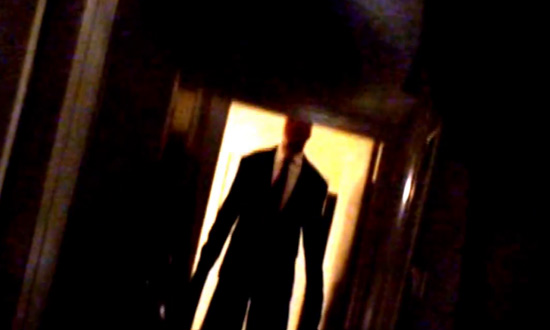
The creature known as Slender man is said to have the appearance of a tall, lanky man in a black suit. Not so scary, right? Just wait.

He towers at six to seven feet with unusually thin limbs. His face, if you can call it that, is featureless and white, though some say that it can morph into whatever you fear the most. His arms, however, can stretch out to grab his victims and bend in unnatural ways with long, talon-like fingers used to scratch at the windows of children. Yes that’s right. While he haunts everyone who has the misfortune to see him, he prefers to devour those that are 16 and younger. He is also said to have multiple arms sometimes seen as long tentacles used to ensnare whomever catches his eye, or should I say, the void where his face should be.

Slender man is a silent stalker that likes to hide in plain sight and is usually spotted in wooded areas where he could blend in amongst the trees and dark corners of the forest. When he finds his victim of choice, he follows them home and upon being seen through the window, can use a form of hypnosis that compels you to walk right into his spindly arms. Usually glimpsed at a distance, once he’s close enough to get a good look at, that’s when he slinks into your home appearing in dark hallways or blank t.v. screens. American legend says that he was once a man who was tortured viciously, first being beaten with a log, then impaled with a 2 foot stick and hung from a tree with his arms and legs pulled from their sockets.

When captured, you will wake to find Slender man standing above you. He will ask one question and if you’re lucky and get it right, he breaks both your arms and legs. But if you are wrong, then he slowly sticks his fingers down your throat pulling out the heart. In circles on the internet Slender man is claimed to be the creation of a website called Somethingawful.com. Many say that this alone debunks the mysterious legend and closes the case on the creature’s fictitious existence. Well, not quite.

It appears that the Slender man myth goes back a lot farther than is claimed. He is based on something called Der Grossman, meaning “tall man”, which is the Germanic version. Legend says that children would site him in the Black Forest days before their disappearance. All that was left behind would be the mutilated remains of livestock and in a few cases, village inhabitants would be found several miles from their homes impaled on the higher branches of the trees. 


The Real Life Legend of Slender Man

Friday, November 30, 2012

Conspiracy Theory - President’s Book of Secrets

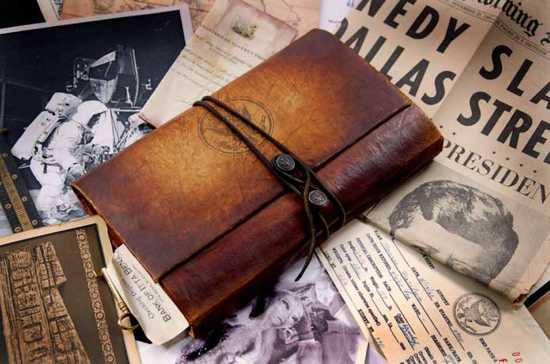
This theory was used in the film National Treasure 2: Book of Secrets, and claims that the Presidents of the United States have passed down a book from Washington to Obama, in which some or all have added facts and histories earth-shattering in scope and implications, and that this book’s location is only known to the President, and the National Librarian of Congress. Thus, if the President is assassinated, the Librarian informs the next President of the book. After each President leaves office, the location is changed.

This book is rumored to contain the truth about the alien landings at Roswell, NM and Rendlesham Air Base, UK, and many other UFO events; the truth about the JFK and RFK assassinations; the location of the Holy Grail (tying in with the Fort Knox conspiracy theory); the fates of various high-ranking Nazis following WWII (and the facts concerning the U. S. government’s assistance of them); even the identity of the Antichrist. Assuming there is a book, and assuming it identifies the Antichrist, we are led to wonder if he and the President are on the same side, are one and the same, or whether the President fears for Earth’s immediate future. Even more insidious, in terms of realism, is the claim that the book told of the attacks of September 11, 2001 before they took place, and also tells of the imminent coup d’etat of Russia, followed by a Russo-North Korean invasion of South Korea, initiating WWIII.

This weekend President Obama got a little down time with his family in Maine, he also took the time to bring some interesting reading material. Supposedly, according to White House officials speaking on the condition of anonymity, the president removed from a secret compartment inside a White House Abraham Lincoln statute the rumored "President's Book of Secrets." Many historians and conspiracy theorists would be surprised to find out that the secret book featured in the movie "National Treasure: Book of Secrets," actually does exist. The top ten secrets believed to be in the book are listed below:

1. The Lincoln Memorial is really made out of solid gold painted white. Should the deficit hit $400 trillion dollars then it will be melted down to pay off debts.

2. Should the Supreme Court even become deadlocked, perhaps by a 4-4 vote with one justice abstaining, then the President can take down the Great Seal of the White House, which is four feet in diameter, and flip it while the vice president calls heads or tails to decide the case.

3. The missing 8 minutes on the Watergate tapes reveals then President Nixon talking about what to do with aliens being held at a secret military base in Iowa.

4. The book also describes a secret deal between the United States and Canada where participants in the witness protection program, and a certain celebrities gone bad such as Lindsay Lohan, can live anonymously in Quebec as long as a promise to speak French.


Conspiracy Theory - President’s Book of Secrets 

Unexplained Phenomenon of NAGA Fire Balls

Naga Fire balls

The Naga fireballs of the Mekong river are not a question of ‘If’, but a question of ‘What’. They are one of the most well documented unexplained phenomena in the entire world. Every year during October on the night of Wan Awk Pansa thousands of spectators gather on the banks of the Mekong river in Thailand and Laos to see the legendary Naga breathe forth balls of fire from the river itself. Many have been watching this every year for their entire life. The balls themselves are reddish in color and are about the size of an egg. They slowly and silently rise from the river before accelerating high into the air where they disappear. There can be anywhere from tens to thousands of these glowing orbs per night. The balls themselves are seen either side of the festival night, which attests to the fact it’s more than likely of natural origin rather than an organized display by officials.

Their supernatural origin is not without opposition. Manas Kanoksin, a doctor from Nong Khai strongly believes that fermenting sediment on the river’s bottom causes pockets of methane gas to form, and that the Earth’s position in relation to the sun during those days of the year causes them to rise, then spontaneously ignite in the presence of ionized oxygen. Italian chemists Luigi Garlaschelli and Paolo Boschetti, have replicated the lights by adding chemicals to the gases formed by rotting compounds. But other researchers dismiss this theory, pointing out that the rocky river bottom doesn’t have much sediment, and that the water’s turbulence would break up any such methane bubbles before they reached the water’s surface. Whatever the cause, the Naga fireballs of the Mekong are one of the least known, most spectacular of phenomena to observe.

Each year, hundreds of fireballs spontaneously explode out of Thailand’s Mekong River. Known as “bung fai paya nak” or “Naga fireballs,” they have appeared on the “late autumn night of the full moon at the end of the Buddhist Lent for as long as anyone can remember,” according to a 2002 Time magazine story about the phenomenon. Some believe the balls come from the breath of Naga, a mythical serpent that haunts the river. (Locals use old grainy pictures and postcards of the mythical beast to prove its presence to tourists.) Others believe the fireballs are actually pockets of methane bubbling up from the river, but many locals remain convinced that the fireballs are of a supernatural origin.

Naga Lights

Weird things are happening some 70 - 100 kilometres downstream from the Vientiane - capital of Laos. In the nights from the muddy waters of Mekong river appear red glowing balls which quickly rise up in the air and disappear without noise (some, who manage to be close to the lights, report silent hiss). These mysterious sparkles are small, but sometimes they reach a size of a basketball.

These are not some ghosts seen by occasional people and questioned by majority. Ghost fireballs of Mekong have been seen by thousands of people, photographed and captioned on movies and, after all, investigated by scientists looking for the explanation of this interesting phenomenon.
Unexplained Phenomenon of NAGA Fire Balls 


Unexplained Heist of THE IRISH CROWN JEWELS?

Irish Crown Jewels

The jewels – emeralds, rubies and diamonds presented to the Irish nation by William IV in the 19th century, were kept in a safe in Dublin Castle’s Bedford Tower. They were in the care of Sir Arthur Vicars, the Ulster King of Arms, his nephew Pierce Mahoney, and two assistants. On June the 28th, 1907, Vicars reported that his key to the tower’s main door had vanished. Five days later, the cleaner, Mrs Farrell, found the main door unlocked when she arrived for work. Then finally, on July 6th, she noticed something even more strange: the door to the strongroom where the jewels were kept, had been left open overnight. That afternoon, a castle porter named Stivey entered Vicar’s room while Vicars and Mahoney were examining the gold and enamelled collar of the Order of St Patrick. Vicars gave the porter a safe key and ordered him to put the collar with the rest of the jewels. A few minutes later, Stivey returned with the alarming news that the safe was already open. Vicars made a swift inspection and cried, ‘My God, the jewels are gone!’

Police never caught the thief. Within a month of the crime, Scotland Yard detectives had produced a report with the name of their prime suspect. However, this report was suppressed, and the Chief Inspector recalled. Later during that year Edward VII demanded that all four men resposible for guard the jewels, step down. 14 years later, Vicars was found dead in the garden of his home in County Kerry. The body was riddled with bullets and a label was found that read: ‘IRA Never Forgets’. But the Irish Republican Army insisted that it was not involved. Regardless, most people in Ireland believed Vicars to be an innocent man who had been badly treated by the British Government. No trace of the Irish Crown Jewels has ever been found.

Almost every nation has its State treasures. They may be symbols of national pride, such as Crown Jewels, or documents that encapsulate national history, as with the American Declaration of Independence. Some of these treasures now reside in museums. Others, most especially crowns and other royal regalia, are regularly worn by heads of State. The regalia variously referred to as the Irish Crown Jewels or the State Jewels of Ireland, however, met a more unusual and mysterious fate.

Properly called the jewels belonging to the Most Illustrious Order of Saint Patrick, they were created to be presented to the National Order of Chivalry of Ireland, the Order of Saint Patrick, for use by the Viceroy or visiting Sovereigns. In 1830 the Crown Jewellers, Rundell & Bridge, created the regalia from jewels that had belonged to Queen Charlotte, the consort of George III. These diamonds, rubies, and other stones possibly included the rose diamond given to the Queen by the Sultan of Turkey and the jewels she received from Mogul Emperor Shah Alam. 


 Unexplained Heist of THE IRISH CROWN JEWELS?

Thursday, November 8, 2012

The 5 Most Scariest Urban Legends and Horror Stories

The Urban Legend can have its lineage traced all the way back to the earliest form of storytelling, when terrifying tales were traded around fires, either as a warning or for mere entertainment. The Urban Legend is a contemporary legend, a modern form of folklore or mythology which reflects the era’s fears or trepidations. While originally, like the original talks of folklore, they were passed around by word of mouth, modern technology has seen the distribution of tales taken on by the new forms of communication and media. The latest of these being used are the chain-email and the use of various social networking sites, which have been able to add an extra fear dynamic in the added clause that if the note is not forwarded to a certain number of people, some form of paranormal revenge will befall the ill-fated reader.

Most Urban Legends change over time and have variations depending on where it is told. They usually have happened to a ‘friend of a friend’, giving it proximity and removing that feeling of being remote to the story, adding that extra fear factor. They are the scourge of the playgrounds and the invader of the wine fuelled dinner party. They are the tale of that misfortunate, distant acquaintance. They are the always terrifying Urban Legends.

01 Bloody Mary


“When I was about 9 years old, I went to a friend’s for a birthday/slumber party. There were about 10 other girls there. About midnight, we decided to play Mary Worth. Some of us had never heard of this so one of the girls told the story.

Mary Worth lived a long time ago. She was a very beautiful young girl. One day she had a terrible accident that left her face so disfigured that nobody would look at her. She had not been allowed to see her own reflection after this accident for fear that she would lose her mind. Before this, she had spent long hours admiring her beauty in her bedroom mirror. 


http://theunexplainedmysteries.com/5-Scariest-Urban-Legends.html

Unexplained Mysteries - The Bilderberg Group

Of all the New World Order conspiracy theories, this one sounds the most plausible. They are a real organization that meets once or, at most, twice a year, renting out entire floors of remote and expensive hotels. No one knows who the members are, except other members, of which there may be 20, or several hundred. They are thought to be powerful financiers, businessmen, politicians, and generals, whose sole intent is to control the world’s economies, wars, politics, anything that helps them make money. Henry Kissinger is known to have been a member at one time. Tony Blair is rumored to be one. Both Bushes are rumored to be members, as is Vladimir Putin.

The original conference was held at the Hotel de Bilderberg, near Arnhem in the Netherlands, from 29 to 31 May 1954. It was initiated by several people, including Polish politicians Józef Retinger and Andrew Nielsen, concerned about the growth of anti-Americanism in Western Europe, who proposed an international conference at which leaders from European countries and the United States would be brought together with the aim of promoting Atlanticism – better understanding between the cultures of the United States and Western Europe to foster cooperation on political, economic, and defense issues. Retinger approached Prince Bernhard of the Netherlands who agreed to promote the idea, together with former Belgian Prime Minister Paul Van Zeeland, and the head of Unilever at that time, Dutchman Paul Rijkens. Bernhard in turn contacted Walter Bedell Smith, then head of the CIA, who asked Eisenhower adviser Charles Douglas Jackson to deal with the suggestion. The guest list was to be drawn up by inviting two attendees from each nation, one of each to represent conservative and liberal points of view. Fifty delegates from 11 countries in Western Europe attended the first conference, along with 11 Americans.


http://theunexplainedmysteries.com/bilderberg-group.html

Unexplained Mysteries - The Babushka Lady

In the 1963 assassination of President John F. Kennedy, Babushka Lady is a nickname for an unknown woman who might have photographed the events that occurred in Dallas' Dealey Plaza at the time President John F. Kennedy was shot. Her nickname arose from the headscarf she wore similar to scarves worn by elderly Russian women (babushka – means "grandmother" or "old woman" in Russian).

Babushka Lady was seen to be holding a camera by eyewitnesses and was also seen in film accounts of the assassination (such as this Muchmore frame and Zapruder Frame 285). She was observed standing on the grass between Elm and Main streets and she can be seen in the Zapruder film as well as in the films of Orville Nix, Marie Muchmore, and Mark Bell (44 seconds and 49 seconds into the Bell film: even though the shooting had already taken place and most of her surrounding witnesses took cover, she can be seen still standing with the camera at her face). After the shooting, she crossed Elm Street and joined the crowd that went up the grassy knoll in search of a gunman. She is last seen in photographs walking east on Elm Street and neither she nor the film she may have taken have been positively identified.


The Babushka Lady never came forward. The police and the FBI did not find her, and the film shot from her position never turned up, despite a request by the FBI to local photo processors that they would be interested in any pictures or films of the assassination. Jack Harrison, a Kodak technician in Dallas, claimed to have developed on November 22, 1963, the day of the assassination, an out-of-focus color slide for a brunette in her late 30s that showed a view similar to the Babushka Lady's position. 


Beverly Oliver

In 1970, a woman named Beverly Oliver came forward and claimed to be the Babushka Lady. She had worked in 1963 as a singer and dancer at the Colony Club, a strip club that competed with Jack Ruby's Carousel Club next door. In 1994, she released a memoir, Nightmare in Dallas, chronicling the events of the day of Kennedy's assassination. Oliver said that after the assassination she was contacted at work by two men who she thought "...were either FBI or Secret Service agents." According to Oliver, the men told her that they wanted to develop her film and would return it to her within ten days, but they never returned the film.

Critics have noted a number of inconsistencies with her story, such as her alleged use of a model of camera that did not exist in 1963,[citation needed] and her claim to have positioned herself just behind Charles Brehm and his son, despite Brehm's statement that he and his son had hurried to that position at the last moment.[6] Also, the fact that the Babushka lady appears to be a stout, middle-aged woman, whereas Oliver was 17 at the time of the assassination, tends to cast doubts on Oliver's claims. 


http://theunexplainedmysteries.com/babushka-lady-mystery.html 

Unexplained Mysteries - The Poe Toaster

The Poe Toaster is the nickname given to a mysterious man who pays annual tribute to Poe by visiting his grave every year. The strange tradition started in 1949 – a century are after Poe’s death, and it occurs every year on the author’s birthday (January 19). According to Wikipedia: “In the early hours of the morning on that date, a black-clad figure, presumed to be male, with a silver-tipped cane enters the Westminster Hall and Burying Ground in Baltimore, Maryland. The individual proceeds to Poe’s grave, where he or she raises a cognac toast. Before departing, the Toaster leaves three red roses and a half-bottle of cognac on the grave.”

The Toaster wears a black hat and coat and hides his face with a hood or scarf. Groups of reporters and admirers are often on hand to watch the event. There have been no attempts to interfere with the Toaster or to unmask him – most likely out of respect for the tradition.

The Poe Toaster is an unofficial nickname given to a mysterious person (or more probably two persons in succession, possibly father and son) who, for over seven decades, paid an annual tribute to American author Edgar Allan Poe by visiting the stone marking his original grave in Baltimore, Maryland in the early hours of January 19, Poe's birthday. The shadowy figure, dressed in black with a wide-brimmed hat and white scarf, would pour himself a glass of cognac and raise a toast to Poe's memory, then vanish into the night, leaving three roses in a distinctive arrangement and the unfinished bottle of cognac. Onlookers gathered annually in hopes of glimpsing the elusive Toaster, who did not seek publicity, and was rarely seen or photographed.

According to eyewitness reports and notes accompanying offerings in later years, the original Toaster visited the tomb from sometime in the 1930s (though no report appeared in print until 1950) until his death in 1998, after which the tradition was passed to "a son". Controversial statements were made in some notes left by the post-1998 Toaster, and in 2006 an unsuccessful attempt was made by several onlookers to detain and identify him. In 2010 there was no visit by the Toaster, nor did he appear in 2011 or 2012, triggering speculation that the 75-year tradition had ended.
http://theunexplainedmysteries.com/poe-toaster.html

Friday, July 13, 2012

Lovelock giant skull - Who Were The Si-Te-Cah

In 1911 several giant skeletons and ancient artefacts were supposedly fund in a cave in Lovelock in Nevada, USA. Almost everything was later lost in a fire but a skull is supposed to be found in the Humbolt Museum, Winnemucca. Many Native American tribes from the Northeast and Southwest still relate the legends of the red-haired giants and how their ancestors fought terrible, protracted wars against the giants when they first encountered them in North America almost 15,000 years ago.
When mining for guano in a cave in Lovelock, a small town about 80 miles north-east of Reno, the miners reportedly found mummies preserved in the dry bat-droppings. The mummies were large, from 6 and a half feet to more that 8 feet (2 to more than 2,5 meters), and they had red hair. They were reportedly lying in a layer of burnt material about four feet under the surface and there were also lots of broken arrows around the mummies. Before archaeologists could survey the findings most of it was gone or damaged - and a later fire where the artefacts were stored did no good either.

Legends
The Puite Indians of the area have legends about giants and how they killed them. The race of giants, the "Si-Te-Cah" , should have been white, red-haired, very tall cannibals, and the Indians started war against them when they entered their land. A coalition of tribes managed to trap the last remaining giants in a cave and while shooting arrows at them they started a large fire at the mouth of the cave. They kept the fire going and shot everybody who tried to get out - until the giants were annihilated. The Paiutes, a Native-American tribe indigenous to parts of Nevada, Utah and Arizona, told early white settlers about their ancestors’ battles with a ferocious race of white, red-haired giants. According to the Paiutes, the giants were already living in the area.


The Paiutes named the giants “Si-Te-Cah” that literally means “tule-eaters.” The tule is a fibrous water plant the giants wove into rafts to escape the Paiutes continuous attacks. They used the rafts to navigate across what remained of Lake Lahontan.
According to the Paiutes, the red-haired giants stood as tall as 12-feet and were a vicious, unapproachable people that killed and ate captured Paiutes as food.
The Paiutes told the early settlers that after many years of warfare, all the tribes in the area finally joined together to rid themselves of the giants.
One day as they chased down the few remaining red-haired enemy, the fleeing giants took refuge in a cave. The tribal warriors demanded their enemy come out and fight, but the giants steadfastly refused to leave their sanctuary.


Lovelock giant skull - Who Were The Si-Te-Cah

Unexplained Mysteries of The Emerald Tablet

The Emerald Tablet, also known as Smaragdine Table, Tabula Smaragdina, or The Secret of Hermes, is a text purporting to reveal the secret of the primordial substance and its transmutations. It claims to be the work of Hermes Trismegistus ("Hermes the Thrice-Greatest"), a legendary Hellenistic combination of the Greek god Hermes and the Egyptian god Thoth.

The Emerald Tablet is an ancient artifact whose current whereabouts are unknown. What was written on it is the foundation of Hermetic Philosophy and perhaps it contains a recipe for preparing the philosopher’s stone which can turn metals into gold. Or else it symbolizes the spiritual equivalent, purifying the soul. Versions of its text became known to the Christian world after the fourteenth century through Arabic translations.

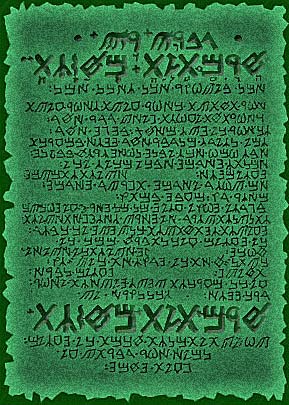
The physical Emerald Tablet was described as a rectangular object of exquisite workmanship, with its sacred message written in bas-relief or carved out, using an alphabet similar to Phoenician. Supposedly this tablet is made of emerald, a gem cherished by the ancients. But since large quality emeralds from the old world (if it was from the old world or from earth even) probably never existed and since there is confusion over what was, and what was called an emerald in the old world, it was perhaps more likely another green crystal, jasper or jade. It may have been simply green colored glass.

Most consider the writings on the Emerald Tablet to be one of the earliest of all extant Western alchemical works, originating from pre-Greek sources. In mystical circles it is still popular with modern-day alchemists. The writings are considered to belong to the Hermetic Tradition, a non-Christian branch of Hellenistic Gnosticism. The Arabs called alchemy the Hermetic art. There were generally two types of Hermetic writings, philosophical and alchemical/magical. Like many texts from this era, most of these texts (the Corpus Hermeticum) were lost somewhere, sometime in history and nobody really knows how many there were.

The roots of the Emerald Tablet are not so easy to pin down. The magic or spiritual secrets that it imparts came directly from Hermes himself, the messenger of the gods, and lord of magicians. Or more specifically, Hermes Trismegistus, a Hellenistic Egyptian mix of Hermes the Greek god and Thoth the Egyptian god. The Greeks in Egypt at the time thought Hermes was the same as Thoth. They are similar in many ways although there are some differences too and some Greeks did not accept this version of the god. Both gods were gods of wisdom, science, magic and the afterlife who taught man how to do all manner of things. The stories and the origins of these gods go back very far into murky history, 10,000 years ago and beyond. And with them go the stories and possible origins of the tablet that they/he created. But that is what makes it interesting, that it could be a surviving thread of ancient wisdom.


Unexplained Mysteries of The Emerald Tablet

The 7 Horniest People on Earth


Man from Zheng Zhou


In 2006, an 88-year-old man from Zheng Zhou, China, caught the attention of the media after growing a small horn, on the right side of his head. The man said it began growing after he picked up a little bump on his head. Doctors diagnosed him with cortex hyperplasia and he soon received surgery, to have the horn removed.

Ma Zhong Nan


Back in 2007, a 93-year-old man, living in a small Chinese village, hoped to find a solution for the problem sticking out of his head. Five years before, Ma Zhong Nan was combing his hair, and carelessly injured his scalp. He paid no attention to the small wound, but soon, a hard substance started coming out of his head. In just half a year, the old man had a 10-cm-long horn on top of his head. After doctors told him they couldn’t fix him, he looked for help through the media.

Granny Zhao


In 2007, the Yangcheng Evening Post reported that a 95-year-old woman, from Zhanjiang city, China, had a curved horn, like the stalk of a pumpkin, coming out of her forehead. Actually, it wasn’t really a horn, but an overgrown mole shaped like a horn. The old woman, known as Granny Zhao, said it started out as a small mole, but it grew in time. She didn’t suffer any pains, on account of her “horn, it just slightly affected her vision. Read more The 7 Horniest People on Earth       

Monday, June 18, 2012

Taman Shud Case - The Body on Somerton Beach

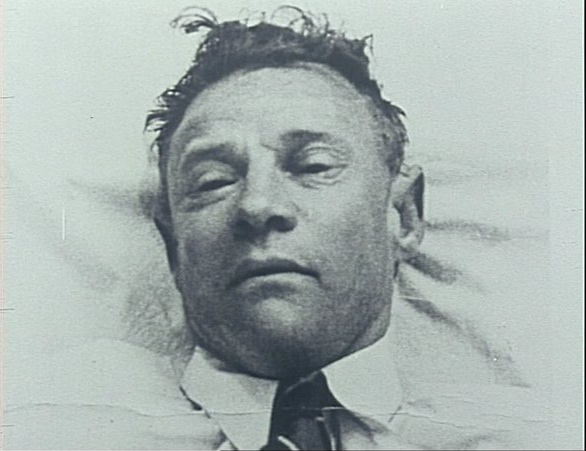
In 1948 the body of a man was found on Somerton beach in Adelaide, Australia. The man was never identified. Police found a suitcase which they believed was his containing clothing in which all but three items had their name tags removed. The name on the remaining items pointed them to a man who was later identified as not being the dead man. A small note in the man’s pocket said “taman shud” which is the last line of the Rubaiyat of Omar Khayyam. It had been cut from a book. A doctor seeing the note on the TV contacted police to say that the book had appeared in the backseat of his unlocked car. It was the copy that had had the note removed. In the back of the book were coded markings which have not been able to be deciphered as yet:

MRGOABABD
MTBIMPANETP
MLIABOAIAQC
ITTMTSAMSTGAB

A name in the front of the book led police to a woman who said she had given it to a man named Boxall during the Second World War. Upon seeing a plaster cast of the dead man she identified him as Boxall. This appeared to solve the mystery of who the man was, until Boxall was discovered alive with his copy of the book undamaged. Coincidentally the woman who identified the man lived in Glenelg – the last town visited by the dead man before he travelled by bus to his final destination. The woman asked police not to record her name as she was married and wanted to avoid scandal – they foolishly complied and her identity is now also unknown. This is considered to be one of Australia’s most profound mysteries. Wikipedia has extensive information on this fascinating case here.

Most murders aren’t that difficult to solve. The husband did it. The wife did it. The boyfriend did it, or the ex-boyfriend did. The crimes fit a pattern, the motives are generally clear.

Of course, there are always a handful of cases that don’t fit the template, where the killer is a stranger or the reason for the killing is bizarre. It’s fair to say, however, that nowadays the authorities usually have something to go on. Thanks in part to advances such as DNA technology, the police are seldom baffled anymore.

They certainly were baffled, though, in Adelaide, the capital of South Australia, in December 1948. And the only thing that seems to have changed since then is that a story that began simply—with the discovery of a body on the beach on the first day of that southern summer—has bec0me ever more mysterious. In fact, this case (which remains, theoretically at least, an active investigation) is so opaque that we still do not know the victim’s identity, have no real idea what killed him, and cannot even be certain whether his death was murder or suicide. 


Taman Shud Case - The Body on Somerton Beach

Katz II - Unexplained Mystery of Ghost Yacht


In 2007, the 12-metre catamaran, the Kaz II, was discovered unmanned off the coast of Queensland, northeast Australia in April. The yacht, which had left Airlie Beach on Sunday 15 April, was spotted about 80 nautical miles (150 km) off Townsville, near the outer Great Barrier Reef on the following Wednesday. When boarded on Friday, the engine was running, a laptop was running, the radio and GPS were working and a meal was set to eat, but the three-man crew were not on board. All the sails were up but one was badly shredded, while three life jackets and survival equipment, including an emergency beacon, were found on board. Investigators recovered a video recording that showed footage taken by the crew shortly before their disappearance. The footage showed nothing abnormal.

The Katz II was (or is) a private yacht whose 2007 crew met with a similar end to the crew of the Mary Celeste. That is to say, no one is quite sure what happened to them. The story is slightly less suspicious than the story of the Mary Celeste, given that there were only three men on board the Katz II. Nevertheless, the lack of clues, disappearance of the crew and discover the boat are very much the same, save the more modern equipment on board the Katz II.

The Katz II was found adrift near the Great Barrier Reef on April 18, 2007. The Katz and three friends -- all experienced -- left Airlie Beach only three days earlier. Upon boarding the vessel, authorities found food set out on the table, equipment still turned on, the yacht's entire store of life jackets, the engine running and a laptop still turned on. There was even a coffee mug still on deck. The only thing that was not there were people and there was no sign of them.

A rescue effort went underway immediately. However, it appeared, judging by a video made by the men and other clues, that the men had gone missing the very evening after they left. That meant nearly three days in the open ocean without life vests, if they had fallen overboard. That meant three days lead, if they met with foul play. They were never found. 


Katz II - Unexplained Mystery of Ghost Yacht

LinkWithin

Related Posts with Thumbnails