Friday, July 13, 2012

Unexplained Mysteries of The Emerald Tablet

The Emerald Tablet, also known as Smaragdine Table, Tabula Smaragdina, or The Secret of Hermes, is a text purporting to reveal the secret of the primordial substance and its transmutations. It claims to be the work of Hermes Trismegistus ("Hermes the Thrice-Greatest"), a legendary Hellenistic combination of the Greek god Hermes and the Egyptian god Thoth.

The Emerald Tablet is an ancient artifact whose current whereabouts are unknown. What was written on it is the foundation of Hermetic Philosophy and perhaps it contains a recipe for preparing the philosopher’s stone which can turn metals into gold. Or else it symbolizes the spiritual equivalent, purifying the soul. Versions of its text became known to the Christian world after the fourteenth century through Arabic translations.

The physical Emerald Tablet was described as a rectangular object of exquisite workmanship, with its sacred message written in bas-relief or carved out, using an alphabet similar to Phoenician. Supposedly this tablet is made of emerald, a gem cherished by the ancients. But since large quality emeralds from the old world (if it was from the old world or from earth even) probably never existed and since there is confusion over what was, and what was called an emerald in the old world, it was perhaps more likely another green crystal, jasper or jade. It may have been simply green colored glass.

Most consider the writings on the Emerald Tablet to be one of the earliest of all extant Western alchemical works, originating from pre-Greek sources. In mystical circles it is still popular with modern-day alchemists. The writings are considered to belong to the Hermetic Tradition, a non-Christian branch of Hellenistic Gnosticism. The Arabs called alchemy the Hermetic art. There were generally two types of Hermetic writings, philosophical and alchemical/magical. Like many texts from this era, most of these texts (the Corpus Hermeticum) were lost somewhere, sometime in history and nobody really knows how many there were.

The roots of the Emerald Tablet are not so easy to pin down. The magic or spiritual secrets that it imparts came directly from Hermes himself, the messenger of the gods, and lord of magicians. Or more specifically, Hermes Trismegistus, a Hellenistic Egyptian mix of Hermes the Greek god and Thoth the Egyptian god. The Greeks in Egypt at the time thought Hermes was the same as Thoth. They are similar in many ways although there are some differences too and some Greeks did not accept this version of the god. Both gods were gods of wisdom, science, magic and the afterlife who taught man how to do all manner of things. The stories and the origins of these gods go back very far into murky history, 10,000 years ago and beyond. And with them go the stories and possible origins of the tablet that they/he created. But that is what makes it interesting, that it could be a surviving thread of ancient wisdom.


Unexplained Mysteries of The Emerald Tablet

The 7 Horniest People on Earth


Man from Zheng Zhou


In 2006, an 88-year-old man from Zheng Zhou, China, caught the attention of the media after growing a small horn, on the right side of his head. The man said it began growing after he picked up a little bump on his head. Doctors diagnosed him with cortex hyperplasia and he soon received surgery, to have the horn removed.

Ma Zhong Nan


Back in 2007, a 93-year-old man, living in a small Chinese village, hoped to find a solution for the problem sticking out of his head. Five years before, Ma Zhong Nan was combing his hair, and carelessly injured his scalp. He paid no attention to the small wound, but soon, a hard substance started coming out of his head. In just half a year, the old man had a 10-cm-long horn on top of his head. After doctors told him they couldn’t fix him, he looked for help through the media.

Granny Zhao


In 2007, the Yangcheng Evening Post reported that a 95-year-old woman, from Zhanjiang city, China, had a curved horn, like the stalk of a pumpkin, coming out of her forehead. Actually, it wasn’t really a horn, but an overgrown mole shaped like a horn. The old woman, known as Granny Zhao, said it started out as a small mole, but it grew in time. She didn’t suffer any pains, on account of her “horn, it just slightly affected her vision. Read more The 7 Horniest People on Earth       

Monday, June 18, 2012

Taman Shud Case - The Body on Somerton Beach

In 1948 the body of a man was found on Somerton beach in Adelaide, Australia. The man was never identified. Police found a suitcase which they believed was his containing clothing in which all but three items had their name tags removed. The name on the remaining items pointed them to a man who was later identified as not being the dead man. A small note in the man’s pocket said “taman shud” which is the last line of the Rubaiyat of Omar Khayyam. It had been cut from a book. A doctor seeing the note on the TV contacted police to say that the book had appeared in the backseat of his unlocked car. It was the copy that had had the note removed. In the back of the book were coded markings which have not been able to be deciphered as yet:

MRGOABABD
MTBIMPANETP
MLIABOAIAQC
ITTMTSAMSTGAB

A name in the front of the book led police to a woman who said she had given it to a man named Boxall during the Second World War. Upon seeing a plaster cast of the dead man she identified him as Boxall. This appeared to solve the mystery of who the man was, until Boxall was discovered alive with his copy of the book undamaged. Coincidentally the woman who identified the man lived in Glenelg – the last town visited by the dead man before he travelled by bus to his final destination. The woman asked police not to record her name as she was married and wanted to avoid scandal – they foolishly complied and her identity is now also unknown. This is considered to be one of Australia’s most profound mysteries. Wikipedia has extensive information on this fascinating case here.

Most murders aren’t that difficult to solve. The husband did it. The wife did it. The boyfriend did it, or the ex-boyfriend did. The crimes fit a pattern, the motives are generally clear.

Of course, there are always a handful of cases that don’t fit the template, where the killer is a stranger or the reason for the killing is bizarre. It’s fair to say, however, that nowadays the authorities usually have something to go on. Thanks in part to advances such as DNA technology, the police are seldom baffled anymore.

They certainly were baffled, though, in Adelaide, the capital of South Australia, in December 1948. And the only thing that seems to have changed since then is that a story that began simply—with the discovery of a body on the beach on the first day of that southern summer—has bec0me ever more mysterious. In fact, this case (which remains, theoretically at least, an active investigation) is so opaque that we still do not know the victim’s identity, have no real idea what killed him, and cannot even be certain whether his death was murder or suicide. 


Taman Shud Case - The Body on Somerton Beach

Katz II - Unexplained Mystery of Ghost Yacht


In 2007, the 12-metre catamaran, the Kaz II, was discovered unmanned off the coast of Queensland, northeast Australia in April. The yacht, which had left Airlie Beach on Sunday 15 April, was spotted about 80 nautical miles (150 km) off Townsville, near the outer Great Barrier Reef on the following Wednesday. When boarded on Friday, the engine was running, a laptop was running, the radio and GPS were working and a meal was set to eat, but the three-man crew were not on board. All the sails were up but one was badly shredded, while three life jackets and survival equipment, including an emergency beacon, were found on board. Investigators recovered a video recording that showed footage taken by the crew shortly before their disappearance. The footage showed nothing abnormal.

The Katz II was (or is) a private yacht whose 2007 crew met with a similar end to the crew of the Mary Celeste. That is to say, no one is quite sure what happened to them. The story is slightly less suspicious than the story of the Mary Celeste, given that there were only three men on board the Katz II. Nevertheless, the lack of clues, disappearance of the crew and discover the boat are very much the same, save the more modern equipment on board the Katz II.

The Katz II was found adrift near the Great Barrier Reef on April 18, 2007. The Katz and three friends -- all experienced -- left Airlie Beach only three days earlier. Upon boarding the vessel, authorities found food set out on the table, equipment still turned on, the yacht's entire store of life jackets, the engine running and a laptop still turned on. There was even a coffee mug still on deck. The only thing that was not there were people and there was no sign of them.

A rescue effort went underway immediately. However, it appeared, judging by a video made by the men and other clues, that the men had gone missing the very evening after they left. That meant nearly three days in the open ocean without life vests, if they had fallen overboard. That meant three days lead, if they met with foul play. They were never found. 


Katz II - Unexplained Mystery of Ghost Yacht

Creepy Places - Aokigahara Suicide Forest


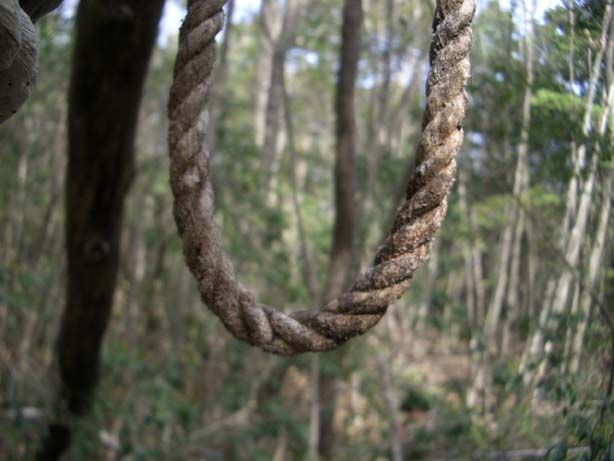
Called "the perfect place to die," the Aokigahara forest has the unfortunate distinction as the world's second most popular place to take one's life. (The first is the Golden Gate Bridge.) Since the 1950s, Japanese businessmen have wandered in, and at least 500 of them haven't wandered out, at an increasing rate of between 10 and 30 per year. Recently these numbers have increased even more, with a record 78 suicides in 2002.

Japanese spiritualists believe that the suicides committed in the forest have permeated Aokigahara's trees, generating paranormal activity and preventing many who enter from escaping the forest's depths. Complicating matters further is the common experience of compasses being rendered useless by the rich deposits of magnetic iron in the area's volcanic soil.

Due to the vastness of the forest, desperate visitors are unlikely to encounter anyone once inside the so-called "Sea of Trees," so the police have mounted signs reading "Your life is a precious gift from your parents," and "Please consult the police before you decide to die!" on trees throughout.

Contemporary news outlets noted the recent spike in suicides in the forest, blamed more on Japan’s economic downturn than on the romantic ending of Seicho Matsumoto’s novel Kuroi Jukai, which revitalized the so-called Suicide Forest’s popularity among those determined to take their final walk. (The novel culminates in Aokigahara as the characters are driven to joint-suicide.) 


Unexplained Mysteries - Creepy Places - Aokigahara Suicide Forest

Creepy Places - San Zhi Resort

What do you get when you cross a series of abandoned, rusting, futuristic UFO-shaped buildings with a series of mysterious deaths covered up by the government? How about the ghost town-slash-tourist resort of San Zhi, located just outside Taipei and inside your worst nightmares.

The exclusive San Zhi resort in Taiwan was supposed to be the destination for bored, rich folk who always wondered what it would be like to live inside an over-sized hockey puck. Construction of Pod City started around the 80s but was quickly shut down after a series of mysterious on-site fatal accidents... or it could have been due to Godzilla attacks for all we know. There is actually very little official information on San Zhi. We can't even confirm how many people died there or if they screamed something about eyeless children eating their souls. The whole thing is shrouded in secrecy.

Currently, most of the information on the complex comes from the locals who--what a surprise--refuse to go near the damn thing. And thus the abandoned 90 pods just stand there, waiting for anyone foolish enough to wander in.

Off the northern coast of the country, on the outskirts of Taipei, Taiwan is an abandoned housing project consisting of podular housing … The area is called San Zhi. There are no named architects since the whole site was commissioned by the government and several local firms. They were trying to create a posh luxurious vacation spot for the affluent and rich streaming out of Taipei. Now this is where things get weird.

The local papers say there were numerous accidents during its construction, and as news spread to the urbanites of the island state, nobody wanted to vacation there, much less visit. Locals say the area is now haunted by those who died in vain and because they are not remembered, they linger there unable to pass on. These are only rumors as far as i can tell… This explains one possibility why the area was abandoned. If the site is haunted, no amount of redevelopment is going to bring the masses to that spot. Even demolishing it is out of the question because destroying the homes of spirits and lost souls is a HUGE no-no in Asian culture. 


Creepy Places - San Zhi Resort 

The Real Dracula: Vlad the Impaler

One of the most influential books in the horror genre is Bram Stoker's 1897 novel Dracula. Stoker, who was a manager of the world-renowned Lyceum Theatre in London, supplemented his income by writing stories. His books include The Lair of the White Worm, The Jewel of Seven Stars, and The Mystery of the Sea. However, it is his narrative about the vampire Count from Romania who invaded London for which th
e Irish author is most well remembered.

Stoker often researched his subjects carefully and included descriptions of real places and people in his stories. Dracula is no exception. Stoker was inspired by folktales from Eastern Europe about vampires and incorporated many of these legends into the novel. He had almost completed his book under the original title of The Un-Dead when he came across a historical figure that changed both the label of the book and the name of the main character. The figure was a 15th century Prince of Wallachia named Vlad III. Because his father was a member of the Order of the Dragon and had taken the name Dracul, Vlad was often referred to as "the son of Dracul" which in Latin was Dracula. Because of his preferred method executing his enemies, however, he was commonly known as "Vlad the Impaler."

The Impaler Prince

Vlad III was born late in the year 1431 in the Transylvanian city of Sighisoara. His father, Vlad II, was a nobleman living in exile. The same year Vlad II was born his father was inducted into the secretive "Order of the Dragon." The order, founded in 1410 by Sigismund the Holy Roman Emperor, demanded the members defend Christianity and resist the Ottoman Turks who were Muslims.

In 1436 Vlad's father took over the throne of Wallachia, a region of what is now Southern Romania. He was removed from power six years later by rivals and decided the best way to get the throne back was to switch sides, betray his oath to the order, and ally himself with the Ottoman Sultan. As proof of his new loyalty, Vlad's father sent two of his sons, Vlad III and his younger brother Radu, to the court of the Sultan to be held hostage. Radu (known as "Radu the handsome") did well at the court and eventually converted to Islam. Vlad, however, was a problem child. He didn't get along with his tutors and trainers and was angry at his father for favoring his older brother, Mircea, and betraying his pledge to the Order of the Dragon (into which Vlad III had also been inducted at age 5). He was also angry at his younger brother for leaving Christianity. His bad attitude earned him beatings, imprisonment and this gave him a hatred for the Ottoman Turks.

Eventually, Dracula was released on the promise of good behavior and continued his education at the Court, learning how to handle weapons and ride horses as well as getting an education on subjects like religion and logic. He also became fluent in several languages. 


Read More about Real Dracula

Mel Holes - Unexplained Mysteries of Devil's Holes

Mel's Hole is a supposed geographic anomaly discovered by Mel Waters on his land near Ellensburg, Washington. Waters claimed that he lived in or near Manastash Ridge, Washington, about nine miles due west of Ellensburg, though later investigation revealed that no such person was listed as a resident. According to Waters, the hole has paranormal properties, including a possibly infinite depth and the ability to restore dead animals to life.

The first references to the hole were made in a series of interviews with Waters, made by Art Bell on the American radio show Coast to Coast AM (which focuses on conspiracy theories and the paranormal). Waters initially appeared on Coast to Coast AM on February 21, 1997. He subsequently appeared on February 24, 1997, April 2000 and January 29, 2002. His most recent appearance on the show was on December 20, 2002.

Description

While speaking on Coast to Coast AM, Waters related several stories about the hole and its properties. He also claimed that he had discovered that the hole was in excess of 15 miles (24 kilometers) deep, which he figured out by spooling out 18 reels of 20lb test fishing line, tied end on end, into the hole. Waters claims that he attached a "triangular, one-pound, standard lead fishing weight" to the end of the fishing line.

Waters also told a story of a local man who dropped the remains of his deceased dog's body down the hole. Later, the man saw his dog while out hunting and attempted to call it; however, it appeared to belong to another hunter. Waters also speculated that the hole's properties might be tied to some cosmological events, including unspecified alignments of the moon.

On the September 18, 2008, edition of Coast to Coast AM, guest Red Elk, an intertribal medicine man, recounted the time he visited Mel's hole. He recounted the hole as "around 9 ft. in circumference and somewhere between 24–28 (27.5?) miles deep" and said that it was a blow hole for Mount Rainier.

Location

Waters has never revealed the exact location of the hole. It is possible that it is located in a region removed from publicly available satellite images due to the nearby Yakima Training Center. Despite this, several people have claimed to have found the hole.\ Just before the tenth anniversary of Mel's first appearance on Coast to Coast AM, the moderator of the Mel's Hole website declared the search for the hole was a dead end, and that it would likely never be proven to exist unless Mel came forward with evidence of its location. 


Thursday, March 22, 2012

Top 10 Occult Secret Societies

A secret society is a club or organization whose activities and inner functioning are concealed from non-members Secret Societies are organized conspiracies working in secret to achieve a hidden agenda. Members use secrecy to protect themselves and their movement. Critics view Secret Societies as malevolent organizations working against the general will of mankind. ‘ Members may be required to conceal or deny their membership, and they are often sworn to hold the society’s secrets by an oath. Violating the oath may result in the application of severe sanctions. Like the most successful forgeries, the most effective secret societies are unknown beyond their adherents. Members may be required to deny the organization itself exists.

10. Ordo Templi Orientis

Ordo Templi Orientis

Ordo Templi Orientis is a mystic organization that was started in the early twentieth century. The group was established along the same lines as the less secretive Freemasons, and supposedly relies on ritual and occult practices as a means for members to move from one level of prestige to another within the organization. The general philosophy of the group was a belief in new age esoteric principles and practices as a method of realizing one’s true identity. Famed occultist and all-around eccentric Aleister Crowley composed much of the group’s lore, including a manifesto called the Mysteria Mystica Maxima, and he later became its head. After his death, the influence and popularity of Ordo Templi Orientis began to wane, but it still exists today and has various chapters scattered across the world, chiefly in the United States, the U.K., and other parts of Europe. As Aleister Crowley’s popularity as a new age figure has continued to grow, more and more of the teachings of the Ordo Templi Orientis have come to light. As such, the group makes much less of an attempt to be secretive today than it did in the past. This doesn’t mean that they don’t still have some bizarre practices. Chief among these is the group’s fixation on the sexual, especially their teachings on the “adoration of the phallus” and the magic of masturbation.

9. Krypteia

Krypteia

The Krypteia was an ancient rite of passage for promising young Spartan men who had completed their formal education. Naked and armed with only a knife, these 18-year-olds were instructed to survive by any means necessary as they patrolled the countryside in search of revolts and misdeeds. Those who survived (and indeed many did perish) were welcomed with open arms into the Spartan army. According to tradition, members of the Krypteia were permitted to kill serfs known as “Helots” without fear of blood guilt.


Follow Top 8 Secret Occult Societies

Lost Cosmonauts Conspiracy

Lost Cosmonauts, or Phantom Cosmonauts, is a conspiracy theory alleging that cosmonauts entered outer space, but without their existence having been acknowledged by either the Soviet or Russian space authorities.

Proponents of the Lost Cosmonauts theory concede that Yuri Gagarin was the first man to survive space travel, but claim that the Soviet Union attempted to launch two or more manned space flights prior to Gagarin's, and that at least two cosmonauts died in the attempts. Another cosmonaut, Vladimir Ilyushin, is believed to have landed off-course and been held by the Chinese government. The Government of the Soviet Union supposedly suppressed this information, to prevent bad publicity during the height of the Cold War.

The evidence cited to support Lost Cosmonaut theories is generally not regarded as conclusive, and several cases have been confirmed as hoaxes. In the 1980s, American journalist James Oberg researched space-related disasters in the Soviet Union, but found no evidence of these Lost Cosmonauts. Since the collapse of the Soviet Union in the early 1990s, much previously restricted information is now available. Even with the availability of published Soviet archival material and memoirs of Russian space pioneers, no hard evidence has emerged to support the Lost Cosmonaut stories.

Allegations

Purported Czech information leak

In December 1959, an alleged high-ranking Czech Communist leaked information about many purported unofficial space shots. Aleksei Ledovsky was mentioned as being launched inside a converted R-5A rocket, two more names of alleged cosmonauts claimed to have perished under similar circumstances were Andrei Mitkov, Sergei Shiborin and Marya Gromova.[2] Also in 1959, pioneering space theoretician Hermann Oberth claimed that a pilot had been killed on a sub-orbital ballistic flight from Kapustin Yar in early 1958. He provided no source for the story. In December 1959, the Italian news agency Continentale repeated the claims that a series of cosmonaut deaths on suborbital flights had been revealed by a high-ranking Czech communist. No other evidence of Soviet sub-orbital manned flights ever came to light.

Heinlein

In 1960, Robert A. Heinlein wrote in his article Pravda means 'Truth' (reprinted in Expanded Universe) that on May 15, 1960, while traveling in Vilnius, in the Soviet Union, he was told by Red Army cadets that the Soviet Union had launched a man into orbit that day, but that later the same day it was denied by officials. Apparently, no issues of Pravda could be found in Vilnius or, reportedly, other Soviet cities for that date. Heinlein wrote that there was an orbital launch, later said to be unmanned, on that day, but that the retro-rockets had fired at the wrong altitude, making recovery efforts unsuccessful.

According to Gagarin's biography these rumours were likely started as a result of two Vostok missions, equipped with dummies (Ivan Ivanovich) and human voice tape recordings, to check if the radio worked, that were made just prior to Gagarin's flight.

In a U.S. press conference on February 23, 1962, Col. Barney Oldfield revealed that a space cabin had indeed been orbiting the earth since 1960, as it had become jammed into its booster rocket. According to the NASA NSSDC Master Catalog, Korabl Sputnik 1, designated at the time 1KP or Vostok 1P, did launch on May 15, 1960 (one year before Gagarin).[6] It was a prototype of the later Zenit and Vostok manned launchers. The onboard TDU had ordered the retrorockets to fire, but due to a malfunction, the firing put the craft into a higher orbit. The re-entry capsule lacked a heatshield as there were no plans to recover it. Engineers had planned to use the vessel's telemetry data to determine if the guidance system had functioned correctly, so recovery was unnecessary 


Lost Cosmonaut Conspiracy

Friday, March 2, 2012

The Max Headroom Broadcast Signal Intrusion Incident

The Max Headroom broadcast signal intrusion was a television signal hijacking in Chicago, Illinois, on the evening of November 22, 1987. It is an example of what is known in the television business as broadcast signal intrusion. The intruder was successful in interrupting two television stations within three hours. Neither the hijacker nor the accomplices have ever been found or identified. Not all pirates wear eye patches and talk funny. Some dress up as characters from TV shows, hijack broadcast signals and troll people who are just trying to watch the news.

This is what happened on November 22, 1987. Sports anchor Dan Roan was live on The Nine O’Clock News on WGN in Chicago, narrating video of the day’s football highlights. The picture on the station monitors, as well as any TV tuned to WGN, suddenly began twitching and flickering. Then the clips from the Bears game gave way to static.

From the snow emerged a clear picture of the grinning face of Max Headroom, the titular character of a TV show and pitchman for “New Coke.” More accurately, it was man in a Max Headroom mask, standing in front of a swaying sheet of corrugated metal, awash in the sound of a high, harsh buzz.

The airwave hijacking, known in the television business as broadcast signal intrusion, was stopped quickly when WGN on-site engineers switched the modulation of the studio link to an alternate transmitter and less than 30 seconds later, the Max impostor, having said nothing, having hardly moved, was gone. Viewers were brought back to a visibly flustered Dan Roan saying, “Well, if you’re wondering what happened, so am I.”

The weirdness had only begun. About two hours after the first incident, viewers of the local PBS affiliate WTTW were interrupted in the middle of an episode of Doctor Who. In the middle of a scene, the signal pirate made another intrusion. The picture danced for a second and Max was back in front of the twirling metal panel again. The pirate, this time transmitting with audio, launched into a bizarre diatribe. While his words were distorted, viewers clearly made out several bits, including New Coke’s slogan, “Catch the Wave” (while Max holds a Pepsi can); a remark about sports reporter and announcer Chuck Swirsky; “Your love is fading”; humming of the theme song to TV series Clutch Cargo; and as Max held up a glove, “My brother is wearing the other one.” 


The Max Headroom Broadcast Signal Intrusion Incident

The Number Station - Spy Radio

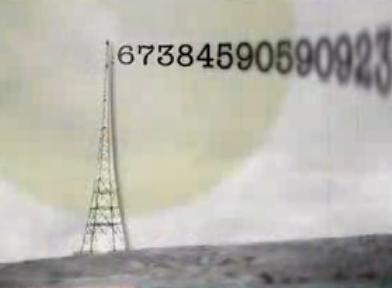
Numbers stations are a staple of conspiracy stories the world over, due to their widespread nature and esoteric purposes. They’re short band radio transmitters that constantly emit a stream of information in a variety of different codes. The name comes from the ones that send out numbers all the time, but some also do letters, words, morse code, or music. It’s pretty widely accepted that these are used by Governments to send information out to agents and spies who are in situations where they can’t easily receive data from their leaders. At the same time, it seems odd that there are so many of them broadcasting so frequently, and not being cracked. With a relatively well understood purpose, you think by now their code systems would have been busted open by savant listeners.

For more than 30 years the Shortwave radio spectrum has been used by the worlds intelligence agencies to transmit secret messages. These messages are transmitted by hundreds of “Numbers Stations”.

Shortwave Numbers Stations are a perfect method of anonymous, one way communication. Spies located anywhere in the world can be communicated to by their masters via small, locally available, and unmodified Shortwave receivers. The encryption system used by Numbers Stations, known as a “one time pad” is unbreakable. Combine this with the fact that it is almost impossible to track down the message recipients once they are inserted into the enemy country, it becomes clear just how powerful the Numbers Station system is.

These stations use very rigid schedules, and transmit in many different languages, employing male and female voices repeating strings of numbers or phonetic letters day and night, all year round.

The voices are of varying pitches and intonation; there is even a German station (The Swedish Rhapsody) that transmits a female child's voice!

One might think that these espionage activities should have wound down considerably since the official “end of the cold war”, but nothing could be further from the truth. Numbers Stations (and by inference, spies) are as busy as ever, with many new and bizarre stations appearing since the fall of the Berlin wall. 


The Number Station - Spy Radio

Unsolved Mysteries of Zone of Silence

There exist a number of "accursed sites" on the surface of our planet. Some of these locations are the sites of gravitational or atmospheric disturbances that still remain unexplained by twentieth century science. Such anomalous areas possess properties which interfere sporadically with humans and their equipment. One area worthy of mention surrounds the Mediterranean island of Elba (famous for being Napoleon's first place of exile), and is the bane of maritime aviation in the Mediterranean; another spot is Mt. Stredohori in Czechoslovakia, where an unknown force drains car engines of power throughout the length of a 75-foot stretch of road.

However, we need not travel so far to encounter a part of the world that is even more perplexing than these others, although it remains little known to most people: Mexico's mysterious, magical zona del silencio--the Zone of Silence, just four hundred miles away from El Paso, Texas. Deserts are often considered to be mysterious enough without the added weirdness that this patch of earth some four hundred miles from El Paso has to offer. It is a place which gobbles up radio and TV signals, and which has of late been associated with the UFO phenomenon.

There is much about our world that we still do not understand. Scientists tell us that natural mysteries abound in every corner of the Earth, from the lifeless desert of Chile to the bottomless depths of the Pacific, there are things we simply do not comprehend.

Perhaps this is the best way to describe a place in northern Mexico in the middle of the hot, searing, punishing Chihuahuan desert, a place commonly called the "Zone of Silence" (Zona-del-Silencio) by the few locals, scientists, students and visitors that wander there from time to time in search of answers. It is a strange place to experience, one of those mysterious natural wonders that beg our attention and muddle our senses. It is sometimes difficult to tell what is truth and what is not; to recognize what you see as real or not.

Drive 400 hundred miles west of El Paso and you enter into an unforgiving section of foreboding semiarid desert landscape that begs for mercy but offers none. The nearest settlement is Ceballos, a ragtag community that holds on precariously to its existence some 25 miles across the barren plain from the heart of "The Zone". Here life is challenging, and there is a constant, delicate balance between death and survival. 


Unsolved Mysteries of Zone of Silence

Unexplained Mysteries of Witch Bottle


The witch bottle is a very old spell device. Its purpose is to draw in and trap harmful intentions directed at its owner. Folk magic contends that the witch bottle protects against evil spirits and magical attack, and counteracts spells cast by witches.

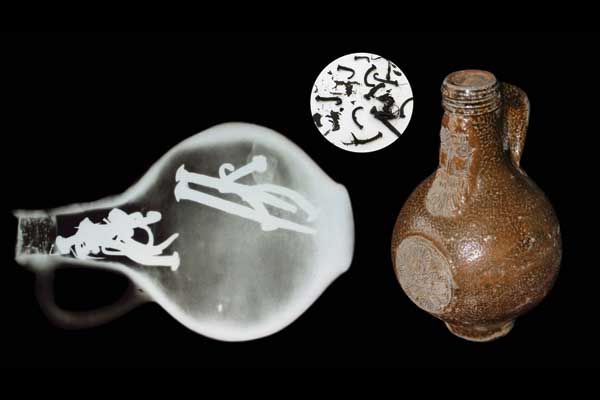
A traditional witch bottle is a small flask, about 3 inches high, created from blue or green glass. Larger and rounder witch bottles, up to 9 inches high, were known as Greybeards and employed so-called Bartmann or Bellarmine jugs. Bellarmines were named after a particularly fearsome Catholic Inquisitor, Robert Bellarmine, who persecuted Protestants and was instrumental in the burning of Giordano Bruno . Greybeards and Bellarmines were not made of glass, but of brown or gray stoneware that was glazed with salt and embossed with severe bearded faces designed to scare off evil.

A witch, cunning man or woman, would prepare the witch's bottle. Historically, the witch's bottle contained the victim's (the person who believed they had a spell put on them, for example) urine, hair or nail clippings, or red thread from sprite traps. In recent years, the witch's bottle has taken on a nicer tone, filled with rosemary, needles and pins, and red wine. Historically and currently, the bottle is then buried at the farthest corner of the property, beneath the house hearth, or placed in an inconspicuous spot in the house. It is believed that after being buried, the bottle captures evil which is impaled on the pins and needles, drowned by the wine, and sent away by the rosemary.

Sometimes seawater or earth are used instead. Other types of Witch-bottles may contain sand, stones, knotted threads, feathers, shells, herbs, flowers, salt, vinegar, oil, coins, or ashes. A similar magical deceive is the "lemon and pins" charm.

Another variation is within the disposal of the bottle. Some witch's bottles were thrown into a fire and when they exploded, the spell was broken or the witch supposedly killed.

This form of "bottled spell" dates back hundreds of years, and were prevalent in Elizabethan England - especially Anglia, where superstitions and belief in witches were strong. The bottles were most often found buried under the fireplace, under the floor, and plastered inside walls.

The Witch-bottle was believed to be active as long as the bottle remained hidden and unbroken. People did go through a lot of trouble in hiding their Witch-bottles - those buried underneath fireplaces have been found only after the rest of the building has been torn down or otherwise disappeared. The origins of this tradition have been dated at least to the 16th century. In ancient times the bottles were made of stone and originally contained rusty nails, urine, thorns, hair, menstrual blood, and pieces of glass, wood, and bone. 


Unsolved mysteries of witch bottle

Friday, February 3, 2012

Mysteries of Scrying

Scrying (also called seeing or peeping) is a magic practice that involves seeing things psychically in a medium, usually for purposes of obtaining spiritual visions and less often for purposes of divination or fortune-telling. The most common media used are reflective, translucent, or luminescent substances such as crystals, stones, glass, mirrors, water, fire, or smoke. Scrying has been used in many cultures as a means of divining the past, present, or future. Depending on the culture and practice, the visions that come when one stares into the media are thought to come from God, spirits, the psychic mind, the devil, or the subconscious.

Although scrying is most commonly done with a crystal ball, it may also be performed using any smooth surface, such as a bowl of liquid, a pond, or a crystal.

Scrying is actively used by many cultures and belief systems and is not limited to one tradition or ideology. As of 2009[update], Ganzfeld experiments, a sensory deprivation experiment inspired by scrying, provides the best known experimental setting for detecting psi abilities in the laboratory. Like other aspects of divination and parapsychology, scrying is not supported by mainstream science as a method of predicting the future or otherwise seeing events that are not physically observable.

Method

The visions that scryers say they see may come from variations in the medium. If the medium is water (hydromancy), then the visions may come from the color, ebb and flow, or ripples produced by pebbles dropped in a pool. If the medium is a crystal ball, the visions may come from the tiny inclusions, web-like faults, or the cloudy glow within the ball under low light (e.g., candlelight).

One method of scrying using a crystal ball involves a self-induced trance. Initially, the medium serves as a focus for the attention, removing unwanted thoughts from the mind in the same way as a mantra. Once this stage is achieved, the scryer begins a free association with the perceived images suggested. The technique of deliberately looking for and declaring these initial images aloud, however trivial or irrelevant they may seem to the conscious mind, is done with the intent of deepening the trance state, in this trance the scryer hears his own disassociated voice affirming what is seen within the concentrated state in a kind of feedback loop. This process culminates in the achievement of a final and desired end stage in which rich visual images and dramatic stories seem to be projected within the medium itself, or directly within the mind's eye of the scryer, something like an inner movie. This process reputedly allows the scryer to "see" relevant events or images within the chosen medium.

One of the most famous scryers in history, lived in the 16th century and was known as Nostradamus. He used a bowl of water or a "magic mirror" to "see" the future in it, while he was in trance. 


 Mysteries of Scrying

LinkWithin

Related Posts with Thumbnails